


In a normal year, scouting hockey is marred by imperfection. Every year high end players get skipped over at the NHL draft for various reasons. Maybe they suffered through injuries. Maybe their team struggled, and it prevented scouts from getting a good read on them. Maybe their team was too good, forcing them down the depth chart with limited minutes and exposure opportunities. Or...maybe they just were not good enough. But thankfully human development is nonlinear and therefore unpredictable. Teenage hockey players are far from a finished product on the ice as their games mature just as the rest of their body and mind do. That is why it is critical to track players as they move through their second and third years of draft eligibility (or fourth years of eligibility for some European players).
For those unfamiliar, North American players with birth dates from January 1st to September 15th, will be eligible for three NHL drafts. Players with birth dates from September 16th to December 31st, will be eligible for two NHL drafts. And for European players (in European leagues), extend that eligibility by one year in both cases. In the last decade, NHL scouts have increased the rate with which they are selecting “re-entry” candidates, or players previously passed over. Contract limits have made it critical for teams to spread out where they select players from, in addition to their age. This has made second- and third-year eligible U.S. and European based players especially attractive. Additionally, CHL players may now be deemed more “intriguing” because of the altered NCAA eligibility rules. NHL teams can draft overage players and retain their rights after they go to college for a few years, expanding their signing and development window. However, these players have had a lot of success in recent years too. Look around the league and you see these players everywhere. For example, Former Calgary Flames, now Utah Mammoth standout defender Mackenzie Weegar was one. Ottawa Senators standout forward Drake Batherson was one. So too was Winnipeg Jets starter Connor Hellebuyck.
Last year, ten “re-entry” candidates went in the top four rounds: Charlie Cerrato, Francesco Dell’Elce, Bryce Pickford, Kristian Epperson, Julius Sumpf, Trenten Bennett, Benjamin Rautianinen, Yegor Borikov, Caeden Herrington, and Zack Sharp. Cerrato was taken inside the Top 50. In our “second chances” article last year (Part 1): (Part 2): (Part 3): We wrote about nine of those ten. In total there were 37 taken, which is a bit lower than the recent trend of other drafts (roughly about 20% of all players selected). I would suspect that bounces back this year. Additionally, of those 37, we identified and wrote about 22 (well over half of them) in our aforementioned second chances series. Just like in previous editions of this annual report, we aim to identify more.
In 2026, we have some very interesting candidates. Edmonton Oil Kings defender Ethan MacKenzie was a solid contributor for Canada’s WJC team this past year. Brandon Wheat Kings forward Joby Baumuller has been among the WHL’s leading goal scorers all year. Prince Albert netminder Michal Orsulak has been among the best goaltenders in the CHL this year. Moncton winger Niko Tournas has been among the QMJHL’s leading goal scorers all year. Russian defenseman Alexander Sapozhinkov is a massive blueliner who has broken out in the MHL and earned a KHL look. This article intends to highlight them and many other candidates who could be part of that 20% this year.
This is part three of the series, putting the spotlight on those re-entries available from across Europe. - Brock Otten
Sweden
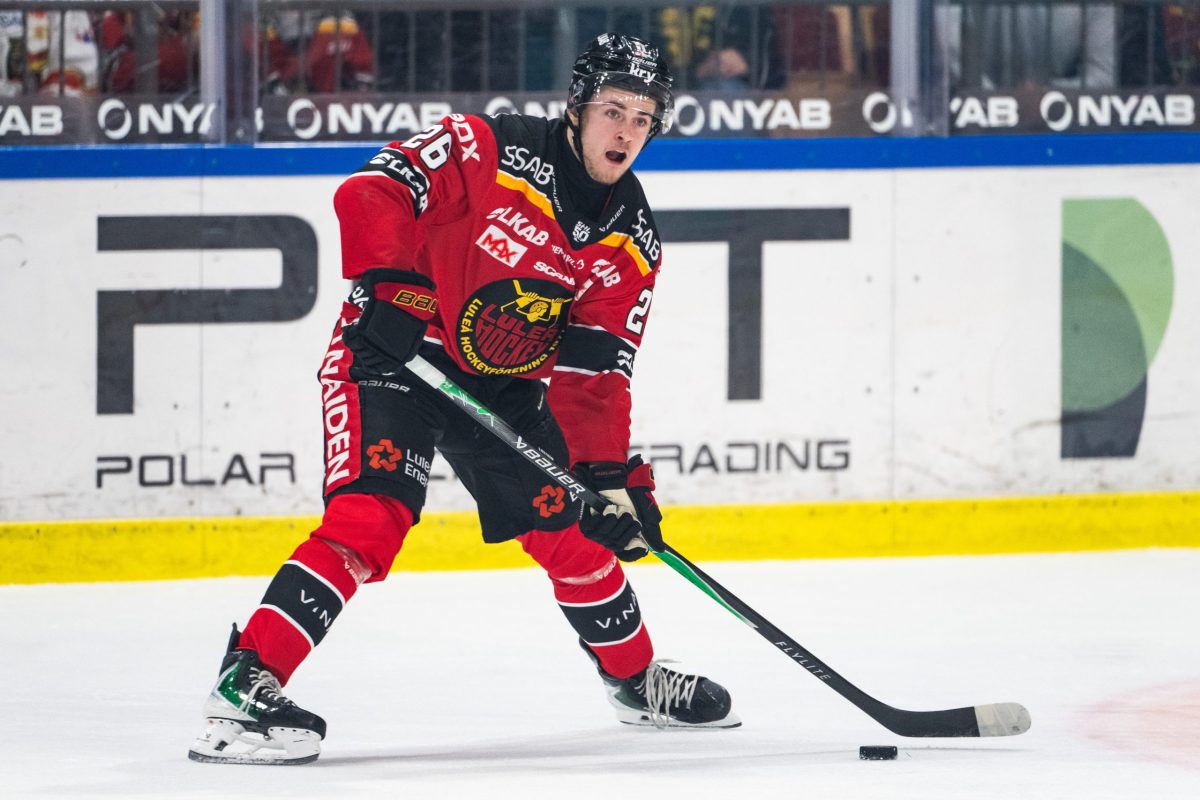
Photo: Simon Eliasson / BILDBYRÅN
Oliwer Sjöström - Defense - IF Björklöven (HockeyAllsvenskan)
Sjöström returns to the draft after going unselected last year, following a season that has brought him back into consideration through clear progression at the professional level. How his game would translate against men was a question coming out of last year’s draft, but his loan to Björklöven has helped answer that. Playing consistent minutes in HockeyAllsvenskan, he has recorded 26 points in 46 games while showing increased confidence with the puck and contributing offensively at a steady rate. His progression is most noticeable in his puck play and composure. He looks more comfortable handling pressure and making decisions in transition, supporting possession without forcing plays. His offensive impact comes more from puck movement and timing than high-end creativity. His strengths are built around mobility, awareness, and puck-moving ability. Areas for improvement remain on the physical side, as added strength would help him handle battles more consistently. His size may also present challenges at the NHL level, which remains a concern given his style of play in defensive situations. From a projection standpoint, Sjöström most realistically profiles as a depth NHL defenseman, likely requiring a longer development path through the SHL or AHL. Based on his progression this season, I would consider him a late round option. (Viktor Ahlund)
Oliver Dejbjerg Larsen - Wing/Center - Rögle BK U20 (U20 Nationell)
A major jump in production has put Dejbjerg-Larsen back on the radar for this year’s draft, as he led the entire U20 series in points. After recording 16 points last year, he followed it up with 53 points in 36 games this season, including 20 goals and 33 assists, a level of production that has been above my expectations. His offensive development has been a key part of his progression, both in his production and overall involvement in the offensive zone. His release has also taken a step forward, adding another layer to his offensive game. He plays with good mobility and is effective with the puck, helping move play forward and support transitions without doing too much with the puck. There are clear signs of offensive upside, particularly in how he finds space. Areas for improvement remain in his physical play and consistency in defensive situations, where added strength is still needed. There is also a question of how well his offensive game will translate to the professional level, which is something to keep an eye on. At this stage, Dejbjerg-Larsen profiles as a long-term project. Despite his strong production at the junior level, a top six role at the highest level is unlikely, and his transition to the professional game will play a key role in determining what type of role he can grow into. After a strong season with Rögle’s U20 and solid performances with Denmark at the WJC, he could draw late round interest. (Viktor Ahlund)
Isac Hedqvist - Wing/Center - Luleå HF (SHL)
Another year, another Isac Hedqvist feature in our overager report. What more can we say about the pure-bred puck-hound from Örnsköldsvik? He’s played over 100 games and counting at the SHL level, even winning the 2025 SHL championship as an everyday bottom six. This year, Hedqvist has played on Luleå’s first line and set a new career high in goals, points, and games played. The physicality, the quickness, the intensity, and the inside drive haven’t gone anywhere. He kills penalties. His offensive capabilities have taken another step. Even when nothing is going for him, Hedqvist is a spark plug that can inject any line with energy. He’s got a great personality, too. If he were two inches taller, he’d have been picked in his first year of eligibility. It’s tough to make it as an NHL bottom six as a 5’11”, 174lbs winger. He’s not skilled enough for a top six role, either. Even if he doesn’t have a clear-cut, projectable role, Hedqvist is wired the right way for the NHL. All he needs in an opportunity to show the league what he can do out on the ice. (Felix Robbins)
Felix Carell - Defense - Malmö Redhawks (SHL)
Carell has had a true breakout year in his DY+2. He’s nabbed a role as an SHL regular despite no prior pro experience. He was also selected to Sweden’s WJC team that won gold, where he featured in every match and occasionally played top pair minutes. Again, despite no prior national team experience. It’s no secret as to why. Carell has matured both physically and mentally since his first year of eligibility, playing a competitive and physical brand of defence that all defence cores need. His skating looks smooth and he’s mobile in all directions. His passing and up-ice vision look solid at the SHL level, and he gets the breakout started with ease. He’s alert and aware in the defensive zone, stifling zone entries and retrieving pucks with his head on a swivel. There are no surprises in Carell's game. His offensive upside is limited, but he does everything you need a defensive defenceman to do. In a couple years, Carell could be a solid depth defenceman that a team can plug into their lineup for some extra jam. (Felix Robbins)
Isac Nilsson - Wing - Malmo (SHL)
Nilsson has worked his way back into draft consideration, showing steady progression this season at the professional level. In 44 SHL games with Malmö, he recorded eight points while adjusting to a higher level of competition, managing the pace and structure better than expected. His development is most noticeable in how he handles pace and pressure at the SHL level. He looks more settled in his decisions with the puck and plays with better timing in transition. It’s clear that he has added strength to his game, both in physical play and as a puck carrier, which was an area of concern for me last season. He brings value through his work rate, awareness, and dependable two-way game. Areas for improvement remain in his physical development and overall offensive ceiling, as he lacks separation ability and finishing consistency. Looking ahead, Nilsson most realistically profiles as a depth forward, requiring continued development at the professional level. Nilsson could fill a role as a checking line player and I would consider him a late round option, and if available in rounds 6–7, I would take a chance on him from a long-term development perspective. (Viktor Ahlund)
Herman Liv - Goaltender - Almtuna (HockeyAllsvenskan)
Liv began the season on loan to Almtuna in HockeyAllsvenskan, where he has adapted well to the professional level and taken positive steps in his development. In 25 games, he’s posted a 2.35 GAA and a .916 save percentage while adjusting to the higher level of competition. His development is most noticeable in his positioning and overall calmness in net, something his father was known for as well. His rebound control has also improved, limiting second-chance opportunities, an area that showed some inconsistency in my viewings last season. He brings value through his positioning and puck tracking, though improvements in explosiveness are needed. He’s also somewhat undersized for the position, though smaller goaltenders have shown they can succeed at the NHL level. Looking ahead, Liv most realistically profiles as a long-term goaltender, likely requiring time at the professional level. His ceiling is most likely projects to the SHL or AHL level, but the path for goaltenders is rarely straightforward, and extended time in top European leagues or the AHL has often proven to be a path toward NHL opportunities. Based on his progression, I would consider him a late round option, where a team could take a chance on him long term. (Viktor Ahlund)
Romeo Edvardsen Sørensen - Wing - Mora IK (HockeyAllsvenskan)
Just 4 days shy of being a 1st time eligible for the 2026 NHL Draft, Sorensen has scored the lights out in his 2nd year of U20 Nationell play and seized an everyday role in the HockeyAllsvenskan. The physical tools make it easy to see where Sørensen could be plugged into an NHL lineup, similar to how he’s used currently with Mora. His motor, his frame, and his physicality have made him a solid bottom 6 checker. His hard and accurate shot has earned him PP time as well. His skating has improved since last season, though he could still use some more quickness. While he's had some highlight reel moments with the puck on his stick at the pro level, Sørensen hasn’t been able to consistently display the soft skill that he has in juniors. For him to tap into that upside, he’ll have to learn to read and process the game quicker at the pro level. The hope is that this improves with more reps. If you leave him to marinate in Sweden for a couple years, Sørensen could be a physical bottom 6 winger with goalscoring upside. (Felix Robbins)
Philip Hemmyr - Wing/Center - Björklöven IF (HockeyAllsvenskan)
After flying completely under the radar in his draft season, homegrown Hemmyr has taken a big step in his hockey career by torching the U20 and earning himself a depth role with Björklöven’s senior team — the best team in the HockeyAllsvenskan. He typically plays down the middle in juniors, but he’s still learning the position at the pro level from the wing. He’s grown an inch or so and has added some quickness to his skating. Hemmyr has always been a solid two-way player, but he’s able to read the game and play intelligently off puck at the pro level already. His off-puck work ethic is great as well, although he needs to fill out before he’s much of a problem on the forecheck. Offensively, Hemmyr hasn’t been able to pull off his playmaking ideas very often at the pro level. However, he’s shown the ability to find soft ice and pounce on pucks around the net (even if it hasn’t shown up on the scoreboard). Hemmyr is an interesting bet to make if you want a bottom 6 two-way forward, but he’s got to marinate in Sweden for a couple more years. (Felix Robbins)
Leo Sundqvist - Wing - Brynäs IF (SHL)
While he may not profile as your typical over-ager target (undersized, not the highest skill level, not scoring at the pro level), Sundqvist is wired exactly how I like my undersized forwards to play: Speedy, feisty, physical, and shoots the lights out. The straight-line speed is great, even for a forward his size. He’s putting up a ton of points as a top 6 in the U20 despite not having the greatest puck skills. His playmaking is fairly practical, but his shot is the best offensive weapon in his arsenal. His play away from the puck is intense and his physical game is that of a forward twice his size. Sundqvist hasn’t been able to lock down an SHL role as of yet. He struggles to read the game at a high level and doesn’t always put himself in the best position. Like with other forwards on this list, the hope is that it improves with reps. If everything breaks right for Sundqvist, he could be a bottom 9 who drives transition play, forechecks, and scores goals. (Felix Robbins)
Finland
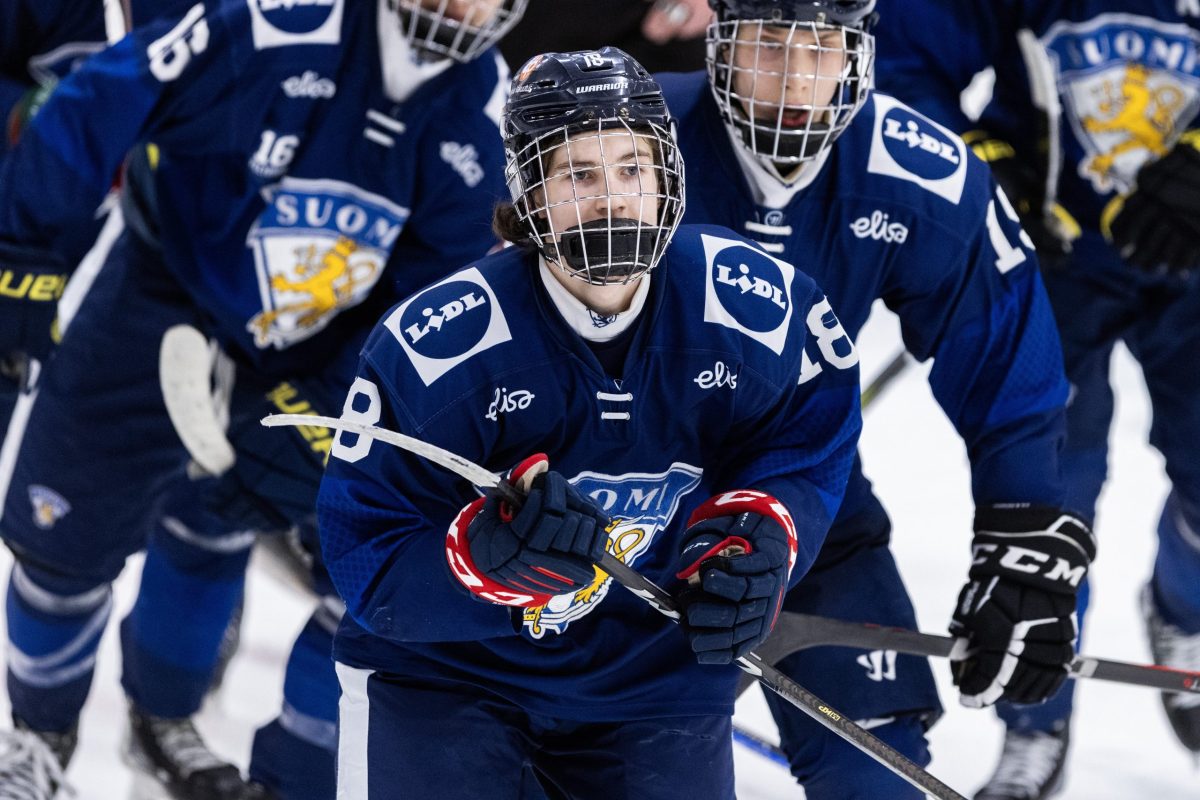
Jere Somervuori - Wing - HIFK (Liiga)
Somervuori has evolved from a high-energy U20 complementary piece into a legitimate Liiga-caliber checking prospect. His rise on the draft map is fueled by his adaptation to professional pace where he hasn't just survived the jump to Finland’s top tier, he has maintained his signature "motor" against men. His game is built on explosive skating and a relentless work rate. He is a puck-retrieval specialist who excels on the forecheck and backcheck, using an active stick to disrupt plays. He shows great poise under pressure and is a versatile "Swiss Army Knife" who can play the wing or center while killing penalties. His Hockey IQ cannot be underestimated. He makes good reads and he has a good awareness of where everybody is on the ice. However, his finishing touch and shooting mechanics remain raw. While his intensity helps him win battles, he lacks the heavy physical frame to overpower opponents, relying instead on positioning and effort. He projects as a reliable bottom-six NHL energy forward at best or a high-end Liiga specialist. His young age for a draft-plus-one skater makes him an intriguing "swing" pick in the middle-to-late rounds for a team valuing defensive responsibility and pace. (Jeremy Rivet)
Leo Tuuva - Wing - Lukko (Liiga)
Tuuva’s draft stock has fluctuated significantly. After a hot start that showcased his offensive skill and power-play utility, his production cooled off in Liiga action. He remains on the radar due to his size and flashes of high-end playmaking, but questions about his consistency and heavy game have caused him to slide recently. Tuuva possesses dynamic hands and a precise shot, particularly effective from the half-wall on the power play. He is a shifty puck carrier who uses weight shifts to create lanes. However, his skating mechanics lack depth and explosiveness, which limits his ability to win 50/50 battles. There is a tendency to play too much on the perimeter in his game. He often avoids the dirty areas of the ice, and his compete level can appear inconsistent when the game turns physical. A boom-or-bust offensive prospect. If his skating improves and he learns to use his 6’01” frame to drive the middle, he could be a middle-six scoring winger. Without those adjustments, he risks becoming a career European pro who struggles with the pace of the North American game. (Jeremy Rivet)
Niklas Nykyri - Defense - HIFK (Liiga)/KooKoo (Liiga)
Nykyri has successfully transitioned to the Liiga level by simplifying his game and leaning into his hockey IQ. He has moved from a flashy U20 defender to a poised, puck-moving professional. His performance at the recent World Juniors has reaffirmed that his vision is among the best in his age group for Finnish defenders. His offensive vision is his calling card. He excels at finding seam passes and threading the needle from the blue line rather than just settling for low-percentage shots. He shows great poise when escaping pressure behind his own net. His weaknesses lie in skating mobility and gap control. While his edges are functional, he can be exposed by high-end speed. His first pass is generally good, but he can become turnover-prone when forced to make decisions under heavy physical pressure. He projects as a modern 3rd pairing puck-moving defenseman at best. His ability to quarterback a second power-play unit and facilitate transitions makes him a candidate for the later rounds of the draft, provided a team believes they can refine his footwork and his pace. (Jeremy Rivet)
Veeti Rasanen - Wing - Jokerit (Mestis)/Jokerit U20 (U20 SM-sarja)
Räsänen has established himself as a premier scoring threat in the Finnish U20 SM-sarja for the past two seasons, forcing his way onto the draft map through sheer offensive production combined with his 6-foot-3 frame. Räsänen is a pure goalscorer with a prototype frame for a modern power winger. His primary weapon is a heavy, deceptive wrist shot with a quick release that beats goalies from distance. He excels at finding soft ice in the offensive zone and is a constant threat on the power play, where he uses his reach and strength to protect pucks. While his offensive instincts are above average, his skating mechanics remain a work in progress. His first-step acceleration is average, which can make it difficult for him to create separation against professional defenders. Additionally, his defensive engagement and off-puck discipline require more consistency to survive at higher levels. He has the potential to become a bottom-six scoring winger with decent offensive upside as well as a versatile player that can play on the penalty kill if he develops his defensive game. Because of his rare combination of size and natural finishing ability, he is an interesting upside target for teams willing to invest in his development. He is likely to be a mid-to-late round pick in 2026, with the potential to rise if his professional transition in Finland continues to show he can score against men. (Jeremy Rivet)
Russia
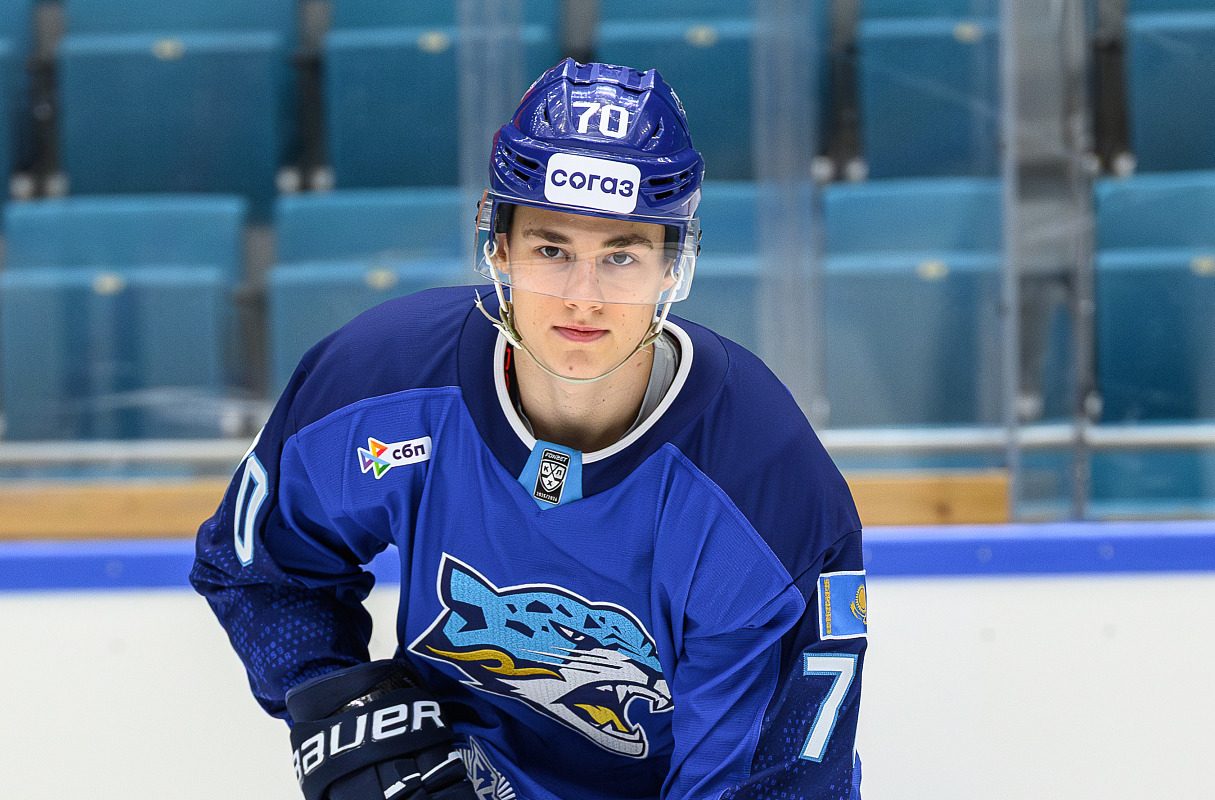
Semyon Simonov - Wing - Barys Astana (KHL)
After a point-per-game season in the MHL and solid look in the KHL last season, Simonov has adjusted to the pro game well. One of the top U21 producers in the KHL in his D+3 season, he puts up points with a quality shot and good off puck positioning. In transition, he makes himself an option along the wall to gain easy entry to the zone and is focused on putting pucks on net. He can fight off pressure well but he is held back by mediocre skating and a lack of skill. Defensively, he is an active player with a good motor but isn’t always successful at winning his battles. This holds true on the forecheck as well, as he's able to pressure opponents but isn’t quite effective in creating turnovers. A good rush attacker with a solid shot, but im not so sure there is an NHL caliber player here, the skating and skill needs to come a ways to be the middle six complementary winger that he will likely end up as in the KHL. (Mark Doherty)
Ivan Patrikhayev - Defense - CSKA Moskva (KHL)
Patrikhayev has found some more offense since his first draft eligible season. As a smaller puck-moving defenseman this is an important development in his game. He stands out in transition, with clean breakout passes and improved footwork to evade forechecks and maneuver up ice. With more activation and an ability to get shots off from the point, he has become more effective in the offensive end. Defensively, there is a lack of physicality, losing battles in front of the net, and can skate himself out of position at times but generally he has played well, supporting his defensive partner and doing his best to recover loose pucks and push the puck up ice. He likely tops out as a top four two-way puck mover in the KHL, as he lacks any NHL caliber tools. But the progression in his skating and overall two-way play could see him as a late round bet for teams who think there is still room for growth. (Mark Doherty)
Artur Faizov - Wing/Center - Salavat Yulaev Ufa (KHL)
Faizov's game is built around his fast pace of play, high motor, and effectiveness on the rush. At lower levels he dominates, forcing turnovers and creating odd man rushes constantly with his speed. The ability to cut off breakouts, attack opponents along the walls and send passes to the slot when turnovers occur on the half wall make him an exciting player to watch. This rambunctious style of play doesn't disappear at the pro level, as he looks solid in the VHL, but the increased physicality and skill in the KHL has caused some struggles in the second half of the year. His slender frame is an issue, unable to win battles he normally would in juniors, and the skill and speed he shows in juniors looks very pedestrian in the KHL. The details in his game, his ability to read play quickly, and ability to get to the middle of the ice are not translating effectively either. I really enjoy the way he plays, and if he gains muscle and works on the details of his game he can be an energy forward in the NHL one day, but it is a long shot. (Mark Doherty)
Maxim Gusev - Defense - Olimpiya Kirovo-Chepetsk (VHL)
Gusev is a steady puck moving defenseman who shines on the breakout and when joining the rush. His newfound confidence, and improved hockey sense and mobility, allow him to find passing lanes and act the trailing forward, driving the slot on zone entries. He picks his spots to activate tactically, gliding into open space, making sure he has support, and firing off shots from the high slot. With the puck on his stick, he's not a dynamic player, the slow first steps skating keep him from beating forwards one-on-one at the blue line or when he carries the puck himself. He keeps the game simple, drawing in defenders and hitting his teammates with accurate passes. What truly holds him back is the defensive game. He's far too passive and not very physical. The slow first steps lead to him getting burned on the rush, and he fails to pick up open players in front of the net. I like the offensive package as a bottom pair puck mover at the NHL level, but his defensive game needs to really take a step over the next few years. Finding a role in the KHL next year will be very important for his development. (Mark Doherty)
Mikhail Melikov - Wing - MHK Dynamo Moskva (MHL)
Melikov has had an impressive year in the MHL, at the top of the scoring charts and playing big minutes for a good Dynamo Moskva team. He's been a much more noticeable player this season, forcing turnovers, getting involved in transition, and creating offense. He is able to do this by utilizing his great skating and high motor. The IQ has also taken a big step, he understands where to be on the ice to make himself dangerous and be a pest for opposing players. The offensive skills aren't elite, but the hands and playmaking are good enough to produce when paired with the motor and IQ. There is room to grow with his shot, as he tends to have a slow release, charging up his shots rather than quickly firing it on net. There are also moments of frustration in his body language where he can lose that effort for a few seconds but his intensity doesn't allow him to stay idle for long. I believe there is middle six potential for Melikov and there is a short list of draft eligible Russians that I would take before seriously considering him. (Mark Doherty)
Gleb Burlaka - Wing - Omskie Yastreby (MHL)
As an MHL rookie in his D+1 season Burlaka has garnered some attention with his point per game pace and his combination of skill and energy. A confident puck carrier with strong edges, he opens his hips to turn away from pressure, and his strong frame allows him to fight off checks and wait for passing lanes to open up. He attacks with speed but can slow the play down when necessary. His game is simple and effective, net driven, supportive and physical along the boards with plenty of compete. There is still a bit of rawness to Burlaka and despite the physicality and engagement he struggles to be the one doing the pressuring. Adding some muscle would help him pin players to walls or land heavy hits on the forecheck rather than just bouncing off defenders. The lack of real high-end skill may limit him to a bottom 6 role. He must add some strength to fulfill that, but his style of play and skating ability is a strong foundation that could lead to him getting selected. (Mark Doherty)
Yegor Gusev - Wing - Sibirskie Snaipery Novosibirsk (MHL)
Gusev has been very productive in his first full season in the MHL. A solid complimentary piece, he does the dirty work to help his line mates thrive and drives the net to collect rebounds and back door feeds. The workrate is impressive, as he hunts down opponents on the backcheck, is quick to apply pressure on the forecheck, and can muck it up in the corners or along the boards. A solid skating base, he can really get moving when he gets a head of steam, adding to that high motor play style. He is also not one to shy away from blocking shots in the defensive end. With that being said, he is a bit slow when reading play and processing information. Puck watching can be an issue at times and he's not always in good positions or picking the right lanes to attack on the rush. The skill is pretty average but there is a solid shot on him. He's a grinder, a bottom six role isn't out of the question as he's had a great rookie season in the MHL. If his IQ takes a step in the coming seasons he could be a player that coaches adore. (Mark Doherty)
Alexander Sapozhinkov - Defense - Kapitan Stupino (MHL)
A classic old school blueliner. Big, physical, and a booming slap shot. Can erase forwards along the boards and contribute on the forecheck when he activates. His long reach helps him shut down rushes, especially when forwards think they have him beat. Improvement in the offensive zone has led to increased production in the MHL. Simple plays, decent maneuverability along the blue line and finding space to get his powerful slap shot off, makes him an interesting player. The skating stride still needs plenty of work. It's short and choppy at times and he has trouble keeping up with pacey players, but his pivots and lateral mobility have come a long way. His tape at the KHL level was pretty concerning mostly due to his skating deficiencies and ability to make quick reads. At 6-foot-6 he still has time to grow into his body, and with patience, could be a decent depth defensemen in the long run. An interesting project to take a swing on in the later rounds. (Mark Doherty)
Ivan Fomin - Wing - Taifun Primorsky Krai (MHL)
Fomin is having an incredible D+1 season as one of the leading scorers in the MHL, while outscoring the second most productive guy on his team by almost 30 points. The undersized winger is as dynamic as they come. A high-end skater with great top speed, explosive edges and lateral mobility. Dazzling hands allow him to cut through defenses and get to the front of the net consistently. He has naturally grown in these areas but what stands out this season is his IQ and effort. He is all over the ice as is constantly finding himself in the right spots to win races to loose pucks and capitalize on mistakes and rebounds. The relentless motor helps him win board battles and fight hard in front of the net, necessary skills for a player his size. A zone entry machine and very creative passer in all areas of the ice. The concern is the frame and some moments of poor decision making and playing hero hockey. I want to hold my judgement till he can prove himself at the KHL level, but why not take a swing on the skillset in the later rounds and go from there? It's likely he ends up as a top six KHL scorer like Ruslan Iskhakov but there is top 6 upside, and I wouldn't be surprised if he is a future Russian FA target in the mold of a fellow undersized Russian FA target in Maxim Shabanov as he has more pace and energy then Shabonov and Iskhakov. (Mark Doherty)
Central Europe
Photo: Joel Marklund / BILDBYRÅN
Tomas Galvas - Defense - Bílí Tygři Liberec (Czechia)
Tomáš Galvas has taken a clear step forward over the past two seasons, transitioning from a depth role into a more impactful puck-moving defenseman in a pro environment. After posting modest production in 2024–25 (11 points in 43 games), he significantly elevated his offensive output this season, producing at close to a point-per-game pace in limited minutes and carrying that confidence into international play. His biggest driver of progression is his puck play. Galvas is a fluid skater with strong edgework, allowing him to escape pressure and lead controlled exits. He consistently makes quick first passes and shows improved assertiveness activating into the rush. At the World Juniors level, he handled elevated responsibility and contributed offensively, reinforcing his trajectory as a modern transition defenseman. Defensively, he still relies more on positioning and stick detail than strength. He can be outmuscled in net-front situations and will need to add physical maturity to handle pro forechecks consistently. Projection-wise, Galvas is trending toward a puck-moving, second-unit type defenseman. His skating and decision-making give him NHL utility, but his long-term upside will depend on how much strength and defensive reliability he can add. (Marek Novotny)
Matěj Maštalířský - Wing - HC Verva Litvínov (Czechia)
Maštalířský is an offensively capable winger, but he didn't produce enough in the Czech top tier league in the past few years. The second half of the 2025-26 season was much better, although he did play on the worst team in the league. Maštalířský is a smart player who may not stand out at first glance, but he plays a solid two-way game and uses his hockey IQ effectively at both ends of the ice. He works hard and skates well, even though he's not the speediest player on the ice and doesn't strike as an energy guy. The size is decent at 6'1", however, at 176 lbs he could add on some muscle to better withstand physical play. Maštalířský may be an option for the upcoming NHL Draft, he's made some progress over the past few years and the improvement in the second half of the season was notable. He may become a middle-six option in the future but needs to add more muscle. He's smart, a decent skater and plays a reliable two-way game. (Matej Deraj)
Matej Kubiesa - Wing - HC Oceláři Třinec (Czechia)
Matej Kubiesa has worked his way back into draft consideration through increased offensive responsibility and strong production at the professional level this season. Playing in the Chance Liga, he is producing at better than a point-per-game rate, reflecting a more consistent role and greater involvement in offensive situations compared to previous years. His game is centered around off-puck play and finishing ability. Kubiesa reads the offensive zone effectively, finding space between defenders and arriving into scoring areas with good timing. His shot is his most reliable tool, featuring a quick release that allows him to convert chances efficiently, particularly from the slot and faceoff circles. He tends to play a direct style, supporting the puck and finishing plays rather than creating through extended possession. His skating remains average, especially in his first-step acceleration, which limits separation against faster opponents. While he competes, his physical presence is not consistently applied, particularly along the boards. Projection is as a depth winger with secondary scoring upside, with his long-term outlook tied to improvements in pace and consistency. (Marek Novotny)
Tomáš Královič - Defence - HC Slovan Bratislava (Slovakia)
Královič made a huge leap compared to his previous season in the Slovak league, with nearly double the ice time. He was one of the leading scorers among defensemen in the league and even set a new record for most points in a U21 season. Královič has an intriguing profile. He has an ideal size at 6'3", 203 lbs, and plays a very physical game. He is more of an offensive defenseman who likes to join the rush and shoots the puck a ton. His defensive game still needs some polishing, but the overall archetype is very interesting. As a 6-foot-3, right-shot, offensively capable defenseman with some bite to his game, there must be NHL interest. On the downside, Královič is quite short-tempered and tends to take a lot of unnecessary penalties. He also needs to continue improving defensively. His skating is decent, but it's not a standout trait. If Královič isn’t picked as an overager, he will be a strong candidate to sign an NHL contract as a free agent. I see him as a bottom-four option in the future. (Matej Deraj)
Lenny Boos - Wing/Center - Düsseldorfer EG (DEL2)/Youngstown (USHL)
A lightly built player with good wheels and some solid hockey IQ, Boos was a guy we liked in his draft year but knew that neither his domestic nor international experience afforded him any real shot at being a draft consideration. This season, he successfully made his way into a top 9 DEL2 role with several appearances for Bremerhaven in the DEL and Champions Hockey League. His solid WJC performance as Germany’s #1 center, which included a 4-point relegation game performance in a key victory over Denmark, must have opened some eyes because he transferred to the Youngstown Phantoms of the USHL shortly - and unexpectedly - thereafter, where he collected 7 points and a + rating in his first 10 outings. The son of a long-time German pro and national team player, we can attest that Boos is very coachable and plays with confidence. Also, he’ll be 19 right on through late November and still has plenty of leeway for physical and skill-related development. (Chapin Landvogt)
Niklas Blessing - Defense - Biel-Bienne (NL)
Blessing continues a trend among Swiss defensemen showing up as overage draft candidates after several years of high-level pro hockey. He wasn’t really on the map in his draft year and then was brought along slowly but soundly in his DY+1, where he saw more time at the NL level than anywhere else. This season, the average sized, yet well-built Blessing has become a full-time NL defenseman with a sound two-way game, often logging over 18 minutes of TOI per night. And it’s been that way all season long, without any lulls, even leading to a top five role at the WJC. His numbers this season have been very much akin to those of Ludvig Johnson, who was drafted as an overager with lesser numbers last summer. (Chapin Landvogt)
Daniil Ustinkov - Defense - Küsnacht Lions (SL)
As a 17-year-old underager, Ustinkov put up 4 points at the U18 worlds and headed into his draft season looking like a top 60 topic. A stocky defenseman whose game we’ve often compared to that of a Dmitry Kulikov, Ustinkov saw his so-so Hlinka Gretzky Cup performance carry with him throughout his draft year, which to his credit was spent primarily playing solid pro hockey at both the SL and NL levels. But defensively weak WJC and U18 Worlds tourneys saw him go undrafted. His DY+1 featured him in a more prominent role at the SL level but without any fanfare and no international performances of note, being left off the WJC squad. This season, he was back at the WJC, where he showed very well for himself (4 assists in 5 games). Further, he’s been one of Küsnacht’s top 3 defenders, suiting up 15 times for NL power Zug along the way. An NL contract is in the bag for next season, and he’ll be 19 right on up through the draft. The multifaceted tools are there for a team wanting low-profile but dependable defensive organizational depth. (Chapin Landvogt)