


In a normal year, scouting hockey is marred by imperfection. Every year high end players get skipped over at the NHL draft for various reasons. Maybe they suffered through injuries. Maybe their team struggled, and it prevented scouts from getting a good read on them. Maybe their team was too good, forcing them down the depth chart with limited minutes and exposure opportunities. Or...maybe they just were not good enough. But thankfully human development is nonlinear and therefore unpredictable. Teenage hockey players are far from a finished product on the ice as their games mature just as the rest of their body and mind does. That is why it is critical to track players as they move through their second and third years of draft eligibility (or fourth years of eligibility for some European players).
For those unfamiliar, North American players with birth dates from January 1st to September 15th, will be eligible for three NHL drafts. Players with birth dates from September 16th to December 31st, will be eligible for two NHL drafts. And for European players (in European leagues), extend that eligibility by one year in both cases. In the last decade, NHL scouts have increased the rate with which they are selecting “re-entry” candidates, or players previously passed over. Contract limits have made it critical for teams to spread out where they select players from, in addition to their age. This has made second- and third-year eligible U.S. and European based players especially attractive. Additionally, CHL players may now be deemed more “intriguing” because of the altered NCAA eligibility rules. NHL teams can draft overage players and retain their rights after they go to College for a few years, expanding their signing and development window. However, these players have had a lot of success in recent years too. Look around the league and you see these players everywhere. For example, Former Calgary Flames, now Utah Mammoth standout defender Mackenzie Weegar was one. Ottawa Senators standout forward Drake Batherson was one. So too was Winnipeg Jets starter Connor Hellebuyck.
Last year, ten “re-entry” candidates went in the top four rounds; Charlie Cerrato, Francesco Dell’Elce, Bryce Pickford, Kristian Epperson, Julius Sumpf, Trenten Bennett, Benjamin Rautianinen, Yegor Borikov, Caeden Herrington, and Zack Sharp. Cerrato was taken inside the Top 50. In our “second chances” article last year (Part 1): (Part 2): (Part 3): We wrote about nine of those ten. In total there were 37 taken, which is a bit lower than the recent trend of other drafts (roughly about 20% of all players selected). I would suspect that bounces back this year. Additionally, of those 37, we identified and wrote about 22 (well over half of them) in our aforementioned second chances series. Just like in previous editions of this annual report, we aim to identify more.
In 2026, we have some very interesting candidates. Edmonton Oil Kings defender Ethan MacKenzie was a solid contributor for Canada’s WJC team this past year. Brandon Wheat Kings forward Joby Baumuller has been among the WHL’s leading goal scorers all year. Prince Albert netminder Michal Orsulak has been among the best goaltenders in the CHL this year. Moncton winger Niko Tournas has been among the QMJHL’s leading goal scorers all year. Russian defenseman Alexander Sapozhinkov is a massive blueliner who has broken out in the MHL and earned a KHL look. This article intends to highlight them and many other candidates who could be part of that 20% this year.
This is part one of the series, putting the spotlight on those re-entries available from Canadian leagues.
OHL
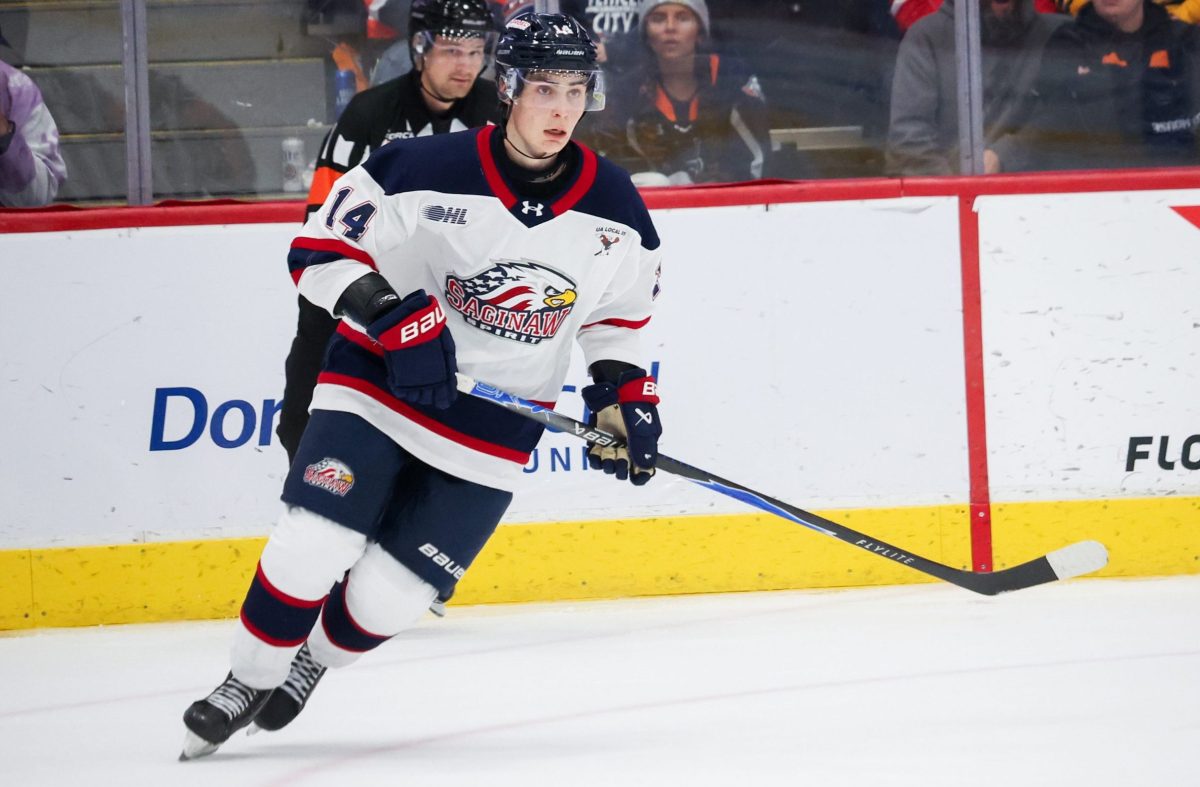
Egor Barabanov - Wing/Center - Saginaw Spirit
A common story among older draft-eligible players who go undrafted in their first year of eligibility is the need to find the right opportunity and given time to shape their game into the role they are best suited for. Often, simply being able to play consistent minutes in different situations allow players to both develop and attract attention from scouts. Egor Barabanov is a prime example of that this season. After spending his draft and draft-plus-one seasons in the USHL producing modest point totals, Barabanov quickly surpassed the combined production from those two years while playing with Saginaw in the OHL this season. Embracing the opportunity to play on the Spirit’s top line as a playmaker on a younger, highly skilled team, Barabanov has developed strong chemistry with his linemates, captain Dimian Zhilkin (2027 Draft Eligible) and current OHL points leader Nikita Klepov (2026 Draft eligible). Barabanov provides positional versatility, playing both the center position while also being effective when shifted up or down a lineup on the wing. Barabanov’s calling card is his playmaking ability with the puck. He has shown a strong ability to anticipate plays as they develop and capitalize on defensive mistakes. He times his passes well in space and generates scoring chances with purposeful passes. He is strong on his edges and uses his shiftiness to create space and open himself up to the play. Barabanov is also a high energy player who hunts down pucks and is aggressive in puck pursuit. However, Barabanov will need to improve his overall footspeed and pace, particularly his explosiveness in starts and stops. He will need to clean up his play in the defensive zone, particularly by improving his awareness of defensive assignments and identifying the correct coverage. Becoming more aggressive with box-outs and tie-ups. Being a centerman, developing a habit of consistently playing above the puck will be key to reducing scoring chances against. Barabonov possesses the offensive tools to project as a bottom-six winger, he still has areas of his game that require more work to fully fit that role. (Liam Staples)
Alex Kostov - Center/Wing - Flint Firebirds
Kostov has been enjoying a career year in his fourth OHL season. He has been a key contributor to the Firebirds’ success, setting a new career high in points and surpassing the 20-goal mark. He has been sidelined since the end of January recovering from an upper-body injury. Kostov attended the Nashville Predators prospect camp last fall, appearing in two games during the team’s NHL prospect tournament. Kostov plays a power-forward style, and at 6’4”, 208 pounds, he understands how to use his size effectively. He does not shy away from physical play — rather, he embraces it. He’s also an excellent athlete who has worked hard to become an above average skater for the OHL level. Flint has found success pairing him with natural goal scorers, as his ability to win puck battles and use his frame to protect possession allows him to distribute the puck effectively to his linemates. Kostov plays responsibly in his own end, forcing more than three turnovers per game in the defensive zone. He utilizes a hard, active stick to disrupt opponents on the rush and uses his length to strip the puck. A healthy return from Kostov in the playoffs would be a significant boost for the Firebirds, as he provides the size and grit needed for a deep run. At the pro level, Kostov projects as a bottom-six winger who brings energy through his physicality and high compete level. He excels in puck battles, plays responsibly at both ends of the ice, and focuses on doing the small details well — winning possession and getting the puck to his team’s primary scorers. (Liam Staples)
Carson Woodall - Defense - Windsor Spitfires
Originally selected in the 10th round of the 2022 OHL Draft by his hometown team, Windsor Spitfires, Woodall has shown continuous growth as a player since getting drafted into the OHL and has certainly earned his spot as a top re-entry candidate in the 2026 NHL Draft. Since becoming an OHL regular the Belle River, Ontario native has steadily elevated his play, seeing his point production increase each year. Now in his fourth season in the league, Woodall leads all OHL defencemen in assists and has firmly established himself as the Spitfires’ number-one defenceman. Woodall is a mobile, puck-moving defenceman who brings a reliable two-way game. He is capable of creating plays through his skating ability and vision on the ice. He is not hesitant to activate off the rush, he is smooth walking the blueline and showed flashes of scoring from distance. Woodall is committed to Boston College for the 2026–27 season. An important aspect of his continued development will be maintaining consistency in his overall game and finding ways to remain a dependable option in the lineup. As a smaller defenceman, listed at 5’11”, 179 pounds, who does not rely heavily on physicality, Woodall must consistently lean on his skating and puck-moving ability to make plays and impact the game. If his development to this point is any indication, it suggests his strong commitment to improving and refining his game could make him a valuable signing as a potential bottom-pair, puck-moving defenceman at the pro level. (Liam Staples)
Cooper Dennis - Wing - Brantford Bulldogs
2025-26 has been a massive coming-out party for Dennis. He’s blown his production with Dubuque last year out of the water, approaching 80 points in the OHL this year. He’s bounced around the lineup, adapting well and driving play with a variety of teammates. Dennis possesses an incredible shot, able to beat OHL goaltenders from distance with his hard wrister. His playmaking game isn’t quite as efficient as other playmakers in this article, as Dennis primarily relies on a burst of speed down the wing to swing pucks across the crease. He’s still a creative player, but after seeing his pass selection, I wouldn’t describe him as a calculated and intentional playmaker. Cooper’s edgework and shiftiness allow him to maneuver the offensive zone, and his straight-line speed makes him a threat off the rush, where he’s displayed high-end finishing skills. He very clearly knows what he wants to execute on the breakaway, finishing his dekes with conviction. However, the elephant in the room is his size. At 5’6 there will be many obstacles in his way regarding his success in puck battles, puck possession while being contacted, and defensive effectiveness. His skill and agility still make him worth a pick in the later rounds, projecting as a skilled middle-sixer, but it will be interesting to see if an NHL team gives him a shot. (Kaeden Ireland)
Tristan Delisle - Center - Owen Sound Attack
Delisle got off to a blazing hot start with the Attack; he was among the league’s leading scorers through the first couple months. Then, like the rest of the Attack, he went ice cold for a huge stretch. Now, he’s hitting the scoresheet again to close out the year. Delisle was draft eligible last year and was a useful role player for the Attack following the Colby Barlow deal. However, his game just didn’t have enough projectability. He’s a detail oriented two-way pivot, but he was average sized, average in terms of skill, and average in terms of skating ability. Thus, NHL teams shied away. This year, he’s shown much more offensively. He’s still average in terms of size, but he’s improved his quickness and he’s become way more confident with the puck. He’s been very dangerous in the home plate area, hunting second chance opportunities and showcasing a quick release. He’s still a strong two-way presence too and he’s been one of the OHL’s best faceoff men this year. So has the improved on puck play improved his projection in the eyes of NHL scouts? They may want to see improved consistency from him, but he’s tracking the same way a guy like Chris Tierney did in his OHL career. (Brock Otten)
Jasper Kuhta - Center - Ottawa 67’s
Jasper Kuhta has put together a very strong DY+1 with the Ottawa 67s, leading the team in goals and finishing 2nd in points for Finland’s World Junior Championship team. His best feature is his shot, blending consistently great power and strong accuracy on his one-timer and wrister.
Last year, Jasper played overseas, and while his assist numbers look flat in the transition to the OHL, he’s clearly taken leaps in his playmaking abilities. Kuhta was always a dangerous threat below the goal line, but he has implemented the same killer passing vision in all areas of the offensive zone. He delivers precise passes to the doorstep and is able to consistently execute no-look feeds to freeze defenders. Kuhta is hitting harder and showing more intensity in puck battles than he did in Finland, although in some games the bursts are fleeting. He’s using his physical tools more effectively, and with some improvements to his skating, he projects as a 3rd-line forward. Jasper is my top-ranked overager in the OHL this year, and I believe his offensive tools and newfound confidence with the puck will make him a welcome feature on a team’s power play. I could see some value in taking him in the top 100. (Kaeden Ireland)
Dryden Allen - Defense - Flint Firebirds
At one point in time, Allen was considered one of the top 2007 born defenders in Ontario, however after he elected to head south of the border to the USHL, some of that hype died down and Allen went unselected last year. Now in the OHL playing a key role for the Flint Firebirds, Allen may have put himself back on the draft radar. Let’s not discount that he was one of the youngest players eligible last year too. Lots of physical development left. Allen plays a heady and mature two-way game from the blueline. He’s a calming presence on the back-end who can kickstart the breakout and excel in a defensive role. He’s not a high skill player. As he moves up the ladder, don’t expect significant offensive production. However, he’s a no nonsense defensive player with good four way mobility. That bodes well for his ability to continue to play that role as he moves to Michigan State soon. Have to wonder if NHL teams are eyeing him in the later rounds this year in hopes that he could develop into a modern day shutdown type. (Brock Otten)
Ben Hrebik - Goaltender - Barrie Colts
There was definitely some prevailing thought that Hrebik would be taken last year after a strong rookie season in the OHL with Barrie. We ended up ranking him 170th for 2025. However, a very poor end to the year, including a bad postseason showing, really cast shadows of doubt over his projection. This year, he’s rebounded incredibly well and has been remarkably consistent for a Barrie team with OHL Championship aspirations. The key for Hrebik will be finishing the year on a high note, including the playoffs. He’s got that size and athleticism package. He’s lightning quick in the crease and he’s worked hard to refine his movements to make himself more consistent. If he has a strong playoffs for the Colts, I’d be shocked if he goes unselected again. There’s too much to like and too much to work with. (Brock Otten)
Matthew Minchak - Goaltender - Kingston Frontenacs
What a find Minchak has been for the Frontenacs; a free agent signing out of the U.S. AAA loop (with the Pittsburgh Penguins elite program). He’s largely been a rock for them and kept them in so many games that they didn’t deserve to be in. And while the Fronts still face an uphill playoff battle, they’re not a plus .500 team without him…even if he’s looking a bit tired to close out the OHL season. Minchak reminds me a lot of watching former Soo Greyhound Matt Murray in the crease. Long and lanky. Solid play tracker. But just needs to bulk up to add more power in his pushes and help him squeeze pucks and close holes. He can get trapped deep in his net occasionally. However, Minchak very much deserves to be an NHL pick this June. I’d love to see him back in the OHL for another year, delaying his commitment to Colgate. (Brock Otten)
Sebastian Gatto - Goaltender - London Knights
Gatto has come into London and completely stolen the show from top Canucks draft pick Alexei Medvedev. There’s absolutely no question as to which goaltender has been better this year and it’s why I’d expect Gatto to be the starter for the playoffs. We actually had Gatto on our draft list in 2024 when he had a terrific year for Leamington (187th overall), so his breakout doesn’t come as a shock to us; we knew he had it in him. He’s big. He’s athletic. He controls the play and is composed/consistent. A Dartmouth commit, if he doesn’t get a look from NHL teams this time around, expect him to be an NCAA standout at some point, eventually placing him on the NHL free agent signing radar. (Brock Otten)
Shaan Kingwell - Wing - Ottawa 67’s
Shaan Kingwell played just eleven OHL games in his draft year with the Ottawa 67s, putting up big numbers with the Navan Grads. After earning a full-time role with Ottawa for the 2025-26 season, Kingwell has been a core piece of the 67s’ middle-six dominance. He sits on pace for 35+ points in around 60 games, respectable results considering his role in the offense is pretty limited. Kingwell’s bread and butter is his off-puck play. He finds ways to get under opponents’ skin constantly, feeding crosschecks and slashes to players on the opposite team who aren’t involved in the play. Kingwell has an active stick and defends well, batting away passes consistently, as well as disrupting the flow of the opposing teams' offense with well-timed activations, picking off opponents, and turning the puck up ice. He isn’t the largest or strongest guy and can be knocked off the puck quite often, but he has the ability to hold onto the puck until the last second possible to find an escape option. Kingwell isn’t a creative playmaker, opting for high percentage reads and maintaining the cycle. Kingwell projects as a bottom-six forward at the next level and will need a good stint within a team’s system after turning pro. He heads off to Princeton University next year, where he will need to pack on some muscle and develop his skating further. (Kaeden Ireland)
Parker Von Richter - Defense - Barrie Colts
It’s been a really nice breakout year for Von Richter as he has emerged as one of the OHL’s elite two-way defenders. This has also helped him secure a scholarship from the University of New Hampshire. He’s worked hard the last two years to improve his mobility and his decision making with the puck. He can still be prone to some mistakes with the puck in the defensive zone, but he’s become a very reliable option inside the opposing blueline. He does a great job getting shots through traffic; he has a quick little half slapper that he loves to use. He shows poise walking the line and has been aggressive in jumping up in the play or leading the rush. Of course, he’s still a physical defender who likes to take away space and who possesses a high IQ in his own end. He was named as one of the top defensive defenders in the OHL Coaches Poll. Just as I was when he was originally draft eligible, I’m a bit skeptical of his NHL projection given the average size/physical tools, but he’s developed very well and could be on the radar of NHL teams because of that. (Brock Otten)
Andre Mondoux - Defense - Kingston Frontenacs
Power is the name of the game here. Mondoux is a big bodied defender (6’4, 200+lbs) who has been terrific for the Frontenacs this year in a defensive role as an OHL rookie. The Notre Dame commit is a tough competitor. He closes gaps quickly and hard. He’s also very aggressive physically below the goal line, almost always initiating contact to help him secure possession or separate a man from the puck. Sometimes he gets out of position defensively from chasing the big hit, but his recovery ability thanks to his length and good mobility is solid. NHL teams are going to love the impact he has at shutting down the transition game of the opposition with his length, solid feet, and physical approach. Offensively, he shows flashes of higher upside and I do wonder if that part of his game could grow further in the NCAA over a few years. Even if it doesn’t, he has some intriguing athletic qualities that could make him a solid depth piece. (Brock Otten)
Ben Wilmott - Center/Wing - Barrie Colts
Ben Willmott joined London after coming over from two years in the USHL and put up strong numbers before earning a trade to the powerhouse Barrie Colts. The witty forward brings an effective 200-foot game and offensive upside in a bottom-six role. His playmaking is the focal point of his offensive game. Ben is great at finding tight windows through defenders and executes his passes to the netfront at a high level. He finds success working down the wall and below the goalline. His shot has been equally as dangerous down the stretch of the OHL season, scoring goals with his snappy wrister and ability to get on rebounds quickly. With the puck, Wilmott loves to pass against the grain, whether it’s net front feeds from behind the net or in transition with a give-and-go.On the forecheck, Wilmott bounces from opponent to opponent, pressuring the breakout and forcing turnovers. This year, he looks a bit lighter on his feet and keeps active on the forecheck more so than last year. He’s a bit on the smaller end to be super effective in this role at the next level, but still engages physically and uses his strong feel for the game to cut off passing lanes. Wilmott should be on NHL teams’ radars for the upcoming draft somewhere outside the top 150. I’m fairly sure an NHL squad will take a shot on him as he heads off to continue his development at Ohio State. (Kaeden Ireland)
Stepan Shurygin - Goaltender - Saginaw Spirit
The best word to describe Shurygin is raw. He has such outstanding moments. The size and athleticism package is for real. He’s lightning quick and agile; he covers his posts well and is never out of the play. He truly can take over games with his ability to make big saves. But, consistency has been a major issue. Not just because he’s playing for a poor defensive team. But, because he’s technically a bit of a mess. He can give up his share of softies and he can spiral a bit once he starts bleeding a few goals. He needs to clean up his rebound control and refine his movement to ensure that he’s not out of position. However, he was one of the youngest players eligible last year when he was passed over. NHL teams may look at his athletic profile and see him as a bit of a blank canvas who can be transformed into an NHL goaltending asset. He’s a long term project, but he does have upside. (Brock Otten)
Jeremy Martin - Wing - Soo Greyhounds
Martin fit in exceptionally well in Sault Ste. Marie following a trade with Flint, developing chemistry with Marco Mignosa and Brady Martin (when he’s been on the ice). He’s a former highly touted prospect in Ontario who had a disappointing draft year with the Firebirds last season. However, he’s bounced back nicely this year and is starting to fulfill his upside as an aggressive power winger who can put the puck in the net. Martin is at his best attacking North/South, using his speed to beat defenders to the net and to apply pressure in puck pursuit. However, he’s also a skilled goal scorer who can find soft spots in coverage and beat goaltenders cleanly with a heavy wrister or snapshot. He’s found some success playing the bumper on the Soo powerplay because of this. NHL scouts are going to have their eye on him this OHL playoffs as he is the kind of guy who could have a lot of success in the postseason. (Brock Otten)
WHL
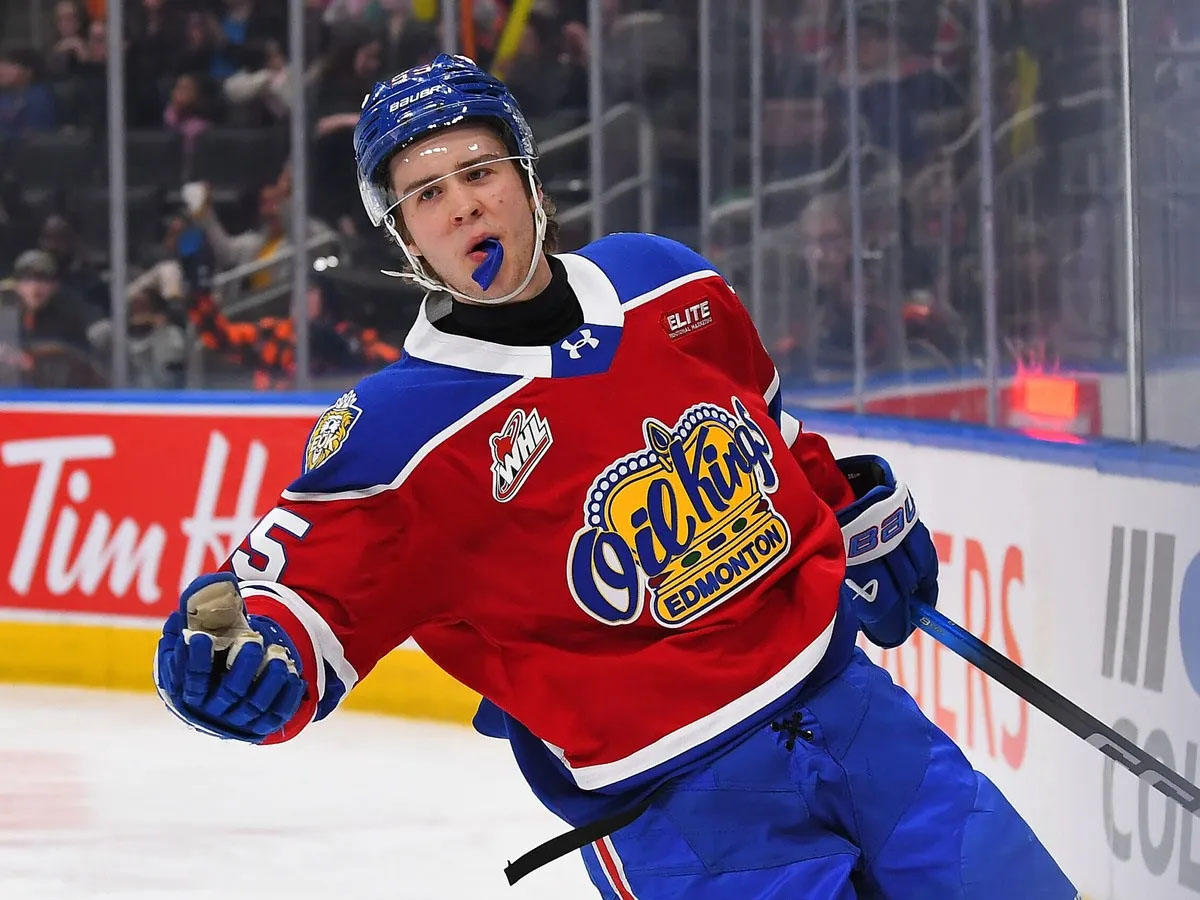
Lukas Sawychn - Wing - Edmonton Oil Kings
In his second season in the WHL, Lukas Sawchyn has taken his offensive skill game to the next level. His puck handling and shifty skating make him a handful for defenders across the league. Sawchyn’s game is about creating openings in the offensive zone with the puck. He can do almost anything with the puck on his stick and will skate east/west in the zone, coming off of the wall with the puck into the slot for passes or shots. He will drive into the zone carrying the puck with good speed, and then slow down the play to allow himself and his linemates to get into position for scoring chances. Without the puck, he will drive to the slot, get into shooting lanes for one-timers, or look to be a passing option on the back door. Sawchyn will struggle at higher levels for a few reasons. His sub-six foot size will likely always be an issue and despite carrying good weight on his frame, he’s not very strong and gets knocked off the puck frequently. He also develops tunnel vision at times and tries to do it all by himself. His defensive details need a lot of work and his offensive skills aren’t at a high enough level for him to be sheltered on a pro team as a strictly offensive player. He’s a boom or bust prospect. (Adam Tate)
Jonas Woo - Defense - Medicine Hat Tigers
If you're looking for excitement, Jonas Woo is your guy. The obvious knock on Woo is his size, but the 5’10” 181lbs defenceman doesn't let that stop him. He is more than willing to throw big hits and engage physically despite almost always being the one giving up some size in the battle. This season has really been an offensive explosion for Woo. He currently sits at 29 goals and 87 points, which is almost double his previous WHL career high of 43 points. He is very deceptive with the puck and has the speed and skill to beat defenders one on one and he has the ability to beat goalies with his shot. He is committed to Arizona State for the 2026-27 season which I believe will help his development substantially. Instead of being forced into pro hockey, it gives him the opportunity to continue to grow his game in college. With the right development he could potentially play a bottom pair role one day in the NHL and some 2nd power play time, but the most likely scenario for him would be a player who spends time in the AHL with the ability to jump into the NHL when needed. (Mika Burns)
Matias Vanhanen - Wing - Everett Silvertips
Mattias Vanhanen has found a nice home on the Everett Silvertips roster, playing on their top forward line alongside Carter Bear and Julius Miettinen. Not only does he lead the WHL’s top team in points, but he sits second in the entire league in assists while averaging more than one per game. Based off those two stats, it goes without question that his playmaking and vision are the biggest strengths of his game. He’s a skilled, detailed play connector that can thread passes through layers of defensive coverage with acute timing and precision. He’s become the league’s best at moving pucks from the boards to the slot. However, Vanhanen will need to add other dimensions to his game to become a successful professional. While his playmaking is apparent, improving his shot would make more of a threat in the offensive zone and eradicate concerns about him playing a little too one-dimensional. He’s also an undersized player who doesn’t operate with the highest pace or compete level, and he’s not a very physical player. He could fit somewhere as a middle-six play connector at the professional level, but players of this archetype make for tougher projections. (Kyle Dalla Zanna)
Joby Baumuller - Wing - Brandon Wheat Kings
On pace to double his point total from last season, Baumuller is a player who has certainly turned a few heads in the WHL this season. For a sub 6ft player, he has a good level of physicality to his game allowing him to be very effective in a checking role while maintaining his ability to contribute in offence as well. His main offensive weapon is certainly his shot. He has a very heavy shot and a quick release that allows him to be a scoring threat from many different areas on the ice. He has been given a higher offensive role in Brandon this season after they lost Roger McQueen to the NCAA, and Baumuller has taken it in stride. Currently on pace to end the year with 40 goals, he has already doubled his 18 goal total from last season. What many like about Baumuller is that he has other tools that he can use to remain effective if his offence doesn’t translate to the next level. He is more than capable of playing a bottom six checking role and providing energy to his team. (Mika Burns)
Brock Souch - Wing - Prince George Cougars
Coming into the WHL this season from the BCHL, Souch hasn’t skipped a beat and has become an important player for the Prince George Cougars right away. With 71 points in 64 games, Souch has been a key offensive contributor for the Cougars and has been a reliable player in his own zone as well. He isn’t a physical player by any means but he doesn’t shy away from physical contact and has a willingness to engage when he needs to. If he can add some size and strength when he makes the transition to pro hockey, it will go a long way in him staying effective. His skating is something that stands out at this level. He is able to use his speed very effectively and beat defenders wide on the rush. He has good ability with the puck and creates chances for his teammates. (Mika Burns)
Luke Cozens - Wing - Medicine Hat Tigers
Anytime you see the last name of a current or former NHL player, you naturally take a second look. Luke is the brother of former 7th overall pick and current Ottawa Senator, Dylan Cozens. When it comes to players with NHL bloodlines, the reason it can be very beneficial is just by being around someone who has reached the highest level. It doesn’t always pan out, but being able to train with and get advice from someone in the NHL can certainly be an advantage. Being a double re-entry player, Cozens is probably unlikely to get drafted this year but scouts couldn't help but notice the start to the season he had with the Lethbridge Hurricanes. He started out at an electric offensive pace which is something that he didn’t show in his first two seasons in the WHL and caught the eye of many. He was over a point per game pace with the Hurricanes but his offensive production has slowed since being traded to the Medicine Hat Tigers in January. If he wants to be effective at the next level, he will need to continue the development path that he has been on this season. (Mika Burns)
Ethan MacKenzie - Defense - Edmonton Oil Kings
MacKenzie’s draft season was mostly lost to injury, playing only 26 games, and he slipped off of scouts' radars. His draft +1 season didn’t go as well as hoped and he didn’t seem to progress as much as expected. This season, his draft +2 year, he’s put everything together and is one of the most impactful defencemen in the WHL. MacKenzie plays a two-way game, and joins the rush with regularity. His offence has improved greatly and he’s more patient with the puck in all three zones. He creates space for his teammates by carrying the puck, looking to exploit weakness in the opposing team’s positioning. Defensively he has always been a battler and his improved skating has led to better gap play defending the rush. He’s able to get to loose pucks faster and he uses his foot speed to skate pucks out of his zone. He can also stretch passes to his teammates. MacKenzie is a high energy player who lacks elite standout traits but is very good at all aspects of the game. He is a bit smaller for a defenceman but is a physical player nonetheless. The lack of size and standout traits might have his ceiling likely limited to a bottom pairing defenceman at the top level of the game. (Adam Tate)
Savin Virk - Wing - Tri-City Americans
Virk has been about as consistent as can be since joining the Tri-City Americans midway through the 2024-25 season. Even though the team as a whole has struggled offensively during that span he has found a way to show up on the score sheet most games, and he comfortably led his club in points this year. Virk is a clever, opportunistic winger. The puck finds him a lot in the offensive zone because he reads and anticipates the play at a high level, and because he has a knack for going unnoticed in coverage. And when he does get a good look in a dangerous spot he doesn't need much time to know what to do, with quick-strike ability as both a playmaker and a shooter. His shots don't scream off his stick, but he places them with deadly accuracy. The big question with him, though, revolves around how translatable his style and approach actually are to the professional levels. His skating and pace are lackluster, he doesn't drive a ton of play himself, and his defensive impact is negligible. NHL teams are probably keeping tabs on Virk, but they might view him more as a potential free agent signing after he's done college than someone worth spending a draft pick on. (Derek Neumeier)
Landon McFadden - Wing - Moose Jaw Warriors
Sometimes a bad situation can provide an ideal opportunity for an underdog prospect who is booking to make a name for himself. That’s been the case this season with McFadden, who was an afterthought for scouts in his first year of draft eligibility in 2025 but who has since taken a massive leap forward in his development as a member of the moribund Moose Jaw Warriors. He more than quadrupled his points output from the previous campaign, including eclipsing the 30-goal plateau, and as of this writing he’s also the leading scorer for his entire team. McFadden is slippery and elusive offensively. He’s more quick than he is outright fast, and that applies to his hands and his mind as well as his feet. He’s very decisive with his puck touches, and rarely makes the wrong read. These are all essential traits for him, because he is worryingly small and slight, making it easy for opposing defenders to neutralize him once they’ve taken away his space. At this point in time McFadden hasn’t committed to a college program, but he would be very wise to do so, to ensure that he can make the necessary gains with his physical development. (Derek Neumeier)
Josh Evaschesen - Wing/Center - Kamloops Blazers
In his final year of draft eligibility, Josh Evaschesen has made quite a name for himself in his first WHL season. The Kamloops Blazers forward has held a position in their top-six and brings a lot of versatility with his ability to play down the middle or on the wing while being a contributor on both special teams units. Evaschesen is one of four 30-goal scorers on the Blazers and is producing north of a point-per game this season, which is impressive considering he was scoring at less than half of that rate during his previous season in the BCHL. Evaschesen’s shot is one of his biggest strengths. He’s got a quick release off the catch and in-stride and can shoot through defenders off the rush. His two-way game is also sound for this level, and he supports breakouts well. He finishes checks, wins battles, and isn’t afraid to fight for positioning around the net front. At 6’2, he has the size that appeals to NHL teams. Adding another gear to his skating and improving his puck skills will be key to contributing more at higher levels, but there’s a potential bottom-six player here. Evaschesen will continue his hockey career with RPI next season. (Kyle Dalla Zanna)
Yaroslav Bryzgalov - Wing - Medicine Hat Tigers
Yaroslav Bryzgalov brings an intriguing combination of physical and playmaking details that could really entice NHL teams in his second year of eligibility. After playing in the USHL the previous season, the 6’4” Belarusian winger is currently slotted in a top-six role on the Medicine Hat Tigers, one of the WHL’s deepest teams. In addition to delivering heavy hits, Bryzgalov leverages his size and physical skills in all situations. He’s relentless in puck pursuits, using his range to win body positioning on puck battles and deliver punishing hits on the forecheck. He’s also very effective at moving pucks off the wall, whether it’s by using his strength to power his way through contact and attack the middle. He’s also one of the more detailed playmakers in the draft, constantly finding lanes through defensive triangles or finding seams to connect passes from the boards to the slot. Skating will need to improve to be a bigger factor at higher levels. While he's good on his edges and uses them to evade pressure in tight areas, he lacks that second gear in his north-south skating, which hinders his speed when he’s on the attack. With his unique toolkit, Bryzgalov projects as a third-line player who is the first guy into the zone doing the dirty work down low to recover pucks, but his detail-oriented connective game could enable him to play higher up a professional lineup with more offensive players. He is committed to Merrimack College for next season. (Kyle Dalla Zanna)
Timofei Runtso - Defense - Victoria Royals
Timofei Runtso has put himself in good position to be one of the first re-entry picks drafted out of the WHL. After playing his draft year in the NAHL, he has emerged as the top defenceman on the Victoria Royals this season after their star blueliner Keaton Verhoeff departed for the NCAA. Ranked as an honourable mention in our latest Top-64 ranking, Runtso is an exciting defender who plays at his best inside the offensive zone. He can command play from the blueline but also has a knack for jumping down the walls or activating down the middle to create opportunities for himself and teammates. He blends skill and deception to shake pressure and has a great eye for finding cross-ice seams and passing lanes. His feet aren’t quite up to par with other prototypical blueliners that push the same high-octane offensive game, but he still moves around the zone well enough to make things happen. Defensively, Runtso remains a work in progress. While he has tightened up his play over the season, he tends to be quite static against the rush, as he concedes the middle too easily on zone entries and misses opportunities to step up and seal attackers down the walls. He can kill plays with well-timed stickwork, but will need to work on his agility, positioning, and physicality to be a more effective defender against tougher competition. Runtso could be a middle-pair defender who could quarterback a power play if everything breaks right for him and he’s able to reach his ceiling. He’s committed to play NCAA next season with Miami University. (Kyle Dalla Zanna)
Dmitri Yakutsenak - Wing/Center - Prince George Cougars
After playing his first season of draft eligibility in Russia’s junior hockey circuit, Dmitri Yakutsenak crossed over to North America and became a mainstay on the Prince George Cougars’ top-six. Currently situated on their top line alongside Brock Souch and Washington Capitals first-rounder Terik Parascak, Yakutsenak plays more of a supporting role. He gets pucks in deep and engages in the corners and along the end boards. He’s got decent playmaking ability and a strong release, and currently occupies the bumper spot on the Cougars PP. Yakutsenak can play both centre and wing, which gives a team flexibility to move him around in their lineup. However, it’s tough to envision what his projection will be, as he lacks any standout traits and characteristics to establish an identity. Even as 6’1 200-pound forward, Yakutsenak has a pretty lanky frame and could afford to add more aggression to play a checking role effectively at higher levels. He could pan out as a bottom-six forward at the professional level. (Kyle Dalla Zanna)
Connor Schmidt - Defense - Moose Jaw Warriors
It has been a difficult couple of seasons for Schmidt, after what looked like a promising start to his career. He was a 1st-round pick (14th overall) in the 2022 WHL draft, and as a 16-year-old he was part of Moose Jaw’s championship-winning team in 2024 (albeit as their seventh defenseman). The Warriors have struggled ever since then, however, and it’s fair to assume that the challenges of his environment had a negative impact on his draft stock and his development. On paper, there are undeniably some things to really like about his game, especially as a right-shot defender. He’s a smooth and agile skater who can explode into space and turn opponents. He’s dangerous with the puck one-on-one, and his goal-scoring ability is well above average for a blueliner of his age. His game has some bite in it at times. And while his actual numbers aren’t overly encouraging, it’s easy to believe that they would have been much better if he played on a roster where he was surrounded with more talent. The best-case scenario for Schmidt’s long-term development is pretty enticing, so a team could be handsomely rewarded if they grab him with a late-round pick and things break just right for him. (Derek Neumeier)
Andrew O’Neill - Center - Edmonton Oil Kings
Moving from the USNTDP program to the WHL this season, O’Neill joined the Oil Kings and immediately filled a team need for a right-handed centre with size. As the season progressed the team has used him as a key component in the bottom six of their lineup, as well as both penalty kill and second unit power play situations. O’Neill’s a bigger forward who skates well for his size. His acceleration is better than expected and he surprises opposition players with his ability to get to areas of the ice quickly. That short area speed helps to make him an effective penalty killer and he defends space well. He also uses that speed, along with an active stick, to create counter attacks on the penalty kill, stealing pucks from point men and sprinting down the ice on breakaways. In the offensive zone he’s an effective forechecker, getting to defencemen along the end boards quickly. Once there, he’s more than willing to finish defenders with hits. The weaker areas of O’Neill’s game are in his offensive play. He has a good wrist shot but it’s not always accurate. He lacks offensive creativity and is a north/south skater who doesn’t handle the puck all that well. His lack of offensive skill likely makes him a fourth line energy forward with penalty kill utility at the pro level. (Adam Tate)
Kayd Ruedig - Defense - Everett Silvertips
Someone who jumped onto my radar early on this season was Kayd Reudig. Starting the year in Portland before being traded 10 games in, he really started to catch my eye while he was playing for the Kamloops Blazers. He was the quarterback on a very effective powerplay and it was impossible not to notice some of the offensive ability that Ruedig has. His skating immediately jumped off the page to me as his main strength on the ice, he is a very smooth skater that is able to be shifty with the puck as well as retrieve pucks effectively under forechecking pressure. He also sees the game well and is able to find lanes and make plays that many defencemen at this level can’t. His defensive zone isn’t a liability, but it will need some improvement as the competition gets better at the next level. Gaining more strength will be key for Ruedig and allow him to win more of those battles in the defensive zone and start the offence going the other way. (Mika Burns)
Tobias Tvrznik - Goaltender - Wenatchee Wild
Tvrznik made a huge statement in his WHL debut (and North American debut) by turning away 60 of 63 shots that he faced, and in the six months since then he has more than proved that his opening-night performance for Wenatchee wasn't a mere fluke. The Czech import has seen a mountain of additional rubber since then (11 games of 40 shots or more, and an average of roughly 35 per game), yet he has managed to remain remarkably consistent and efficient, earning him a lot of praise and respect among scouts. In many ways Tvrznik already looks the part of an NHL goaltender: he has filled out most of his 6-foot-4 frame, he wears pretty large equipment, and like many of the world's top netminders, he utilizes a straightforward and square blocking technique that lets his size do most of the work and doesn't burn up a lot of energy. Like all teenage goalies there are still things that he needs to work on — namely, his lateral movement and ability to reset to face secondary chances — but he has a better and sturdier foundation in place compared to almost all of his peers. Tvrznik could get picked pretty high in the 2026 draft because he checks off a lot of important boxes that teams look for in a goalie. (Derek Neumeier)
Michal Orsulak - Goaltender - Prince Albert Raiders
Orsulak’s play for various Czechian national teams until this season has been spotty and may have contributed somewhat to his being passed over in last year’s NHL Draft. There can be a bit of an overreliance on judging goaltenders based on their play in these tournaments. What scouts saw was a goaltender who struggled with puck tracking and played smaller than his 6’2” frame, often going down into the butterfly too early and exposing more of the net than he should. Orsulak joined the WHL this season, and while he’s in a good situation with a good team, his play has also been a strong contributor to Prince Albert’s record. There has been clear improvement in his ability to read plays and track the puck. His play reading, patience, and anticipation, has him staying on his skates longer and he doesn’t go into the butterfly as quickly as he used to. His positioning has also improved with better play reading, which in turn has helped his rebound control. His skating has always been good and he moves well for a larger goaltender. At this point, it wouldn’t be surprising to see Orsulak develop into an AHL starter with a good chance of being an NHL backup. (Adam Tate)
Kadon McCann - Center - Medicine Hat Tigers
McCann isn't the type of player whose counting stats will jump off the page at you, but that's okay, because that's not where the strength of his game lies. He’s a shutdown center first and foremost, specializing in killing penalties and handling important defensive matchups. Playing on the powerhouse Medicine Hat Tigers has usually kept him lower in their lineup, though that’s not a bad thing, because it’s helping train him for the kind of role that could be his calling card for playing in the NHL one day. McCann certainly has the right tools for the type of job that he does. He’s fairly big and fairly strong, with a willingness to get his hands dirty and stick up for teammates. He moves around the ice reasonably well. He’s reliable in the faceoff dot, taking lots of draws on the season and winning more than half of them. And don’t look now, but he’s even scored over 20 goals, primarily because he plays hard and battles to get to the net in the offensive zone. There really isn’t a lot else to say or write about McCann because he’s such a straightforward player, but that won’t stop NHL scouts from finding him appealing to some degree. (Derek Neumeier)
Keets Fawcett - Wing - Regina Pats
Fawcett put himself on the radar of scouts with an impressive debut as a WHL rookie with the Calgary Hitmen in 2023-24, but didn't quite do enough to actually get himself drafted. He then got off to a slow start the following year, and a mid-season trade to the rebuilding Regina Pats made the situation worse, not better. Things were starting to look dire for his NHL chances, but the arrival of two budding young superstars in Maddox Schultz and Liam Pue has revitalized the entire Pats roster, with Fawcett being the biggest individual benefactor. The newly-20-year-old winger is legitimately dangerous, and sometimes even electrifying, when the puck is on his stick. He oozes confidence and vision offensively. He's pacey and can make plays with the puck at full speed, but he's also very adept at abruptly stopping up and slowing things down to create different options for himself. While he is a little lacking in terms of size and strength, he makes up for it by playing with a lot of intensity and focus. Fawcett is committed to Bowling Green University for next season, where he will have a great opportunity to claim a scoring-line role and continue his offensive development. (Derek Neumeier)
Matyas Man - Defense - Prince Albert Raiders
A big change of scenery can sometimes do wonders for a prospect's draft stock, and Man is a great example of that. After going unselected in back-to-back seasons playing in his hometown of Ostrava, Czechia, he made the decision to travel roughly 7,400 kilometers to Prince Albert to join the WHL's Raiders, a choice that is already paying dividends for him. Not only did the switch help him play his way onto his nation's World Juniors roster, his current club is primed for a deep playoff run, with both situations putting him in the sightlines of more scouts than ever before. Man is something of a throwback defenseman. He's tall and menacing, with no qualms about using those natural gifts to his advantage. His approach is all about disrupting opposing players as much as possible in his defensive zone, whether that’s getting his stick on pucks using his long reach, or using his hulking frame to block shots or wrestle opponents away from scoring areas. Crucially, his skating and puck-moving abilities are adequate for a guy of his size and style — definitely not great, but not so bad that they’re a serious liability. Man wouldn’t ever be anything more than a bottom-pairing defender at the NHL level, but he has a realistic chance of reaching that point. (Derek Neumeier)
QMJHL

Niko Tournas - Wing - Moncton Wildcats
Tournas is an overage winger whose path to the draft has been unconventional but increasingly promising. After a quiet stint in the USHL, he found his footing with a strong season in the NAHL, earning renewed attention. A smart pickup by Moncton Wildcats, he rewarded that opportunity by finishing sixth in league goal scoring, validating the organization’s belief in his late-blooming potential. He offers an appealing blend of size, skating, and scoring touch. Tournas protects the puck well, finds soft spots in coverage, and consistently positions himself as a shooting option. His stride is powerful and deceptive, enabling quick speed generation, and his shot is notable for his velocity, accuracy, and release. He excels on the power play from the half wall and contributes across all three zones, using reach and physicality to disrupt plays. His offensive habits—quick puck movement, cycling, and net-front presence—furthers enhance his value. Areas for improvement include inconsistent pace and effort during shifts, and defensive positioning that needs some refining. While his ultimate outcome is uncertain, he projects as a potential middle-six winger with power-play usage. Tournas is likely to be drafted in the mid-rounds, and even if not, he has a toolkit that should earn him a signing or camp invite. (Joey Fortin Boulay)
Philippe Veilleux - Wing - Val-d'Or Foreurs
Philippe Veilleux has taken big steps in his development since last season. After being passed up in the draft by NHL teams, the skilled winger is not only leading his team by almost 30 points this season, but is also currently second in the entire league with 95 points. Only turning 19 in late March, we have seen Veilleux take his offensive skill set to a next level. He has been showing great poise with the puck and seems in full control of the game at the QMJHL level, timing passes perfectly as his opponents commit with their stick. His shot has also been finding the back of the net all season, with most of his goals coming from precise shots in the slot rather than deflections or rebounds. Veilleux has always been an agile skater, using edges to display his fluidity, but the overall pace of his game has always been limited. While it has gotten better this year, he will still need to improve in this area in order to potentially reach the NHL level one day. (Jeremi Plourde)
Nathan Lecompte - Center - Chicoutimi Saguenéens
Nathan Lecompte has been one of the many offensive forces playing for Chicoutimi, the league leaders in goals. The small forward has been producing at above a point-per-game pace, with 62 points in 59 games. He finds most of his goalscoring success right next to the net, as he has mastered the timing of corralling and releasing loose pucks right in the slot. He is also quite strong on the rush, as he consistently plays with one of the highest pace in the league. His highly energetic style of play allows him to adjust his passing angles rapidly enough to be a great playmaker for his teammates, notably Lefebvre, Guité and Massé, who are skilled finishers. Lecompte doesn’t necessarily have the best vision or play selection, but understands his role well. If he builds on the goalscoring aspect, he could find a role in the NHL as an energetic, down the line-up, intense small forward. (Jeremi Plourde)
Marek Daníček - Wing - Newfoundland Regiment
Danicek earned draft attention after arriving in Newfoundland as a first-round CHL Import selection, following a dominant U20 season in Czechia where he led the league in scoring. He made an immediate impact, producing consistently and securing a role on the Regiment’s top line. He finished second on the team with 74 points and led in goals with 33. A highly skilled forward, Danicek’s game is built on dynamic puck control and creativity. He excels on the power play, particularly from the half wall, where he manipulates defensive coverage, initiates cycles, and creates passing lanes with deceptive movements. He’s equally capable as a shooter or playmaker and he usually supports the rush as a trailing option. While he shows decent defensive awareness, his overall impact at five-on-five is limited by a heavy first-step, lack of pace and an unwillingness to engage physically. Danicek remains a raw prospect whose development will depend on improving skating and physicality. Although projecting him as an NHL player is difficult, his offensive skillset suggests pro potential, likely as a top scorer at the AHL or European level. He may attract late-round interest but is more likely a camp invite. (Joey Fortin Boulay)
Louis Antoine Deneault - Goaltender - Newfoundland Regiment
Now in his third year in the QMJHL, Denault has taken enormous strides in his development from when he came into the league to today. The colossal netminder is just as big now as he was back then, but he couldn't have been more raw and unpolished at the time. It was almost like his game needed to be completely built from the ground up. It's abundantly clear that he has put in the necessary work, though, and he now finds himself as the de facto starter on a Newfoundland team with big plans for the playoffs. The main appeal with Denault is immediately obvious the moment that you first see him on the ice. He's a giant in the crease with a height of 6-foot-8, which puts him in a tie for the tallest goalie in QMJHL history. When he faces shooters head-on pucks tend to get lost in his equipment, and he holds his crease very well against chances in tight. There are unsurprising limitations to his quickness, reaction time, flexibility and dexterity, but these are the areas that he's currently improving, and the good parts of his game mostly outweigh the bad. Denault is undeniably a long-term project, but he's a unique and worthwhile one for a team to take on. (Derek Neumeier)
Kuzma Voronin - Wing - Moncton Wildcats
The Moncton Wildcats have a knack for finding little-known players and help them play at their best to give them more visibility for the NHL draft. For Kuzma Voronin, coming to play for them in the QMJHL this season looks like a terrific bet. Despite currently playing on the third line, Voronin is producing at a rate of slightly more than one point per game. The reason why he is so effective is that Voronin is playing at a very high pace, outskating most of his opponents. He uses his astonishing speed to create space in the offensive zone, where he can generate some offense even at top speed. Yes, his game revolves around his speed, but he is also a tenacious and hard-working player. He is always playing at high intensity, his feet never stopping on the ice. However, even if Voronin is not really a small player, he still needs to improve his strength to win battles for the puck and have his feet more stable on the ice. Some question marks remain with his decision with the puck at high speed, but he has shown this season that he has an interesting bottom 6 potential in him. Will any team take a chance on him in the next draft? (Jer Tremblay)
Shawn Carrier - Wing - Halifax Mooseheads
Shawn Carrier has increased his production significantly from last season, going from 44 to 61 points, playing 59 games in both years. The goal scoring has especially increased, going from 18 to 36. He leads the Halifax Mooseheads in goals and is second in points. It is clear to see why Carrier is finding so much success in the QMJHL. Finally getting first line minutes, he thrives as the Mooseheads’ main puck carrier, beating opponents with a combination of speed and skill. Him finding success in the goal scoring department should not come to as a surprise, as he has always, throughout his career, been able to record as many goals as assists everywhere he played. The reason it took a bit longer in the QMJHL is that Carrier needed to find his rhythm and timing in order to score while going at a higher speed, with less time to pick the perfect shot. He plays with a lot of confidence, and needs to continue on this path in order to find success at the pro level. In the QMJHL, he rarely gets challenged physically on the rush; this will happen a lot more at the pro level. He will need to either get even better skill-wise, or learn how to withstand significant physical pressure. (Jeremi Plourde)
Marcus Kearsey - Defense - Charlottetown Islanders
After a promising and productive draft year with Charlottetown two years ago, Marcus Kearsey was on many draft lists. However, at the draft in 2024, no NHL team took the chance on the 5’11” defender. Then last year was a big step back in Kearsey’s production, finishing the year with only 28 points. It was not the year of Charlottetown, but this season is completely different for the team and mostly for Kearsey. He is on pace to double his previous production and he is currently the fourth most productive defenceman in the QMJHL. His offensive game is mainly coming from his high-level mobility and agility. He possesses a lot of skills and awareness on the ice and he knows where his teammates are and where they will be on the ice. He likes to shoot from the blue line to generate dangerous rebounds or simply to beat the goaltender with smart-placed shots. On defence, Kearsey is way more active with his stick. He reads the plays well and often gets in the way, before starting an attack on the offensive zone. The physical side is not a strength for him even with his size and will probably never be. Teams could be interested in Kearsey for his ability to control the play and make smart decisions with the puck. With further development in the AHL, Kearsey could become an interesting third pair defender. (Jer Tremblay)
Elias Schneider - Center - Shawinigan Cataractes
Here is another European player who chose to come and play in the QMJHL hoping to gain more visibility. Elias Scheider played in the DEL U20 in Germany last year in his draft year season, producing a solid 64 points in 31 games. The Shawinigan Cataractes knew that he could have a solid offensive impact on their team, but he brings even more to the game. He is a smart two-way centre that mostly plays a North-South game. He intercepts a lot of pucks with his active stick and his smart off-puck readings, generating a lot of counter-attacks. He is often involved in the transition, often carrying the puck in the offensive zone when he can use his skills and his playmaking ability to create a scoring chance. He is a very smart passer, always calm with the puck. Although he is lacking some top speed and explosiveness, he makes up for it with good decisions. The only side of his game that needs to improve a lot if he wants to play at a higher level is the physical one. He is often getting outplayed along the boards or pushed away easily from the puck. His level of intelligence could give him a chance to break through an NHL line-up and play some hard defensive minutes on the bottom six. (Jer Tremblay)
Danai Shaiikov - Goaltender - Gatineau Olympiques
Shaiikov has been one of the more intriguing goaltending stories heading into the upcoming NHL Draft. Arriving as a CHL import pick, he quickly seized the starting role in Gatineau and emerged as arguably the team’s most valuable player. On a roster with limited offensive support—where the leading scorer managed just 35 points—Shaiikov consistently kept his team competitive while posting some of the league’s stronger numbers. His game is built on high-end athleticism and quickness. He tracks pucks well, squares to shooters effectively, and displays strong crease mobility. Shaiikov also plays an aggressive style, often challenging shooters and attacking pucks. His competitiveness stands out, as he battles relentlessly through second and third opportunities, giving his team a chance to win on most nights. However, his aggressive approach can work against him. When plays break down, he can scramble, lose control and look completely out of place on rebounds. He’s also slightly undersized as a goalie, which could limit him at the professional level. As a DY+1 overager, Shaiikov’s projection remains uncertain. With improved control, he could develop into a reliable 1B or backup, making him a worthwhile late-round draft consideration. (Joey Fortin Boulay)
Florent Houle - Wing - Sherbrooke Phoenix
Florent Houle has steadily emerged as a legitimate draft prospect, boosting his production to near point-per-game level while ranking second on his team in goals, despite playing fewer games than the leader Thomas Rousseau. His skating has taken a notable step forward, becoming more explosive and adding a new layer to his game. A versatile two-way forward, he is trusted in all situations, even late in games to protect leads. He mostly relies on speed, pace, and effort—he’s a powerful, agile skater who excels in transition and can win races or beat defenders wide. He plays a scrappy, physical style, consistently engaging along the boards and around the net. He’s disruptive in the neutral zone and provides reliable support down low. Offensively, he can move pucks through tight seams and maintain possession under pressure. That said, his offensive game lacks creativity and dynamism, and I’m not sold that it’ll follow to the pros. Also, teams would probably wish he would be a little bigger and stronger for his playing style. Houle projects as a bottom-six checking forward, likely needing a few years in the ECHL/AHL. He could warrant a late-round pick, thanks to his playoff-style traits. (Joey Fortin Boulay)
Liam Lefebvre - Center - Chicoutimi Saguenéens
Liam Lefebvre went from completely unknown by most people last season to a well-established name this year. He has spent the first half of the year with Rimouski, scoring 29 points in 34 games, before being traded to Chicoutimi. His production jumped after this, with 28 points in 22 games, and has even been ranked 70th in the Central Scouting north American rankings. Standing at 6’3, Lefebvre is a lanky center who loves shooting. In any given situation, Lefebvre has his eyes on the net and is looking to be fed the puck for one-timers. His wrist shot release is also amongst the best in the QMJHL. He is particularly dangerous on the rush, using his reach and mobility to push back the defense, then cutting back and looking for a scoring chance or a passing option. Lefebvre also loves to rattle the opposing team with his physical net front game. He has the frame and the shot to turn some eyes in his direction, but will need to continue improving the rest of his game in order to make it to the NHL. (Jeremi Plourde)
Carl Otto-Magnussen - Defense - Saint John Sea Dogs
After playing all of his junior hockey in Sweden, Carl Otto-Magnussen decided to go play in North America in the QMJHL for the 2025-2026 season, before joining the NCAA next year. Starting the year with the Moncton Wildcats, he was traded mid-season to the Saint John Sea Dogs where he is currently playing. Otto-Magnussen might not be a flashy or the most interesting player to watch play the game, but what surely interests the scouts is his effectiveness and his physical potential. Standing at 6’7”, he is literally a giant player on the ice. He has a clear physical edge on everyone and that will not change even at a higher level. On the ice, Otto-Magnussen plays the role of a shut down defenceman, which fits his best attributes. He can be physical along the boards and his big, big range often helps him win puck battles without too much effort or movement. Of course, the biggest issue in his game is his skating and his ease of movement on the ice, but he looks like he is still not used to his own size. If that could change sooner than later and he can improve his stability, a lot of teams could take interest in drafting a big player that can push everyone and play hard. (Jer Tremblay)