


Team Outlook
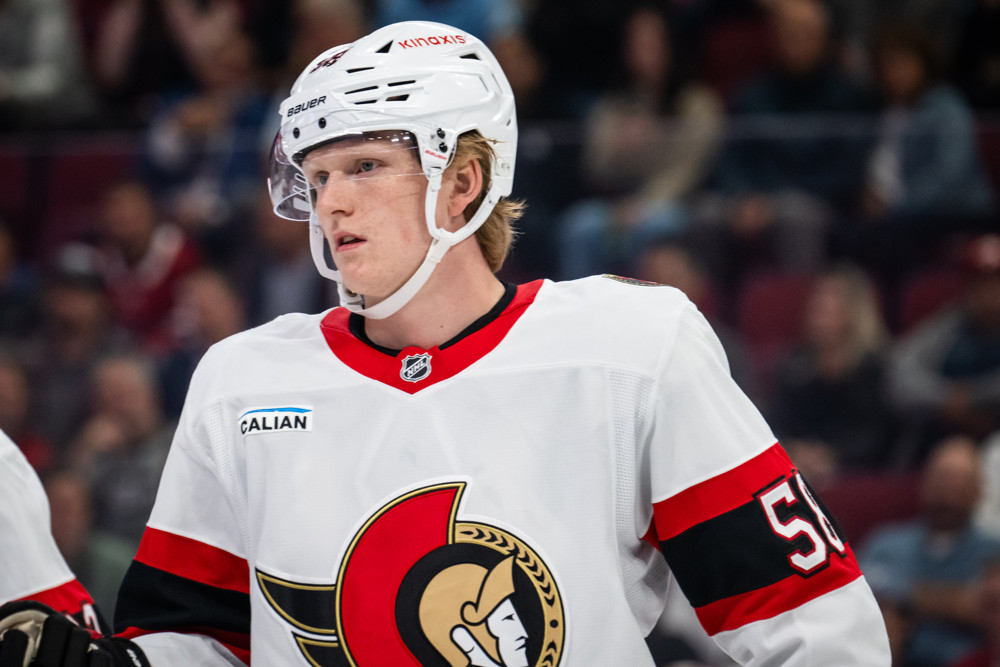
The Senators look to build on their first postseason qualification following the 2024–25 season, their first playoff appearance since 2016–17. They currently sitting outside of a playoff position by six points but appear to be entering a competitive window built around stars in their prime such as Brady Tkachuk, Tim Stützle, and Jake Sanderson. With Linus Ullmark providing stability in goal, the organization believes its window can remain open for several years, assuming it continues to draft and develop the right complementary pieces to round out its depth. Below are six candidates that you might want to either buy or sell for your dynasty squads.
Buy Candidates
Carter Yakemchuk, D
Why Buy?
Yakemchuk brings the kind of profile dynasty managers should be targeting from the blue line, size, confidence, and a clear desire to drive offense. After nearly cracking the NHL roster out of camp, his transition from the WHL to the AHL has been extremely encouraging, pushing his projected star potential from 44% to 65%. He attacks space aggressively, is comfortable shooting through traffic, and shows little hesitation jumping into the rush, traits that translate well to power play usage. The offensive instincts have always been the selling point, and early pro results suggest that projection is beginning to materialize.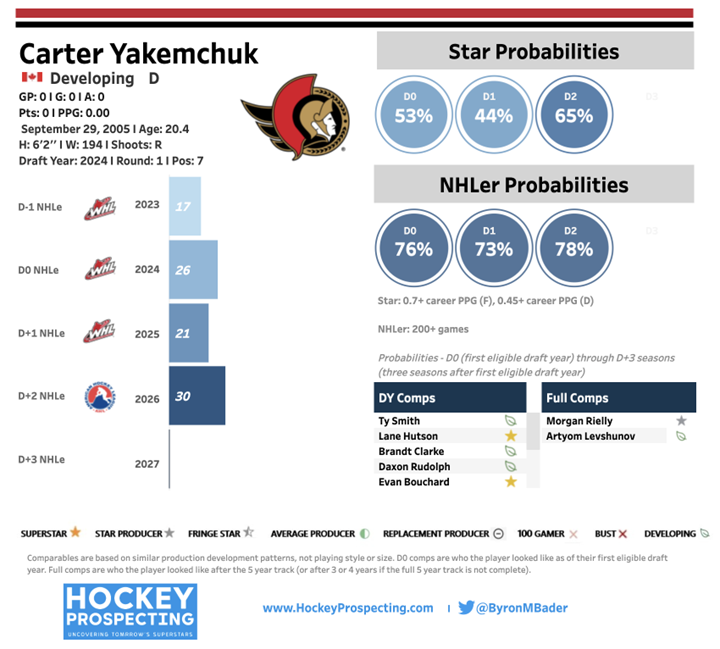
There is still defensive refinement ahead, but Ottawa’s system is actively searching for blue liners who can create offense, which should give Yakemchuk meaningful runway. While Jake Sanderson may command the heavier all situations workload, Yakemchuk’s value is likely to come primarily through power play deployment, a role that could remain available even as the team’s core solidifies. If his reads continue to mature and his risk management tightens even slightly, the fantasy ceiling rises quickly, making this a strong buy window before opportunity and production fully align.
Dmitri Isayev, LW
Why Buy?
Isayev has quietly developed into one of the more intriguing left-wing prospects in Ottawa’s pipeline, built around smart positioning, efficient puck movement, and composed decision making that allows him to impact shifts without needing to dominate the puck. His game leans more toward awareness and timing than pure flash, traits that often translate well as competition increases. After being selected in the fifth round in 2025, he has taken steady steps forward, improving his offensive production at the MHL level while also earning more opportunities at both the KHL and VHL this season, even though most of his development time has still come in the MHL.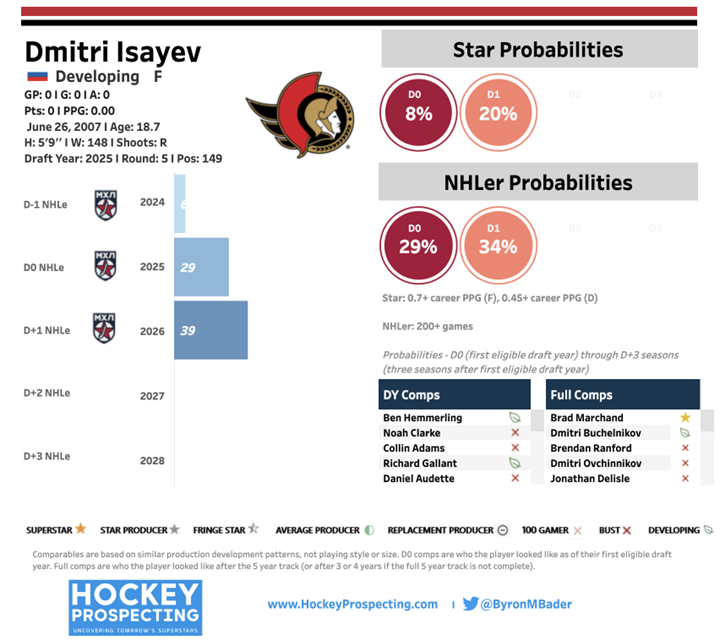
Isayev’s relatively low name recognition compared to other prospects in the system creates a potential buying window for dynasty managers. His Hockey Prospecting star probability has risen from roughly eight percent to 20%, reflecting tangible developmental growth rather than hype-driven momentum. At five-foot-nine, he will need to continue proving he can produce against stronger professional competition, but Ottawa’s ongoing search for depth scoring gives him a pathway if his offensive instincts continue to translate. In deeper formats, he profiles as a speculative addition whose value could climb if his transition to higher leagues keeps trending upward.
Leevi Meriläinen, G
Why Buy?
This season has been awful for Meriläinen. He entered the year as the de facto backup behind Linus Ullmark but struggled badly, with underlying numbers that rank among the weakest in the NHL according to Evolving Hockey. That downturn comes after a 2024–25 campaign where he performed slightly above expected, making the regression even more noticeable. The situation deteriorated enough that Ottawa felt compelled to bring in James Reimer despite him not being on an NHL roster earlier in the year, a clear signal that the organization lost confidence in Meriläinen’s short-term reliability.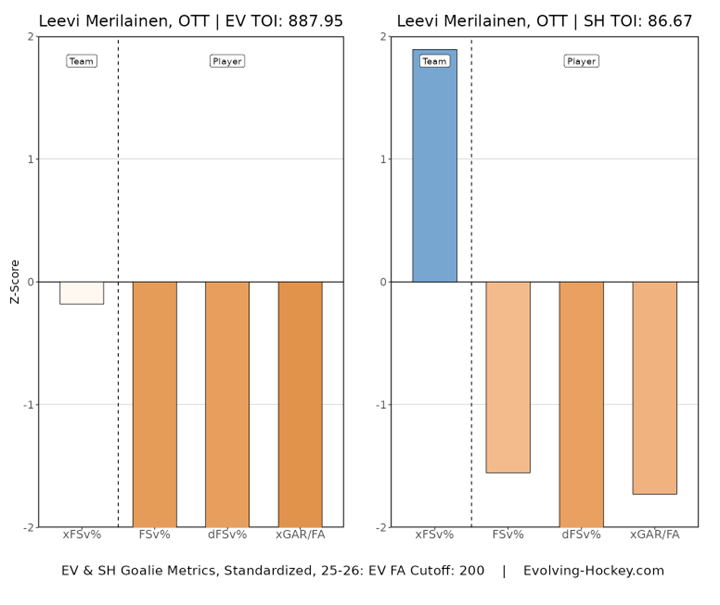
Even with those struggles, Meriläinen still profiles as one of the better goaltending prospects in Ottawa’s system, which admittedly lacks strong competition. Attempts to lean more heavily on Mads Søgaard have not produced consistent results, leaving the door open for a rebound if Meriläinen can stabilize his game. His technical foundation and previous trajectory suggest this may be more of a confidence and adjustment phase than a permanent step backward. With some refinement and a reset mentally, he could work his way back into a tandem role with Ullmark, making him a speculative buy-low target for dynasty managers willing to tolerate volatility at the position.
Sell Candidates
Mads Søgaard, G
Why Sell?
You can see the appeal with Mads Søgaard. He’s huge, and at six-foot-seven he takes away a massive portion of the net simply by being in position. That size, combined with flashes of athleticism, has long fueled optimism that he could grow into a high-volume NHL goaltender if everything clicks. At lower levels, that frame can overwhelm shooters and allow him to survive on reach and coverage alone.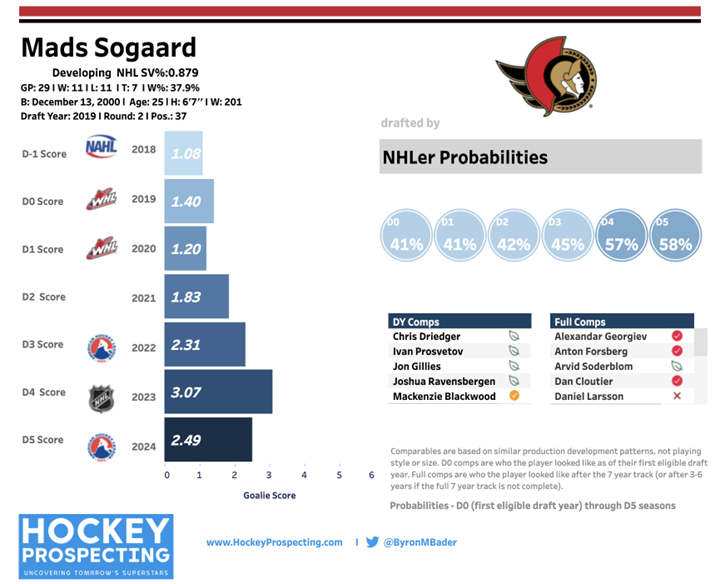
The downside is that his large frame and slower movements can leave exploitable holes against elite shooters. At the NHL level, tracking, rebound control, and recovery speed have remained inconsistent, and Søgaard has repeatedly struggled when facing top NHL talent. Even during stretches of AHL success, the NHL results have followed a similar pattern, and we saw hints of those challenges internationally as well, though one Olympic appearance against a stacked American roster should not be over-weighted. Perhaps someone in your league still believes in the old Hockey Prospecting model projection that gave him a 58% chance of becoming an NHLer, but that probability likely trends much closer to zero now after several failed attempts to establish himself. With Ottawa no longer desperate for goaltending options, this may be a practical window to sell before opportunity becomes more limited.
Logan Hensler, D
Why Sell?
Hensler continues to project as a reliable, well-rounded defender built on skating, positioning, and intelligent reads. He plays a clean, efficient game and rarely looks overwhelmed, traits that should translate to NHL minutes in a real-life role. However, his development curve this season has been relatively modest. His scoring has ticked up slightly at the University of Wisconsin, but not to a level that meaningfully shifts his offensive projection, and his Under-20 World Junior Championship performance did little to elevate his long-term fantasy outlook.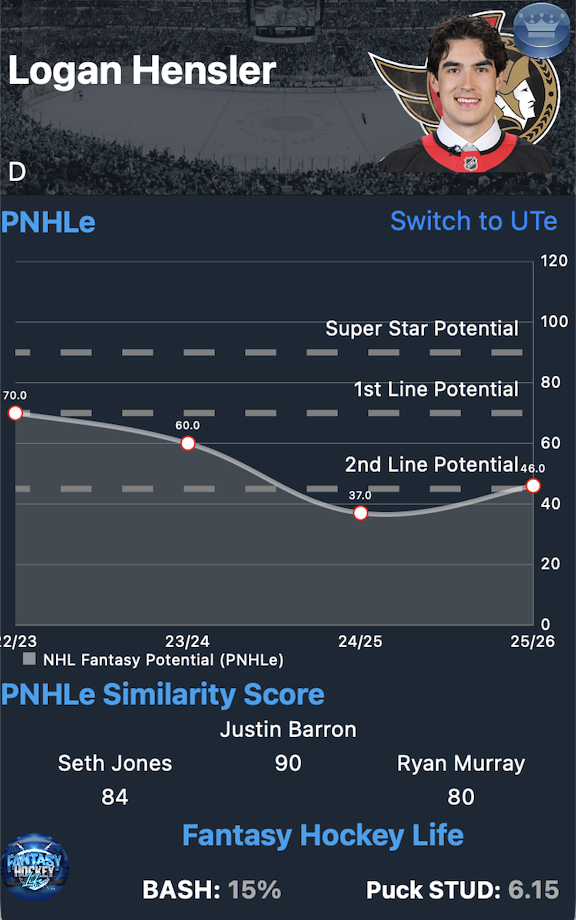
From a dynasty perspective, the concern is ceiling. Hensler profiles as the type of defenseman who may provide stability on an NHL blue line without driving fantasy production. Even using the Rank King application, which tends to inflate defender scoring projections, his pNHLe sits at 46, a number that aligns more with depth defensemen than offensive catalysts. Comparable outcomes like Justin Barron illustrate the risk of waiting for offense that may never fully materialize, though an optimistic projection might see him reach something closer to a Seth Jones-lite profile. If another manager is valuing the strong real-world traits as future fantasy upside, this may be the right window to sell rather than waiting for a breakout that may never come.
Gabriel Eliasson, D
Why Sell?
Eliasson brings a very clear identity to the ice, physical, aggressive, and heavily involved in contact, but the overall profile remains fairly one-dimensional. He racks up hits at a high rate, which can hold value in leagues that heavily reward peripherals, but that physicality often inflates his perceived upside beyond what his overall game currently supports. Too frequently he chases contact at the expense of positioning, pulling himself out of structure and limiting his effectiveness in transition and defensive coverage.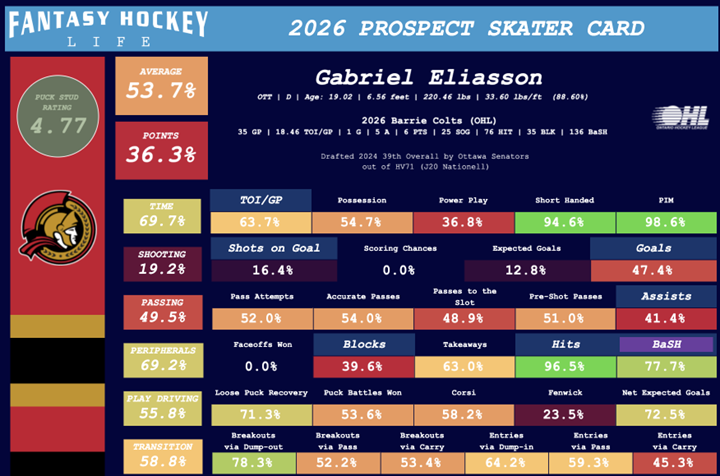
The underlying numbers reinforce those concerns. According to his Fantasy Hockey Life skater card, Eliasson struggles to drive play and contribute meaningfully in transition, even at the OHL level. Without stronger puck-moving ability or offensive growth, his path to consistent NHL usage looks narrow, likely limited to depth roles where fantasy relevance is minimal outside of specialty formats. If another manager is valuing the hits without accounting for the broader play-driving limitations, this may be a good opportunity to move on.
Summary
| Player | Role | Key Insight |
| Carter Yakemchuk | Buy | Offensive defenseman with size and power-play upside |
| Dmitri Isayev | Buy | Small, but crafty forward with upside |
| Leevi Meriläinen | Buy | Composed, technically strong goalie with rising value |
| Mads Søgaard | Sell | Big-bodied goalie with ongoing consistency concerns |
| Logan Hensler | Sell | Reliable defender with limited offensive projection |
| Gabriel Eliasson | Sell | Only valuable in leagues that reward hits and penalty minutes |