


#1 Canada

Projected Starter: Carter George
Projected Backup: Jack Ivankovic
It’s a rare sight to see Canada have both goalies return from a previous year, let alone arguably the second-best goalie tandem at the tournament in 2025. Carter George, while just being an OHL goalie in a tournament of Liiga and Allsvenskan starters, still is the best goalie coming into the World Juniors without much debate. His elite skillset in skating, positioning, and cerebral aspects of the game comes paired with a level of maturity and refinement rarely ever seen in 19-year-old goalies, let alone junior ones. It easily raises him to on par with the best young pro goalies out there; the only problem is that he is signed to the NHL and is still 19 in the Canadian development system. He projects to have a very strong WJC, and as long as his team doesn’t let him down again this year, it’s a strong possibility he can win the goalie of the tournament. Jack Ivankovic would be one of the best starters at the tournament this year, but having to sit behind Carter George means he rides the bench for yet another year. Though he’s good enough to warrant one game, where he will most definitely have a strong outing.
#2 Finland

Photo: Mathias Bergeld / BILDBYRÅN
Projected Starter: Petteri Rimpinen
Projected Backup: Kim Saarinen
The 2025 World Juniors saw one of the most well-built American teams ever in the tournament, face off against Petteri Rimpinen in the gold medal game, the entire backbone of the Finnish team. Naturally, the 2025 best goaltender award-winning Rimpinen looks to defend his throne again this year as Finland’s starter. His athleticism is world-class, and there isn’t really anyone who can touch him at this tournament in that aspect. He’s a high compete goalie who practically stole every win for Finland last year, and despite an extremely well-played finals by the Liiga rookie of the year, the team fell short. While not quite living up to his expectations in his club play this year, following a Liiga top three goalie of the year finalist season as a rookie, it is likely that Rimpinen sees every game in the tournament this year. That’s not to say that Saarinen isn’t a good goalie, though. Saarinen is another fellow Liiga goalie who can play nearly on par with Rimpinen, with an abundant skillset and a much bigger frame at 6-foot-4. However, Rimpinen’s game-stealing ability is unmatched, and Finland will need every bit of it if they want to contend for a medal against Canada, Sweden, and Czechia this year.
#3 Sweden
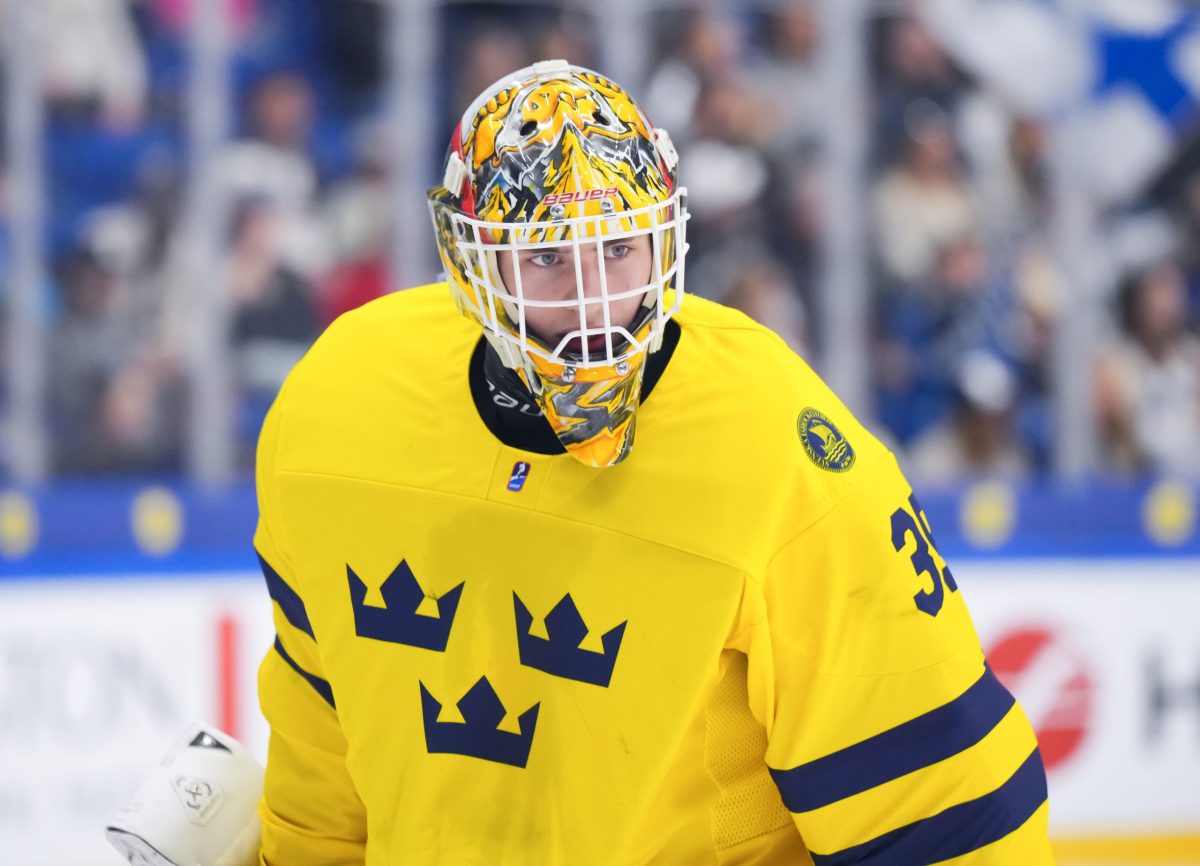
Projected Starter: Love Harenstam
Projected Backup: Herman Liv
All three Swedish netminders for the World Juniors this year are newcomers to the team, with Harenstam and Goos being last year's u18 tandem. However, the undrafted 19-year-old Herman Liv slots in as well and is locked to be at least the backup. Both Harenstam and Liv have had impressive seasons in the Hockey Allsvenskan this year, already making them some of the best goalies and most experienced players at the tournament. Given that Harenstam has been the national team starter for years and has so far seemingly outplayed Liv on one of the worst teams in the league, it appears likely that Harenstam will slot in as the starter for the next two years. Harenstam is an athletic goalie with great mobility, and has greatly improved his cognitive aspects in tracking and play reading, alongside developing a very competitive nature to pair with his athletic prowess. Liv is similar, being well-positioned and boasting solid athletic ability and skating, but may struggle cognitively compared to Harenstam. The gap between the goalies is not great enough for either to have a long leash. Sweden likely will deploy both goaltenders and ride whoever is the hotter one, but it would be hard to make a wrong choice here.
#4 Slovakia
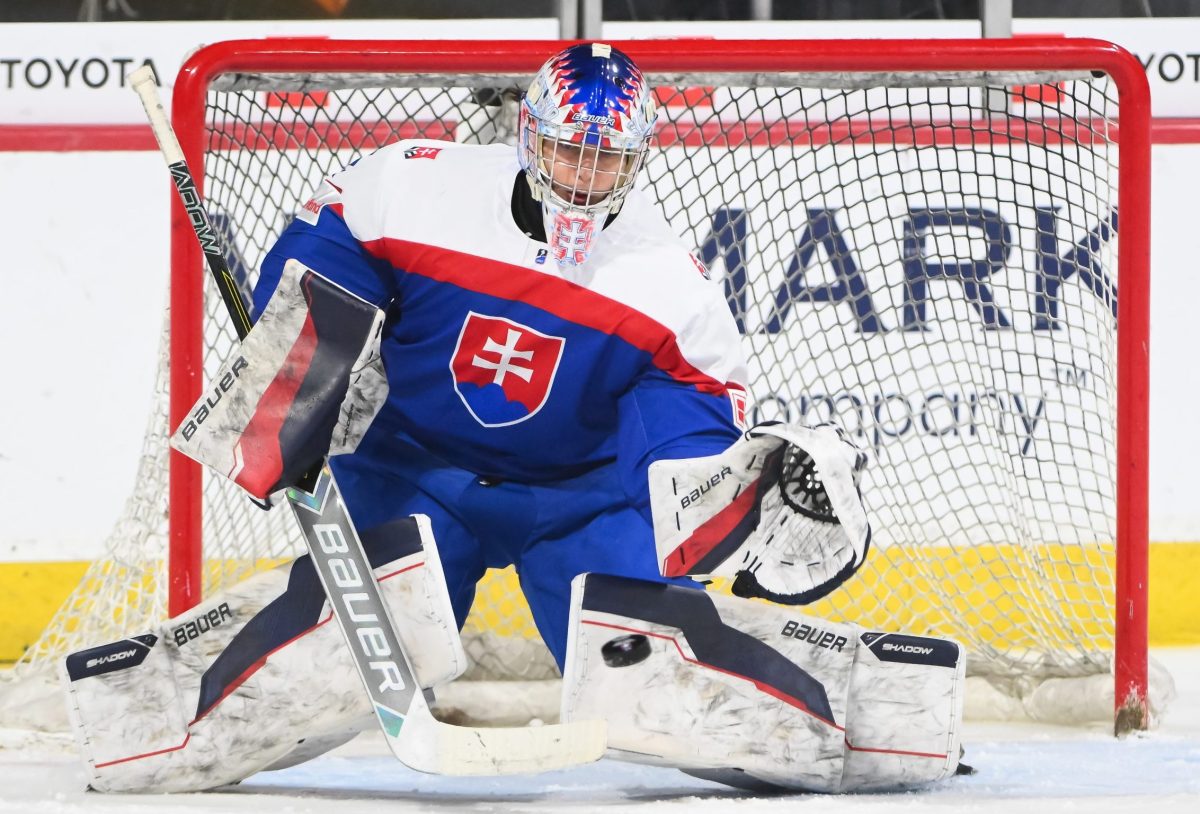
Projected Starter: Michal Pradel
Projected Backup: Alan Lendak
On a rare occasion, Slovakia possesses two very solid goalies who stand on relatively equal footing. While Pradel may be the better prospect as the 6-foot-5 hulk of a goalie drafted in the third round compared to the 6-foot-1 undrafted 19-year-old Lendak, he is still no slouch. Lendak would be considered the more volatile of the two goalies as he is a hyperathlete. Without question, Lendak is one of the quickest and most flexible goalies at the tournament, approaching the likes of Rimpinen and Ivankovic. His game against Czechia last year displayed these qualities despite a four-goal loss. However, getting pulled from his other start, allowing three on five shots, shows the volatility here. In contrast, Pradel plays much slower, focusing on excellent economical proper positioning, backed by a fantastic stance to eclipse the net, and very good play reading. However, while improved, Pradel’s athleticism is lacking compared to some other WJC goalies, and he doesn’t possess elite skating either. Both are great goalies, having respectable USHL seasons, where Pradel is one of the top starters in the league. But, it wouldn’t be out of the box to see Lendak stepping in as his elite athletic ability could be the X-factor needed to steal games if he gets hot.
#5 Switzerland
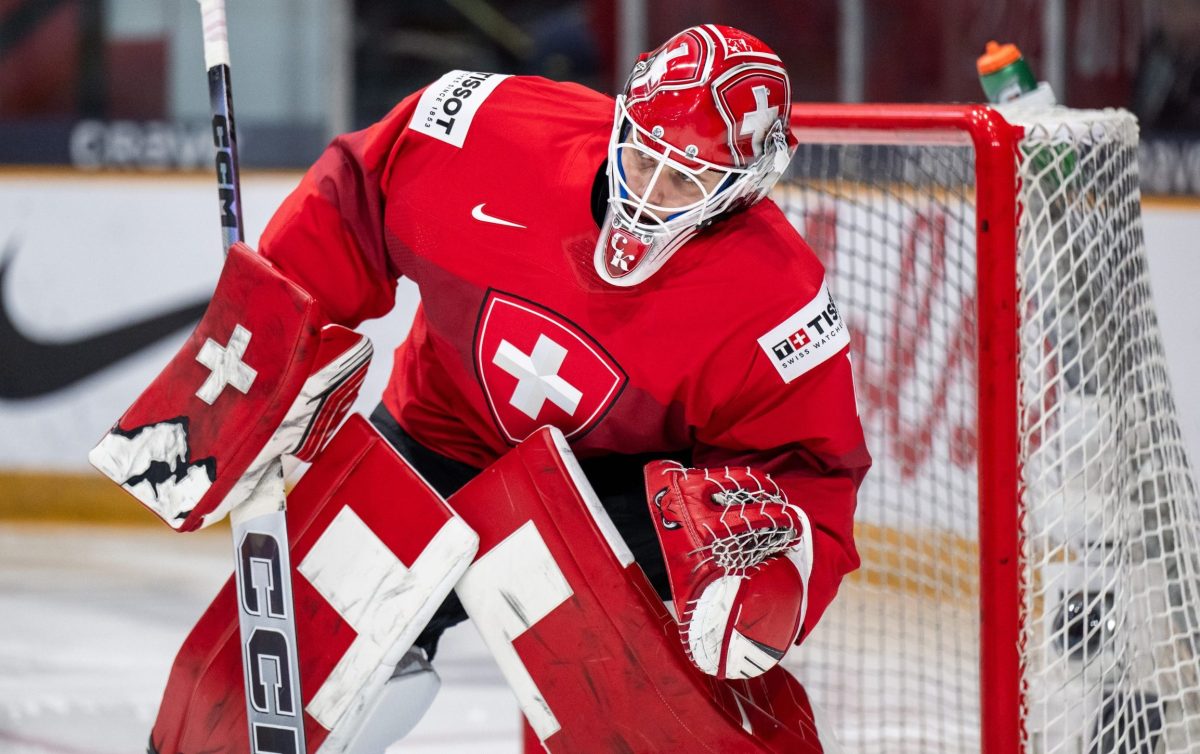
Photo: Mathias Bergeld / BILDBYRÅN
Projected Starter: Christian Kirsch
Projected Backup: Elijah Neuenschwander
It is improbable that there has ever been an era of young Swiss goaltending as good as it is now. Kirsch and Neuenschwander are both returners from last year, and both fourth round draft picks to the NHL. They bear similar skillsets, being large goalies at 6-foot-4, highly athletic, with not a ton of calmness and refinement to their games. At last year’s tournament, it was a rough showing for the Swiss goalies, even when accounting for their team, or lack thereof. But Linards Feldbergs proved that it is possible to play well and even steal a game or two, even on a terrible roster. This year, both goalies have made improvements in their games, as Kirsch has grown into a good starter for Kitchener, leading them to one of the best OHL records. While still not a very good team, the goaltending from Switzerland could very easily lead the squad to several wins, with a likely win coming against Germany, and potentially even some upsets against weaker American and Slovakian teams. These high-risk, high-reward, athletic goalies could either crash and burn alongside the team or rise to the occasion and shock the world.
#6 United States
Projected Starter: Nick Kempf
Projected Backup: Caleb Heil
The United States recently have been tearing up the world juniors and sported three different goalies with the likes of Trey Augustine, Jacob Fowler, and Hampton Slukynsky, all three are blue-chip NHL prospects. Now the task falls to Kempf and Heil, who are not bad goalies by any means; it’s just unfair to compare them to their predecessors. Kempf slots in as the likely number one, being an NCAA starter, with Heil, the USHL goalie, likely backing him up. Both are similar goalies, on the shorter end, being good skaters, and decently refined. Kempf is categorized as the more athletic goalie with a high compete level, whereas Heil is much more centred on efficient skating, depth, and overall quickness. However, both can really struggle with their hands and get picked cleanly pretty easily. Neither goalie has necessarily put together a great full season statistically in junior, but both goalies are still good enough to be at the tournament, with Nick Kempf especially, potentially having the ability to steal games given his motor and athleticism. It will be an uphill battle for the United States to win a medal, let alone gold, and it will all come down to the play of these two in net.
#7 Czechia
Projected Starter: Michal Orsulak
Projected Backup: Matyas Marik
With Jakub Milota out with an injury, the reins should fall to the undrafted 18-year-old Michal Orsulak to steer the Czechian team. While coming up short at last year's draft, Orsulak is by no means a bad goalie or prospect. At 6-foot-4, he is one of the most flexible goalies at the tournament, being able to deploy in a low and wide stance while maintaining a high degree of power and mobility, a rare trait, giving him a significant advantage in tight and down low. He has also seemingly cleaned up his erraticism quite a bit, learning to control his body much better as he has developed into one of the premier starting goalies in the WHL. However, he has his faults, specifically with his hands, as he can get beaten cleanly far too often, making him volatile against the likes of good shooting teams. But given how Marik was initially the third option as Milota was rostered before being ruled out with an injury, subsequently leading to the addition of supposed fourth option Ondrej Stebetak, it’s highly likely that Orsulak will see most, if not all, of the games. Czechia boasts a very strong roster this year, and Orsulak should be good enough to win them a medal as long as his hands don’t become too much of a problem
#8 Germany
Projected Starter: Linus Vieillard
Projected Backup: Lukas Stuhrmann
One of the more under-the-radar goalies from last year's tournament was Linus Vieillard, the then 18-year-old undrafted goalie out of the German U20. He sported a .915 save percentage in 3 games and had an unequivocally excellent performance against Finland. He’s a small goalie who plays very narrowly, but he possesses good skating, quickness, and a very quiet playstyle with athletic abilities that shouldn’t be scoffed at. He isn’t a dominant goalie in any one area, but he also doesn’t possess too many major weaknesses outside of his smaller stature and narrow-framed stance, which has made him susceptible to mid-to-high shots to the outside hands. Behind him is Lukas Stuhrmann, who by no means should be a write-off on the scouting report, should he get into games. He is similar to Vieillard in nearly every aspect, being short, a good skater, quick, pretty quiet, and having solid athleticism. Nothing jumps out at you watching Stuhrmann, but he's shown he can be very capable at a junior level without too many weaknesses, besides, again, the undersized and very narrow gloves issue. Both goalies are good enough that Germany should stave off relegation for yet another year.
#9 Latvia
Projected Starter: Nils Roberts Maurins
Projected Backup: Mikus Vecvanags
Last year’s Latvian team was highlighted by the legendary performance of Linards Feldbergs, who stole a game from Canada. Unfortunately for Latvia this year, their goalies don’t seem to be able to fill in the large shoes Feldbergs left. The starting role is really up in the air this year, and it could realistically be any of the three goalies. Mikus Vecvanags is an NHL draft pick; however, he has been struggling mightily in the North American junior scene, not having played a game in the QMJHL since November 21st, with no report of an injury. Vecvanags has a solid frame and stance at 6’3 and is a decent skater on his feet and an athlete. However, his rebound control is erratic, and he’s had issues with angling, tracking, and compete. Nils Roberts Maurins, from the USHL, is probably the fastest and best skater, who has a great frame, but lacks control and is inconsistent in the butterfly. Ivans Kufterins, the WHL goalie, is probably the better athlete of the three and definitely plays with intensity and speed, but has less control over his body, making his movements and decision-making erratic. We very well could see all three goalies make appearances, with the true starter being picked at the end of the tournament. Their expectations are to just survive.
#10 Denmark
Projected Starter: Anton Emil Wilde Larsen
Projected Backup: Patrick Tiedjen
The starting goalie for Denmark realistically could go to nearly anyone, but Anton Emil Wilde Larsen has appeared in more international games this year and was the U18 D1A starter last year, as well as several games in the top Danish league, making him the probable starter. The 17-year-old goalie Larsen, like his other two counterparts, has been playing in the second-tier professional league, which houses no tracked goalie data on elite prospects. However, it has been found that Larsen has played in 19 games across both leagues and has amassed just one win. The very first game of the season. Hopes, understandably, are not skyrocketing high for this Danish squad, but a draft-year starting goalie is always of intrigue. Despite the obvious lack of results from Larsen's club season (including a game with 13 goals against), he doesn’t seem to be an irredeemable goalie. He has a good frame, has a solid understanding of positioning and tracking, and appears to be a solid skater and athlete as well. It’s not off the table that we see all three Danish goals make an appearance this year, but if Larsen can display even a little talent facing 50+ shots a night, a North American junior team might come calling.