


McKeen's Hockey: Dynasty Stock Watch
Montreal Canadiens Edition
Team Outlook
After their surprise run to the Stanley Cup Final in the COVID-shortened 2020-21 season, the Canadiens missed the playoffs for three straight years before returning in 2024-25, where they were eliminated in the first round. Now, Montreal appears to be entering its true competitive window, with Nick Suzuki and Cole Caufield in their prime years and a new wave of emerging talent led by Ivan Demidov, Lane Hutson, and Jacob Fowler. The prospects in this system will either push their way into that core or develop into important supporting pieces as the Canadiens work toward their 25th Stanley Cup championship.
Buy Candidates
Michael Hage, C
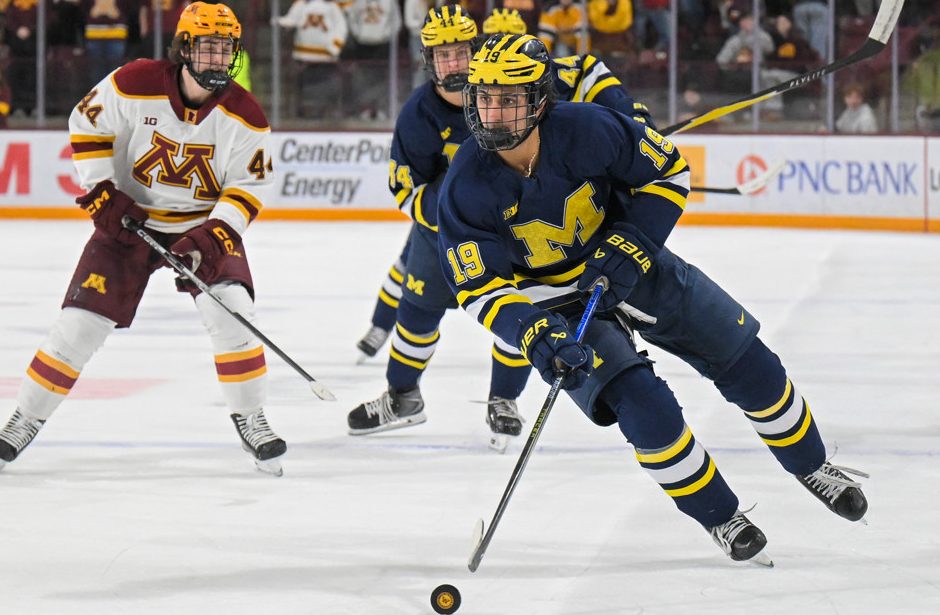
Hage has emerged as the best long-term center prospect in Montreal’s system. His game is driven by strong skating and high-end offensive awareness, allowing him to push pace through the neutral zone while consistently identifying and creating scoring opportunities. He processes the game quickly and uses subtle puck movement to manipulate defenders, traits that have translated into a standout NCAA season where he currently ranks sixth in points per game and has helped lead Michigan to the number one ranking in the country heading into the Frozen Four.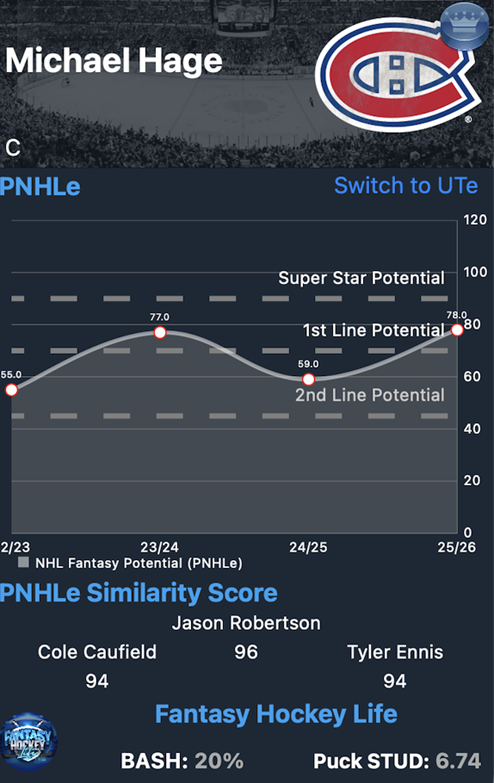
His pNHLe has climbed to around 80, suggesting legitimate top-six offensive potential, even if that level may come in peaks rather than sustained production. The bigger question for Montreal is whether Hage can solidify himself as their long-term second-line center, a role he is currently the best internal candidate to fill. While his development will still require patience, his trajectory, production, and underlying tools point to a player whose value could continue to rise, making him an appealing target in dynasty formats if there is still any skepticism tied to his timeline.
Alexander Zharovsky, LW
Zharovsky brings one of the more exciting offensive skill sets in Montreal’s pipeline, combining high-end puck handling with excellent edgework to create separation in tight areas and generate chances both off the rush and in sustained offensive-zone play. His creativity and ability to manipulate defenders make him a constant offensive threat, though like many skill-driven wingers, his long-term success will depend on continuing to refine his decision-making and consistency against higher levels of competition.
After not appearing in the KHL last season, Zharovsky has broken out in his draft-plus-one year with Salavat Yulaev Ufa, posting 41 points in 58 games, the top point-per-game mark among teenage players in the league. That performance has fueled a dramatic rise in his Hockey Prospecting profile, with his star probability jumping from 18% to 48%, a rare leap that signals legitimate upside. With that kind of trajectory, he is quickly becoming one of the more appealing high-upside targets in dynasty formats and a prospect worth investing in before his value climbs further.
Bryce Pickford, D
Pickford is in the midst of an excellent draft-plus-one season, currently leading WHL defensemen in points-per-game for the Medicine Hat Tigers. His production has been backed by strong underlying metrics, as his Fantasy Hockey Life skater card highlights strengths across play driving, transition, and puck battles, pointing to a well-rounded offensive profile rather than just inflated scoring totals.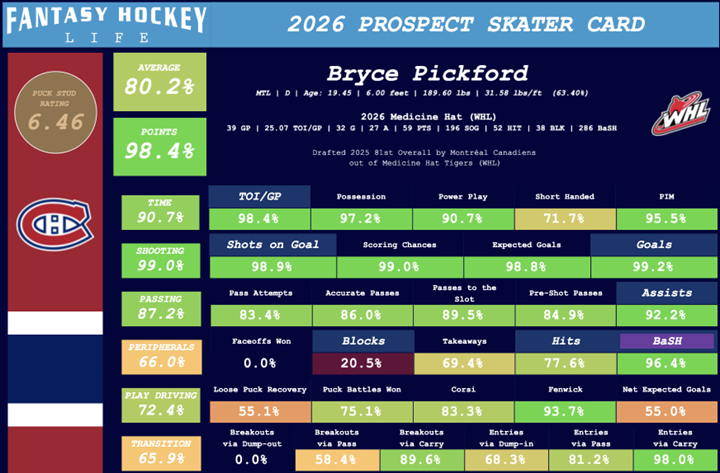
He stands out as an offensive-minded defense prospect whose style translates well to fantasy formats. Pickford consistently activates into the play, joins the rush, and looks to create shooting lanes from the blue line, using his mobility to stay involved while maintaining enough defensive structure. If that offensive confidence and versatility carry over to higher levels and he earns power-play deployment, he has the potential to become a fantasy-relevant contributor from the back end.
Sell Candidates
David Reinbacher, D
Reinbacher is still widely viewed as one of Montreal’s safest defense prospects, and for good reason. He plays a composed, efficient two-way game, defends well, moves the puck cleanly, and brings the size and mobility NHL teams want in a top-four blueliner. He should help the Canadiens play more structured, reliable hockey as he matures, which gives him clear real-life value within the organization.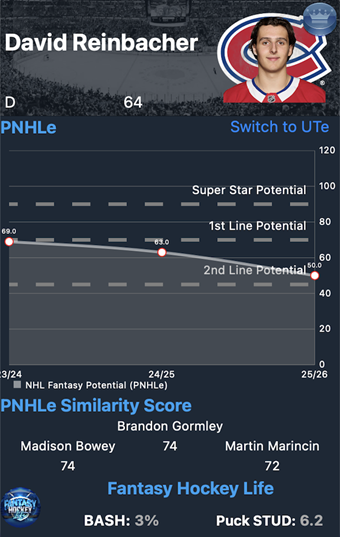
For dynasty managers, though, the concern is his offensive ceiling. Reinbacher’s game is built more on stability and efficiency than high-end creativity, and his pNHLe has trended downward since his draft year. His play-driving metrics in the AHL have also been poor, which adds another layer of concern when projecting his long-term fantasy upside. That does not mean he lacks value, but it does make it less likely that he develops into a strong fantasy asset, especially in formats that do not reward peripheral contributions. If his current dynasty value still reflects expectations of notable power-play production or top-end scoring from the back end, this may be the right time to sell before his profile settles in as a dependable but lower-scoring NHL defenseman.
Owen Beck, C
Beck has built a reputation as one of the more dependable two-way centers in Montreal’s prospect system. His strengths include faceoff ability, responsible defensive play, and strong positioning across all three zones, all traits that tend to earn trust from coaches. He has also been a reasonable producer in the AHL, which supports the view that he can become a useful NHL player. Still, his profile points more toward a reliable, play-driving bottom-six center than an offensive focal point.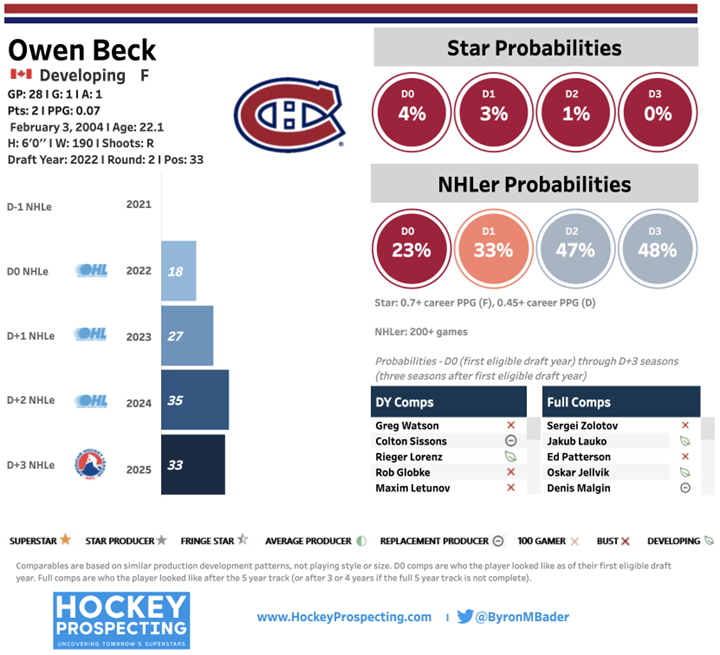
For dynasty purposes, that limits the appeal. Hockey Prospecting gives him a zero percent chance of becoming a star, which may be a little harsh, but its NHLer probability has him at nearly a 50% chance of playing 200 games, a mark that feels realistic. Beck should have real-life value if he becomes the type of center who can drive play, handle tough minutes, and stabilize a lower line, but that role does not usually translate into strong fantasy value unless the league is especially deep. If another manager still views him as a potential top-six offensive contributor, this could be a good time to explore moving him.
LJ Mooney, RW
Mooney is one of the more entertaining skill prospects in Montreal’s system, relying on creativity, puckhandling, and offensive flair to generate scoring chances. He is tenacious, competes hard in every situation, and plays with the kind of energy that makes him easy to root for. His Fantasy Hockey Life skater card also highlights how effective he is in several key areas, especially puck battles won and loose-puck recoveries, which are particularly important traits for a smaller player trying to overcome physical disadvantages. Those details help explain why he has become such an intriguing prospect despite his lack of size.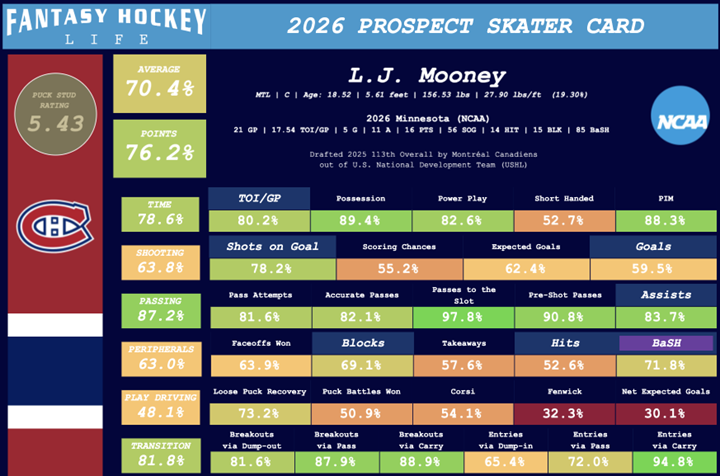
That said, it is still difficult to ignore his stature. At just 5-foot-8, the barrier to entry to the NHL remains immense, and projecting smaller skill forwards into meaningful scoring roles always carries added uncertainty. As the competition gets stronger, faster, and more physical, players who rely on finesse have to consistently prove they can create space and hold up against bigger defenders. I would love to see Mooney succeed, but the odds are still working against him, and if his current dynasty value already reflects a top-six offensive projection, this may be the prudent time to sell while optimism remains high.
Summary
| Player | Role | Key Insight |
| Michael Hage | Buy | Skilled center with strong offensive-driver potential |
| Alexander Zharovsky | Buy | Creative winger with under-the-radar upside |
| Bryce Pickford | Buy | Offensive-minded defense prospect worth monitoring |
| David Reinbacher | Sell | Excellent real-life defender but uncertain fantasy ceiling |
| Owen Beck | Sell | Reliable center whose role may limit scoring output |
| LJ Mooney | Sell | High-skill prospect with significant projection risk |