


In a normal year, scouting hockey is marred by imperfection. Every year high end players get skipped over at the NHL draft for various reasons. Maybe they suffered through injuries. Maybe their team struggled, and it prevented scouts from getting a good read on them. Maybe their team was too good, forcing them down the depth chart with limited minutes and exposure opportunities. Or...maybe they just were not good enough. But thankfully human development is nonlinear and therefore unpredictable. Teenage hockey players are far from a finished product on the ice as their games mature just as the rest of their body and mind do. That is why it is critical to track players as they move through their second and third years of draft eligibility (or fourth years of eligibility for some European players).
For those unfamiliar, North American players with birth dates from January 1st to September 15th, will be eligible for three NHL drafts. Players with birth dates from September 16th to December 31st, will be eligible for two NHL drafts. And for European players (in European leagues), extend that eligibility by one year in both cases. In the last decade, NHL scouts have increased the rate with which they are selecting “re-entry” candidates, or players previously passed over. Contract limits have made it critical for teams to spread out where they select players from, in addition to their age. This has made second- and third-year eligible U.S. and European based players especially attractive. Additionally, CHL players may now be deemed more “intriguing” because of the altered NCAA eligibility rules. NHL teams can draft overage players and retain their rights after they go to College for a few years, expanding their signing and development window. However, these players have had a lot of success in recent years too. Look around the league and you see these players everywhere. For example, Former Calgary Flames, now Utah Mammoth standout defender Mackenzie Weegar was one. Ottawa Senators standout forward Drake Batherson was one. So too was Winnipeg Jets starter Connor Hellebuyck.
Last year, ten “re-entry” candidates went in the top four rounds: Charlie Cerrato, Francesco Dell’Elce, Bryce Pickford, Kristian Epperson, Julius Sumpf, Trenten Bennett, Benjamin Rautianinen, Yegor Borikov, Caeden Herrington, and Zack Sharp. Cerrato was taken inside the top 50. In our “second chances” article last year (Part 1): (Part 2): (Part 3): We wrote about nine of those ten. In total there were 37 taken, which is a bit lower than the recent trend of other drafts (roughly about 20% of all players selected). I would suspect that bounces back this year. Additionally, of those 37, we identified and wrote about 22 (well over half of them) in our aforementioned second chances series. Just like in previous editions of this annual report, we aim to identify more.
In 2026, we have some very interesting candidates. Edmonton Oil Kings defender Ethan MacKenzie was a solid contributor for Canada’s WJC team this past year. Brandon Wheat Kings forward Joby Baumuller has been among the WHL’s leading goal scorers all year. Prince Albert netminder Michal Orsulak has been among the best goaltenders in the CHL this year. Moncton winger Niko Tournas has been among the QMJHL’s leading goal scorers all year. Russian defenseman Alexander Sapozhinkov is a massive blueliner who has broken out in the MHL and earned a KHL look. This article intends to highlight them and many other candidates who could be part of that 20% this year.
This is part two of the series, putting the spotlight on those re-entries available from leagues based out of the United States. - Brock Otten
USHL
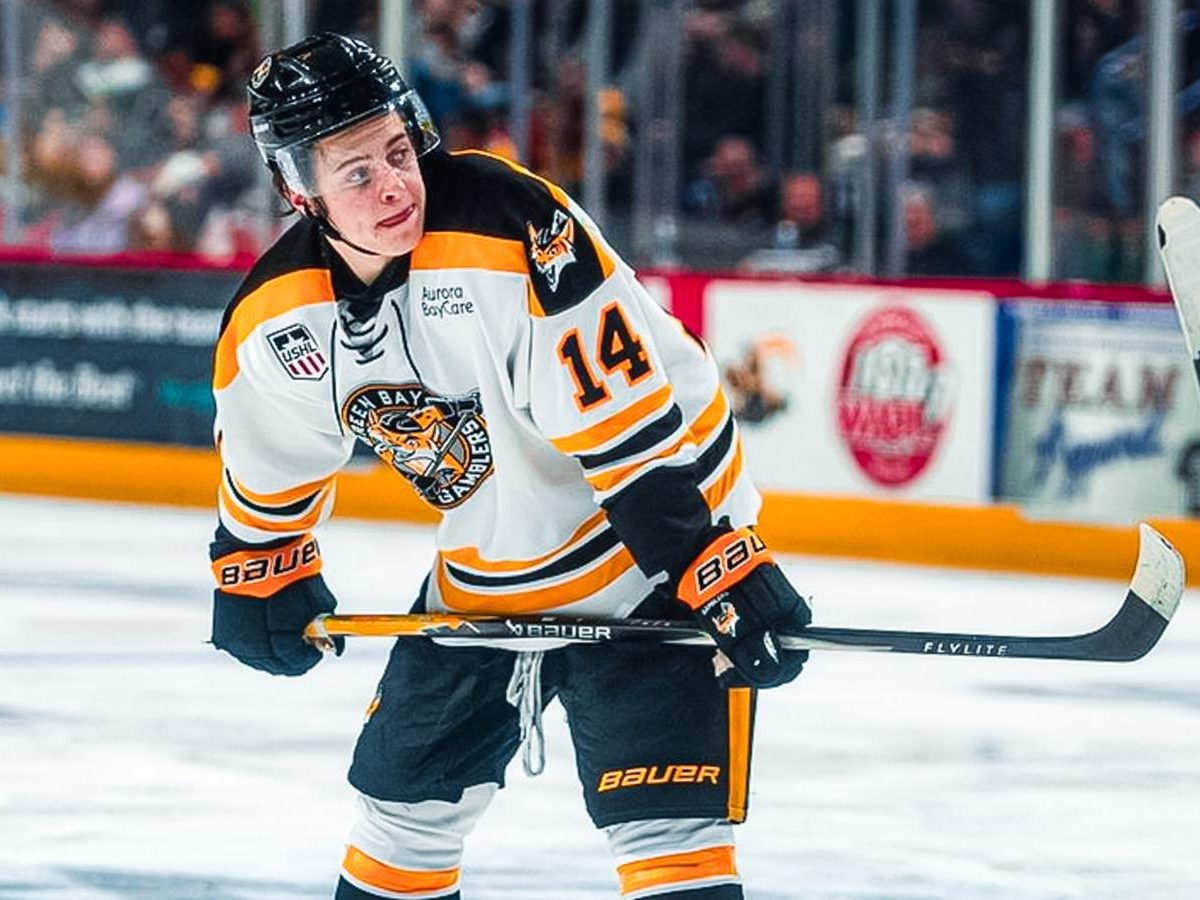
Zach Wooten - Center - Green Bay
Basically, out of nowhere, Zach Wooten has stepped up and quadrupled his point production from his last season with Green Bay. First and foremost, his shot is incredible. Possessing a quick release, accuracy, and nearly 30 goals in his bag, Wooten is a sniper and takes command of the offensive zone and power play. His threat as a shooter also makes him a good passer, being able to fake out defenders and create passing lanes for his teammates. This growth as an offensive threat will be greatly welcomed by the University of Wisconsin next year. Defensively, he is generally okay, he ties up opponents well and is good at chasing down opponents close to him, but his overall involvement and physicality aren’t overly special. Though he has not been listed in Central Scouting’s Mid-Season rankings, he will get a good look sometime later in the draft. Wooten will likely be a college standout who signs as a free agent in a couple of years, with a chance of making an NHL roster. (Linc Zdancewicz)
Justin Graf - Wing - Cedar Rapids
The younger brother of Sharks forward (and UDFA) Collin Graf, Justin was completely off the radar for draft boards in his initial season of eligibility, where he played high school prep hockey. His immediate success has grabbed attention in his D+1 season since joining Cedar Rapids in the USHL, where he has hovered around a point per game. There’s a lot to like about Graf’s offensive game, which is why he leads the RoughRiders in ice time on the man-advantage. As a playmaker, he is patient and crafty, often delaying or using cutbacks to find the perfect passing lane. As a scorer, though he would be considered average as a shooter, Graf has a useful one-timer and is good at burying rebounds. He is also excellent at finding and creating space, especially on the rush. An area for improvement right now is remaining consistently engaged away from the puck, right now his effort seems to ebb and flow a bit with offensive opportunities. A third liner that provides offense is within the range of outcomes for Graf as a pro. (Jamison Derksen)
Shayne Gould - Defense - Sioux City
Despite being undersized at 5’9, Shayne Gould is an exciting offensive defenseman with a great deceptive ability to run a USHL blue line. His low hand on his stick is very low, so low in fact, you can never tell when he will fire a powerful wrister or when he will completely fool you with a pass. Gould also has fantastic hands that allow him to activate lower in the offensive zone and create highlight reel plays. His deceptiveness as a stick handler has made him a very effective puck carrier, especially in transition, though I would want to see his overall decision-making in the neutral zone improve. He is quite averse to physicality, but who wouldn't at 5’9. Gould is committed to UConn and will continue to develop a dangerous offensive game there, though I don’t see enough NHL upside to warrant him being drafted as of yet. An exciting collegiate for sure, but not enough of a battler in his two-way game, but that could change in the NCAA. (Linc Zdancewicz)
Masun Fleece - Wing - Dubuque
After splitting time between the USHL and BCHL last season, Masun Fleece played his entire season with Dubuque in the USHL this year and produced very well. Fleece is quick, chopping his feet to bear down on opposing defenders on the forecheck and when attacking the net on zone entries. Despite being relatively short, he is hard to knock off the puck, partially due to being stronger, but also due to his great puck control and stick handling. Fleece fits the mold of this Dubuque team: fast, annoying in the neutral zone, and relentless. He is still a bit buck-wild when he skates around the ice and can get caught biting too much, but a high motor is almost always seen as a good thing. His main drawbacks stem from his role, he will not be a driver on any line and will mainly operate as a support player. Fleece is committed to Maine in the coming future, and I hope they can round out his overall game as they have done for similar players like Justin Poirier and Miguel Marques. He will find success on an NHL lineup, should everything break right, as a bottom-six energy forward, forechecking, trying to catch defensemen off guard, and playing a fast-paced game. I would not be shocked if a team takes a chance on him this time around. (Linc Zdancewicz)
Graham Jones - Center - Fargo
Jones, in his second year of eligibility, is looking to make his case for being selected in the 2026 class. Previously he played in the USHS ranks with Shattuck St. Mary’s where he was a standout. He had a brief stint in the USHL, but it wasn’t enough for NHL scouts. This year, he played the whole year in Fargo and performed well. His motor is excellent, always moving his feet. His shot is also pretty heavy, and he displays a high-end IQ that allows him to get to the dangerous areas of the ice consistently. However, his frame is an issue, at 5’8” and 165 pounds. Slated to play in the NCAA in the 2027-28 season with Boston College, he has time to bulk up and improve his overall game to overcome the obstacles set by his smaller stature. He is worth a look in the mid-to-late rounds, but NHL teams might pause looking at his size, again. (Kyle Pereira)
Nikolas Young - Defense - Lincoln
Nikolas Young has seemingly come out of nowhere into a huge role on the Lincoln Stars’ blueline this season. Last year, Young rarely saw the ice on the man-advantage and was fourth among Lincoln blueliners in shorthanded ice time. This season however, the newly named captain leads the team in icetime on the powerplay and the penalty kill, while also being leaned on heavily at five on five. The 6’0” defender is competitive in battles and has a strong stick defensively. He relies on efficient positioning as he has some issues with footspeed and can get exposed if he chases instead of letting the play come to him. With the puck on his stick, Young keeps his head up and usually makes the right pass, though he doesn’t really create offense at this point. He will need to improve his footspeed, but a team may want to use a late pick on him as a potential bottom-pair contributor. (Jamison Derksen)
Ryland Randle - Defense - Des Moines
Randle, a double over-ager defender, played his first and second year of eligibility in the USHS ranks with Cushing Academy. This season was his first in the USHL, where he has produced moderately well. He’s a very steady defender, who does not possess any true standout trait. He plays with solid pace and a great feel with and without the puck. Randle possesses a strong first pass to transition up ice and takes what the opposition gives him in the offensive end. He keeps things mostly simple, however. Defensively, he knows where to be, possesses a strong stick, and gaps up quite well against the rush. However, he has a smaller frame for a defender at 5’10” and being a double over-ager in his first USHL season, has the odds stacked against him. He has good anticipation and hockey IQ that could be worth a late-round swing, but he’s likely an NCAA undrafted signing, at best, in the future. (Kyle Pereira)
Carl Axelsson - Goaltender - Muskegon
After a really rough fall of 2024, Carl Axelsson was sent to the NAHL to recapture the potential he showed over in Sweden, and with Muskegon, he has definitely captured something special. He has been the solid starter Muskegon has needed for a proper Clark Cup title defense, excelling on one-on-one chances and down low. Axelsson is very quick to cover up and overall has very good positioning. His play recognition and rebound control have been fine, but he has made massive improvements over what they were last season. I still have some concerns over his glove hand and overall athleticism, but the tools are there for him to improve as he seeks to move to the college level at Minnesota-Duluth next season. He should get some consideration to be drafted this time around; however, he was not listed in the most recent Central Scouting Rankings of NA Goalies, so take that with a grain of salt. (Linc Zdancewicz)
Roberto Leonardo Henriquez - Goaltender - Green Bay
Roberto Leonardo Henriquez, whose father is from the Dominican Republic, was born in Slovakia and grew up playing on larger European ice surfaces, before coming to North America in 2024/25. Henriquez stepped into the NAHL and dominated, quickly moving up to Green Bay in the USHL, where there were some growing pains. He was ranked #264 by McKeen’s in the 2025 NHL Draft Guide, largely due to his impressive athleticism, but he is otherwise a quite raw prospect at this point. This season, Henriquez has been near the top of most USHL goaltending stats with an impressive 2.20 GAA and .921 SV%. Still, his positioning is an issue, and he can overcommit to pucks at times, relying too much on his quickness to recover for rebounds or back-door plays. At 6’2”, he can’t really afford to get caught out of position as often as he does, but if he can tighten up his positioning, there is a solid puckstopper here. (Jamison Derksen)
Cole Tuminaro - Defense - Chicago
Tuminaro missed nearly his entire draft year with an injury and has bounced back well with the Chicago Steel this year. He’s been ranked highly by NHL Central Scouting, and he earned a spot on the U.S.’ WJAC roster. Tuminaro is best described as a throwback defender. He is one mean customer. He is suffocating physically and he’s had to fight several times this year in response to some of his big hits. At 6’4, 230lbs, he’s also extremely intimidating. When you compare him to his first year in the USHL with Sioux City, his skating has improved by leaps and bounds. He’s actually quite agile for a defender his size, showing strong pivoting ability. His lateral quickness and backwards stride are also solid, making him a very difficult player for opposing USHL forwards to beat one on one. He doesn’t generate significant power in his forward stride; he’s a bit lumbering in that regard, but the overall skating profile is more than adequate for the kind of game he plays. Offensively, he actually shows some intriguing flashes of upside. He can escape the forecheck and he can slip pressure inside the offensive zone. Can this part of his game be developed further at Cornell? Regardless, Tuminaro has intriguing upside as a physical, stay at home defender from the right side. (Brock Otten)
Ajay White - Goaltender - Fargo
Ajay White, who went undrafted in 2024 and 2025, is giving one last bid at being selected in 2026. In the 2023-24 season, he played largely in the NAHL, where he held a .910 SV% and a 2.90 GAA. But when he got two USHL games that season, he struggled, with a .875 SV% and a 3.51 GAA. The following season, playing in the USHL for 24 games, where he once again struggled. He recorded an .899 SV% and 2.78 GAA. This season, however, he has bounced back. In 40 games, White recorded a .905 SV% and a 2.48 GAA, eclipsing the .900 SV% mark for the first time in the USHL. He’s currently committed to play at the University of St. Thomas next season. White is an interesting case. It’s unlikely he gets selected, as his overall statistical improvement isn’t substantial enough to truly warrant a very big look from NHL teams. However, his maturity is clear in how mechanically sound he is in the crease. His rebound control is also another example of his maturity, as he does a very good job of keeping his rebounds from entering dangerous spots. However, one of his flaws comes down to his lack of explosive lateral agility and almost panicky movements. He can over-set or over-push on certain shots, and it’s because of those happy feet and panic movements putting him out of position. Depending on how he develops in the NCAA, there’s a world where he can become an AHL goaltender, but there’s not a ton of NHL upside with White. (Kyle Pereira)
Alan Lendak - Goaltender - Des Moines
Lendak, who was passed over in the last two drafts, is another over-ager goaltender pushing for an NHL draft selection in his last year of eligibility. In his first year of eligibility in 2023-24, he played in Slovakia, primarily playing in Slovakia’s U20 ranks. Playing for two different teams, Lendak recorded a .938 SV% and 1.96 GAA, but would not have his name called. The following season, he came overseas and played for the Fargo Force in the USHL, where he posted a .895 SV% and 2.97 GAA across 40 games, a significant regression from his Slovakia U20 numbers. This season, he split between Fargo and the Des Moines Buccaneers, totalling 30 games, a .913 SV% and a 2.23 GAA. With a much improved statline, Lendak is making a case to be selected this year. Lendak’s biggest and most noticeable strength is his flexibility. It’s almost Andrei Vasilevskiy-esque with how he contorts his body at times to make difficult, spread-eagle saves. But while he can make some of those crazy, game-changing saves, he also has some kinks to iron out. His positioning is flawed, as he doesn’t track the puck very well, leading to his angles being off. Paired with his crouched stance, making himself look a bit smaller in the net with his already below-average frame at 6’1”, it leads to holes in the top corners. He has given up a lot of those goals where, had he been slightly better positioned, would have likely been an easier save to make. Ultimately, he makes saves more difficult on himself. But with NHL coaching and a more focused development plan, there’s upside here. He has those athletic, game-changing abilities in his arsenal, and some refinement to the more detailed parts of his game could go a long way into the development of an NHL-caliber goalie. It’s a long shot, but it’s possible. (Kyle Pereira)
Thomas Zocco - Center - Sioux Falls
As of writing this towards the end of the USHL regular season, Zocco finds himself in the top five of league scoring as a league rookie after transferring from the BCHL. Zocco’s offensive success comes from three things: high end skill, high end sense, and a competitive drive. He routinely carves up the neutral zone, keeps plays alive in the offensive zone, or creates advantages with his hands; he’s a skating highlight reel. He’s also a hard worker who works to earn his touches and is aggressive in pursuit of the puck. Bottom line, he’s a difference maker at the junior level. A Merrimack commit, Zocco projects as an offensive catalyst at the NCAA level too. However, his projection beyond that gets murky because he’s undersized and not a terrific skater. He has shorter, choppy strides that limit his speed, power, and ability to quickly change direction. He relies on his hands at this level, but at higher levels, that won’t be enough. Even with outstanding offensive development over the last few years, Zocco remains a draft long shot because of some physical and athletic limitations. NHL teams are likely to want to see how his game translates to the NCAA level first. (Brock Otten)
Matthew Grimes - Defense - Sioux Falls
With great speed and very solid hands, Matthew Grimes is an offensive defenseman that many should keep an eye on going into this draft cycle as a re-entry. His overall skating is excellent, he gets a ton of speed in a straight line, making him a deadly puck carrier. Additionally, he naturally has good gap control when defending the rush, being very quick to react to plays and loose pucks. Grimes has been so effective in transition, using his stick handling and quick decision-making to generate lateral space and make defenders miss. His speed during these rush chances is truly difference making at the USHL level. He has a tendency to do too much with the puck, but overall makes good offensive reads on the rush, and when activating in the offensive zone. Defensively, he shows average compete, getting his stick in lanes but not overall impacting the game on the wall physically. Grimes has a ton of potential to hop into a Minnesota lineup and be a play driver on their back end. He has shown enough of a success rate in the offensive and neutral zones that he would shock no one going as early as the 3rd-4th round. (Linc Zdancewicz)
NCAA
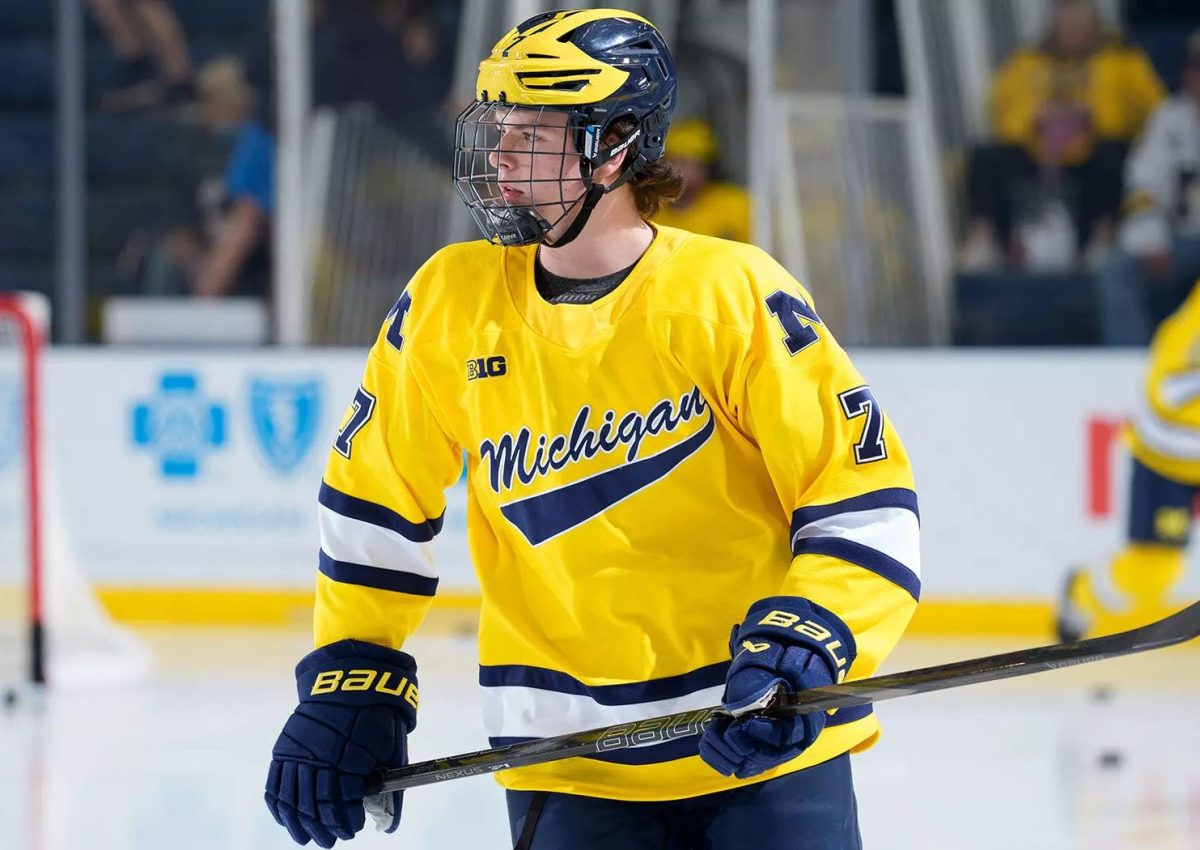
Dakoda Rhéaume-Mullen - Defense - Michigan
Being a reliable two-way defenseman who shows flashes of being very useful in many different situations, and a skater who will definitely not be passed up in the draft a second time. Rhéaume-Mullen activates so well in the offensive zone, constantly moving along the blueline and wall to become an option for the offense-heavy Wolverines this season. His ability to join and support the rush adds another layer of deadliness to any transition. Additionally, he does well to back check with his quick feet when he does get too aggressive. Rhéaume-Mullen’s skating has improved a lot from last season, bettering his play in the defensive zone and as a puck carrier overall. He still struggles to make an impact physically to deter opponents and is still not potent enough offensively to run a power play, but Dakoda Rhéaume-Mullen has shown more than enough to warrant a selection in the mid-to-late rounds of this draft. (Linc Zdancewicz)
Jack Galanek - Center - UMass
Sitting only behind Jack Musa and Vaclav Nestrasil, Freshman Jack Galanek has been a big reason why UMass has had such a successful season this year. He is a gritty center with a knack for being a connecter in the neutral and offensive zones, getting into open space, and quickly passing to generate chances. Galanek has a high motor but nothing more than a solid skater with an average level of physicality. His success rate in the faceoff dot has been notable and a key factor in why UMass has put him in every situation. He plays a unique role for any squad and should be an excellent supporting center to UMass for at least another year until he is ready for the AHL. As for his NHL upside, it is a bit in question outside of a 4th line role, but he could play his way into a lineup with his grit. (Linc Zdancewicz)
Bobby Cowan - Wing - Western Michigan
Bobby Cowan has been on a steady upward trajectory that should continue with him hopefully getting drafted this spring. In ‘23/24, Cowan was a key cog in Edina High’s Minnesota State Championship team, but wasn’t able to provide much offense (just 6 points in 20 games) when he joined Omaha in the USHL. An offseason trade saw him go to the Madison Capitols where he began to flourish offensively, finishing his draft season with 51 points. Despite his lack of size (Cowan checks in at 5’10”), Cowan does not shy away from the physical side of the game. His work ethic, dangerous shot, and above-average skill were enough for McKeen’s to rank him #236 in the 2025 NHL Draft Guide, but his average skating was likely the sticking point for him not being selected. This year as a freshman with Western Michigan, he has improved his speed and that has greatly improved his outlook as a pro. It’s easy to see a third line winger with some scoring punch as the outcome for Cowan. (Jamison Derksen)
Lukas Peterson - Defense - Maine
A smaller defender who started the year really well with Maine as a freshman, but lost steam in the second half of the year from a production standpoint. We wrote about Peterson in this piece last year after a strong USHL year with Green Bay. He’s a creative and mobile offensive defender who can quarterback the power play thanks to his ability to walk the line and escape pressure. He’s also not a liability defensively because he will compete physically, even if he’s not always successful in high traffic areas. But would that be the case at the NHL level? There’s no question that Peterson possesses offensive upside, but NHL teams may continue to take a wait and see approach with him to see how his game develops at the NCAA level. If he ends up becoming one of the more efficient offensive defenders in college, he could end up on the free agent radar. (Brock Otten)
Caton Ryan - Wing - Cornell
Caton Ryan is someone that made it onto the radar of some scouts (McKeen’s had him #282) in the 2023/24 Draft cycle but was tough to truly get a handle on due to his vastly inferior competition in the CCHL in his draft year. He moved on to the BCHL last season, where he racked up 42 points in 44 games with the Penticton Vees, before joining Cornell this season and repeating his near point-per-game pace as a freshman. Ryan’s smooth skating and deadly shot make him very dangerous offensively, particularly on the rush and on the man-advantage. As a playmaker, he’s more of a connector than a creator, he’ll move the puck quickly and decisively but doesn’t really search for lanes, preferring to shoot instead. Though he has good pace and agility at top speed, his acceleration remains an issue that will need some work before turning pro. Given his steep development curve, there may be a middle-six winger here if everything breaks right for Ryan. (Jamison Derksen)
Luka Radivojevic - Defense - Boston College
Given his diminutive 5’9” stature, it isn’t the biggest surprise that Radivojevic was passed over in his first year of draft-eligibility, but the high-IQ, offensive blueliner still offers pro upside. Ranked #83 in Mckeen’s 2025 NHL Draft Guide, Radivojevic is an elusive skater with above-average playmaking ability, but his size is a significant hurdle defensively. His move to Boston College from the USHL this season has been good as he’s been forced to add muscle to defend against older, stronger opponents. It remains to be seen if Radivojevic will be able to carve out an NHL career after plenty of hype as a 16 and 17-year-old that sort of petered out during his draft year. After averaging half a point per game in the USHL at 17 and the NCAA at 18, is there enough offense to compensate for his shortcomings? Maybe given some continuity he finds another gear offensively as a sophomore at Boston College, along with getting a proper opportunity on the power play after being buried behind senior captain Lukas Gustafsson this season. He might make it to the NHL as a PP2 QB, or his size may end up limiting him to an AHL career. (Jamison Derksen)
Tobias Pitka - Center - Northern Michigan
Standing tall at 6’4, Tobias Pitka has used his size well for a Northern Michigan team that definitely needed something after only winning three games. He is a true power forward with the ability to annoy the living daylights out of opponents, putting body and stick on his man to take them out of the play. Pitka is a solid skater, with good inside edges, and draws good balance and power from his skates, however, his pace has been quite slow outside of tight spaces. Sometimes his effort is frustrating, more so due to a slow acceleration and a lack of quick feet when chasing down an open man in space. Pitka really improved a ton in his last two years in the BCHL, nearly going point-per-game last season. This year, despite missing some time, he finished second in points with 12 on one of the worst teams in the NCAA. His offensive game is not the strongest, but Pitka gets results when placed in front of the net. He may not get drafted, but I can see him signing as an NCAA free agent in a couple of years. (Linc Zdancewicz)
Cooper Cleaves - D - Dartmouth
Cleaves is a 6’4” shutdown blueliner that jumped from the BCHL to the USHL midseason last year and was an NCAA freshman this season with Dartmouth. He is a smooth skater, even if he isn’t the fastest, and uses his size well. He is very effective at killing rushes by using his long reach and taking away time and space quickly. Cleaves also uses his large frame to suffocate opponents physically. Cleaves is pretty limited offensively, and needs to improve his decision-making with the puck at times, but it’s his play without the puck that will be his calling card as a pro. It will be interesting to see if his offensive game is able to develop next year with a new d-partner, as this year he was mainly paired with offensive-minded veteran CJ Foley, who took on the bulk of the puck moving duties, and at times it looked like Cleaves was just trying to stay out of the way when he had the puck. As a big, mobile, right-shot defender, he has plenty of tools to make it to the next level. With some slight improvement in footspeed Cleaves should be a solid defensive blueliner that has upside with further development. (Jamison Derksen)
John Parsons - Goaltender - Providence
Parsons, another double over-ager goalie, has been on an upward trajectory since his first year of eligibility. In 2023-24, he played with the NTDP, where he recorded an .864 SV% and 3.71 GAA across all 33 contests, including a .854 SV% and 4.13 GAA in 14 USHL games that season. With those poor numbers, he was passed on in the 2024 draft. The following season, he would join the Chicago Steel, where he played 35 games, with a .903 SV% and a 3.49 GAA, much better numbers, but on a team who finished last in their division. This season, he made the jump to the NCAA, playing for Providence College. He has found a ton of success there, recording a .923 SV% and 1.99 GAA in 18 contests. While Parsons has seen his statistical profile show great improvements over the years, one has to remember that Providence is a top-10 college hockey program in the nation this season. For Parsons, his calmness and composure in the crease is evident. He displays patience and keeps himself in position, square to shots, and angled up well, even when there’s chaos in front of him. He hardly ever panics. He has very refined movements and tracks pucks very well, allowing him to constantly position himself well against shooters. His size, at 6’4”, also gives him an advantage, as he takes away a lot of the net when he positions himself as well as he does. However, he lacks the lateral agility and explosive athleticism to make difficult saves. When playing behind the Steel, who finished bottom of their division, his numbers were not as sterling as they were in Providence this year. When challenged more, and with less defensive structure and success in front of him, issues arise. There’s still a very reliable goalie who makes all the saves he needs to make. That’s the foundation for a goalie who could crack an NHL roster and stick as a backup, so long as he continues to develop his game in the NCAA. (Kyle Pereira)