


As part of reviewing McKeen’s Top 200 prospect list, I took a step back to identify players whose current valuation may not fully align with their long-term fantasy outlook. This process isn’t about ranking disagreements as much as it is about opportunity, highlighting where perception and projection may be out of sync.
From a dynasty perspective, these are the players that can create an edge. Some may be ranked a bit aggressively relative to their realistic fantasy ceiling, making them potential sell candidates at peak value. Others may be undervalued, either due to slower development curves, league context, or lack of hype, presenting strong buy opportunities before their value rises. What follows is a closer look at those players, and where I see actionable opportunities for dynasty managers.
Buy Candidates
Benjamin Rautiainen, LW
Team - Tampa Bay Lightning
McKeen’s Rank - 97
Rautiainen is coming off one of the most dominant Liiga seasons in recent memory, posting 77 points in 59 games and becoming the first player in nearly two decades to surpass the 70-point mark. He also captured both league MVP honors and the Golden Helmet, a rare combination that highlights just how impactful his campaign was. For a player who entered the year as a mid-round pick, this type of production has significantly shifted his trajectory and forced a reevaluation of his long-term outlook.
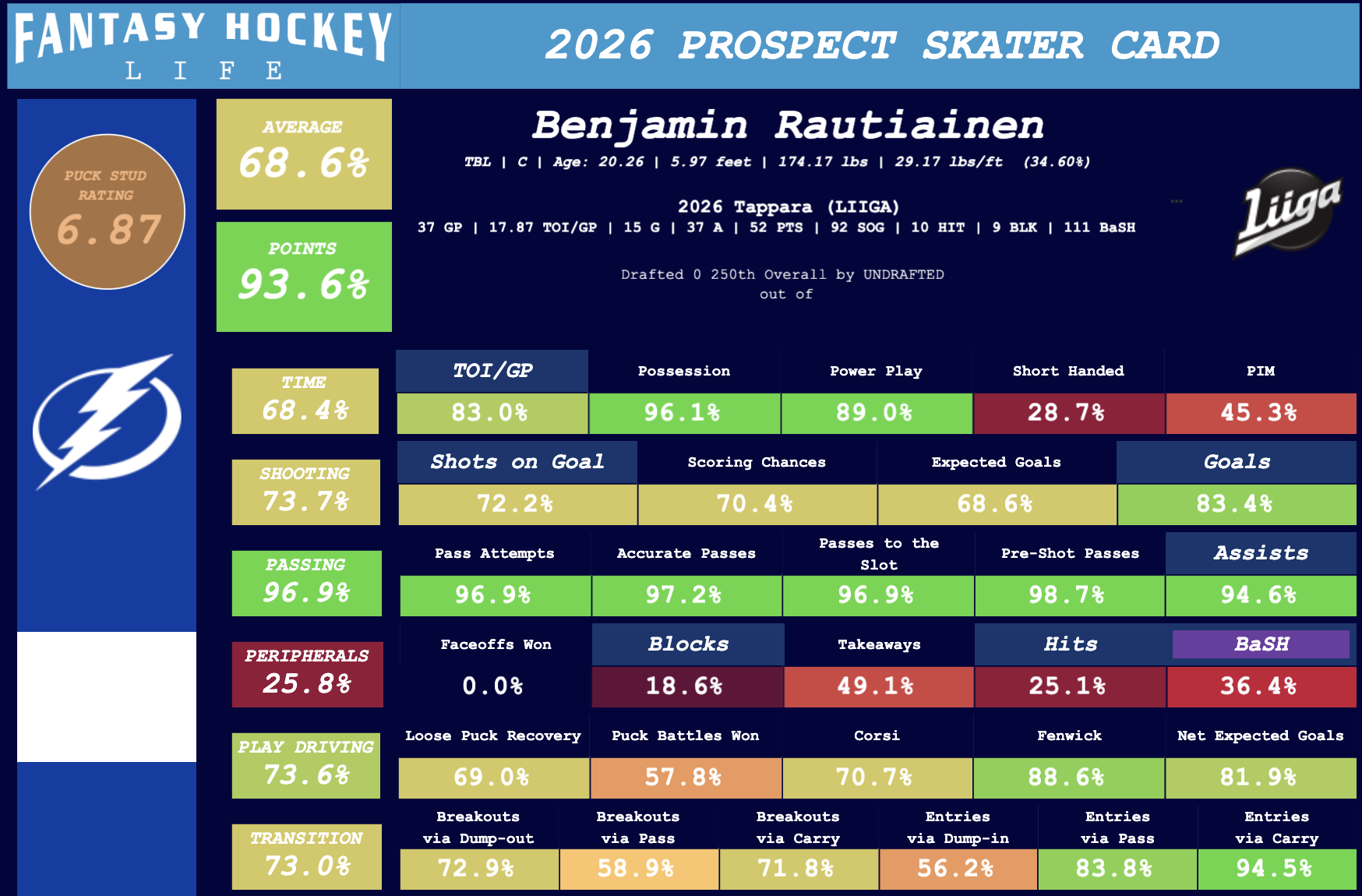
What makes him a strong buy candidate is how translatable his game appears. Rautiainen drives offense through intelligence, timing, and spatial awareness, consistently extending possession and creating opportunities in tight areas. His Fantasy Hockey Life tracking profile supports the production, showing strong play-driving metrics, above-average loose puck recoveries, and high-end playmaking indicators. That combination suggests his breakout is sustainable rather than situational. While projection models remain conservative, players with this profile often outperform expectations, making this an opportunity to invest before his value fully catches up.
Dmitri Buchelnikov, LW
Team - St. Louis Blues
McKeen’s Rank - 113
Buchelnikov has steadily developed into one of the more dynamic offensive players in his cohort, combining high-end skill with a natural scoring touch. He is a dual-threat winger who can both create and finish, showing confidence attacking defenders and the ability to make plays under pressure. His offensive toolkit allows him to impact games in multiple ways, particularly when given space to operate. While his 2025–26 season may look like a step back on the surface, context matters. He was adjusting to his fourth KHL team in as many years, and his role shifted, with nearly two minutes less total ice time per game, including over 30 seconds less on the power play, which significantly impacted his production.
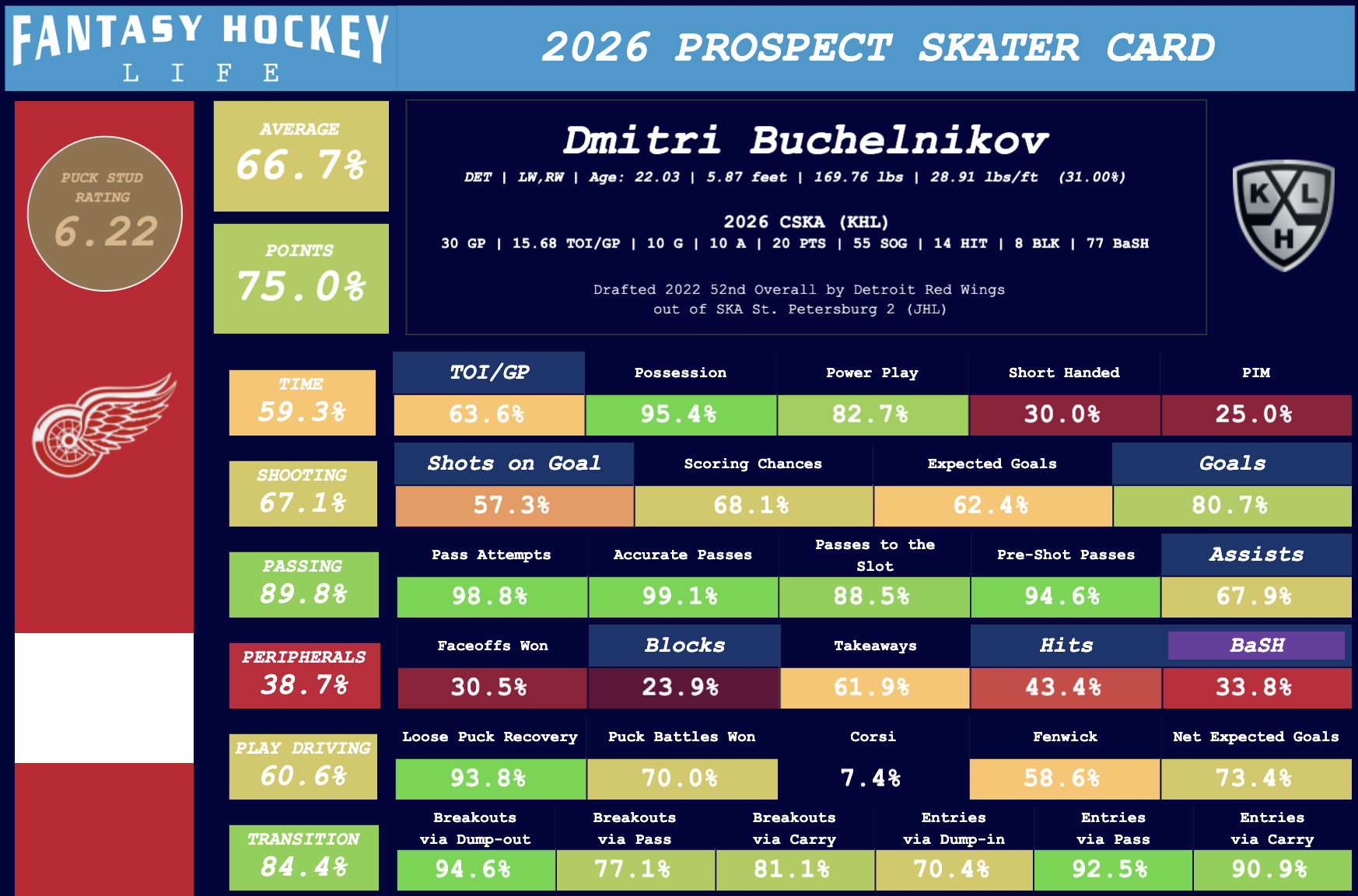
The appeal here still lies in his offensive ceiling. As a smaller forward, there are understandable concerns about his ability to win puck battles and recover loose pucks, but his Fantasy Hockey Life skater card suggests he already excels in those areas at the KHL level. That combination of skill and competitiveness helps mitigate some of the typical risk associated with his profile. If he can secure a more stable role and consistent deployment, particularly in offensive situations, he has the tools to emerge as a legitimate top-six option for St. Louis Blues, making this a strong buy opportunity before his value rebounds.
Eric Pohlkamp, D
Team - San Jose Sharks
McKeen’s Rank - 107
Pohlkamp has quietly emerged as a defenseman worth monitoring, driven by a strong offensive skillset from the blue line. He moves well laterally, distributes the puck efficiently, and shows confidence activating into the play, particularly in offensive situations. His ability to contribute on the power play adds an additional layer of fantasy appeal, and his recent surge in production has pushed his pNHLe north of 70 via the NHL Rank King application. While that number may be somewhat aggressive, it reinforces the level of offensive impact he has shown. He also elevated his profile significantly as a Hobey Baker finalist, helping lead the Denver Pioneers to the NCAA championship with a strong all-situations presence.
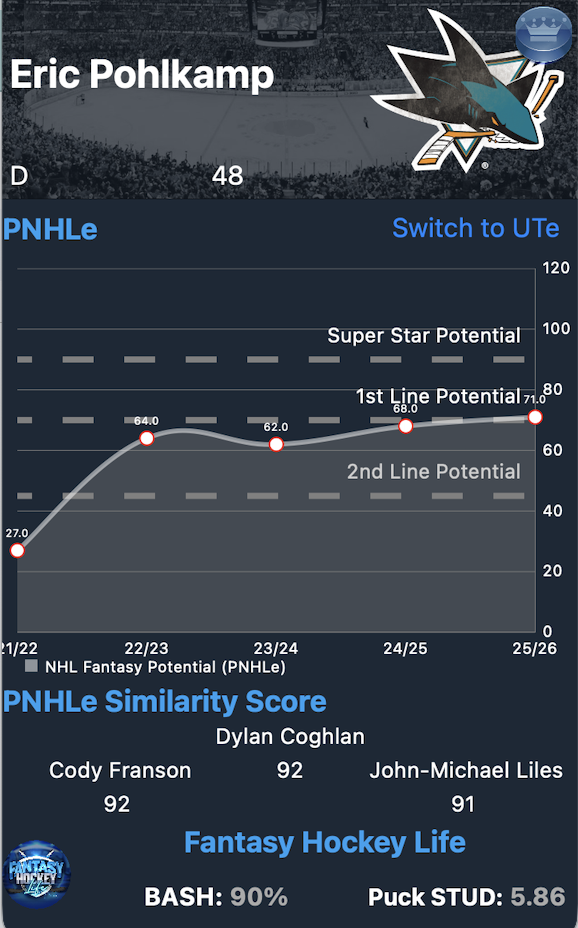
The broader appeal lies in both his opportunity and well-rounded contributions. The San Jose Sharks lack a clear long-term power-play quarterback on the back end, which creates a potential pathway for Pohlkamp to carve out a meaningful role, possibly even ahead of players like Sam Dickinson or Luca Cagnoni if his development continues on its current trajectory. In particular, Pohlkamp is the top right-handed defender of the group so if handedness ends up mattering, he has the inside track. Beyond the offense, his Fantasy Hockey Life profile highlights contributions across peripherals, including blocks, shots, and hits, giving him multi-category appeal. Offensive defensemen with this type of usage and pathway tend to see their value rise quickly, making Pohlkamp a strong speculative buy at this stage.
Riley Heidt, C/LW
Team - Minnesota Wild
McKeen’s Rank - 100
Heidt continues to establish himself as a high-end playmaking center, consistently driving offense through vision and creativity. He excels at controlling pace and creating opportunities for teammates, making him a central figure in his team’s offensive structure. His ability to produce across different situations reinforces his offensive reliability. That said, there is no question his stock has dipped somewhat following a less impactful transition from his dominant WHL career to the AHL, where early returns did not match expectations.
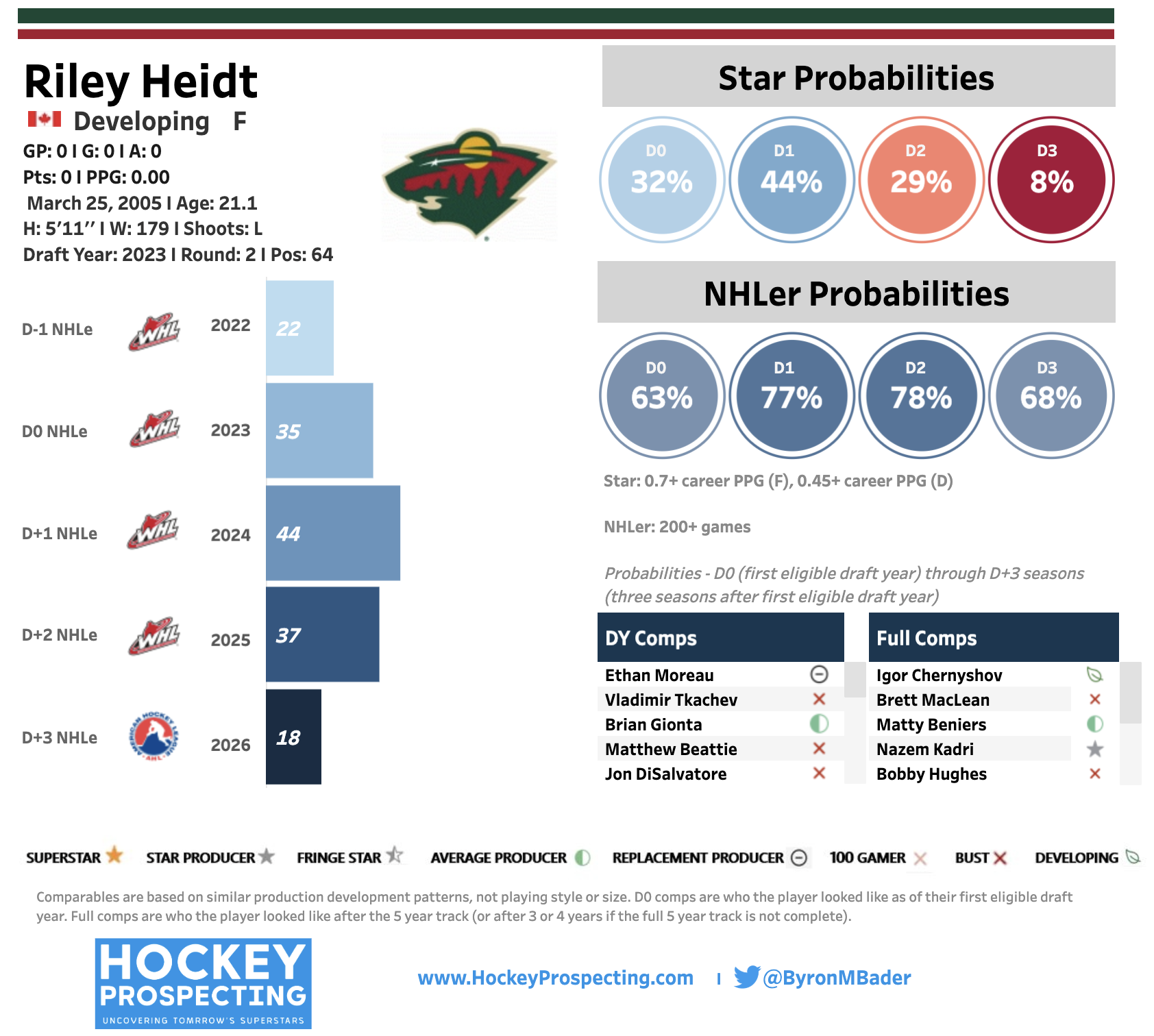
From a dynasty perspective, this is more of a value bet. If Heidt can be acquired at a discount due to that perceived dip, there is still plenty to like. There were signs of adjustment and improvement as the AHL season progressed, and his competitive edge and play-driving ability remain intact. While his Hockey Prospecting profile has trended downward, the underlying offensive instincts and track record suggest there is still rebound potential. The Wild could benefit from his playmaking and feistiness down the middle, and if he finds his footing at the professional level, his value could quickly rise again.
Dean Letourneau, C
Team - Boston Bruins
McKeen’s Rank - 96
Letourneau’s profile is built around size and long-term upside, making him one of the more intriguing development projects in this range. At 6-foot-7, he already creates matchup problems, and as his coordination and skill continue to catch up to his frame, there is potential for a unique offensive player. His flashes of puck skill and playmaking suggest more upside than typically seen in players of his build. His transition path also provides important context. After making a massive jump from Canadian prep school hockey to a loaded Boston College roster in 2024–25, he managed just three assists in 36 games, an unsurprising adjustment period given the circumstances and limited opportunity behind players like James Hagens, Gabe Perreault, and Ryan Leonard. With those players gone, he put up 39 points in the same number of games and a more prominent role on the team in 2025-26.
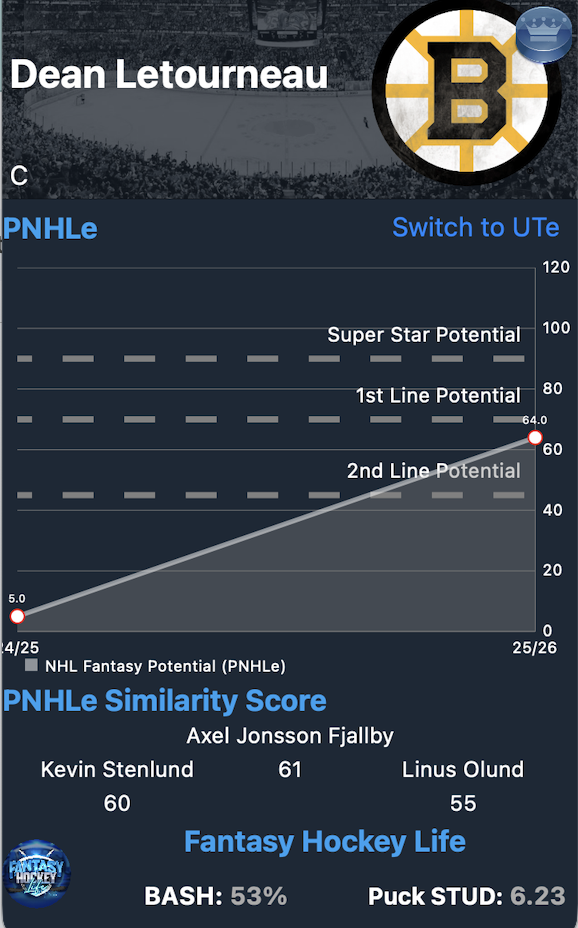
Letourneau’s pNHLe via the NHL Rank King application now sits around 64, which may even undersell his long-term upside given his trajectory. As he continues to grow into his frame and gain confidence at the NCAA level, he has the tools to impose himself physically while expanding his offensive game. The timeline remains longer, but that often creates buying opportunities in dynasty formats, and Letourneau represents a classic projection bet whose value could rise significantly if his development continues on this path.
Ryan Ufko, D
Team - Nashville Predators
McKeen’s Rank - 133
Ufko’s value lies in his mobility and offensive instincts, allowing him to impact play from the back end. He moves the puck efficiently and shows confidence jumping into offensive situations, particularly on the power play, where his vision and decision-making stand out. His skating allows him to recover defensively, helping mitigate some of the risks that come with an aggressive style. A fourth-round pick in 2021, Ufko has been somewhat under the radar, but began to draw more attention after an excellent showing at the 2023 Under 20 World Junior Championships, and has since continued to excel at both the NCAA and AHL levels.
RYAN UFKO HAS HIS FIRST NHL GOAL AND IT WAS GORGEOUS 😱 pic.twitter.com/Ge7plVWzEO
— NHL (@NHL) March 11, 2026
The upside here is tied to opportunity, and that opportunity is beginning to materialize. Ufko has already appeared in over a dozen NHL games this season, flashing his offensive ability, including on his first NHL goal. While he is still adjusting to the pace and demands of the NHL, his trajectory remains encouraging. If he can stabilize his defensive metrics and earn the trust of the coaching staff, there is a pathway for him to take on a larger offensive role. Long term, he could even position himself as a potential successor to Roman Josi on the power play as the veteran eventually slows down, making Ufko an intriguing buy candidate with sneaky upside.
Bryce Pickford, D
Team - Montreal Canadiens
McKeen’s Rank - 129
Pickford has gained attention for his ability to generate offense from the blue line, combining strong puck skills with a willingness to activate in the offensive zone. He shows confidence handling the puck and can create opportunities through both shooting and distribution, with his offensive involvement continuing to trend upward. After producing just under a point per game in his draft season with the Medicine Hat Tigers, he has taken another significant step forward, now approaching 1.5 points per game as team captain, a leap that underscores both his development and increased responsibility.
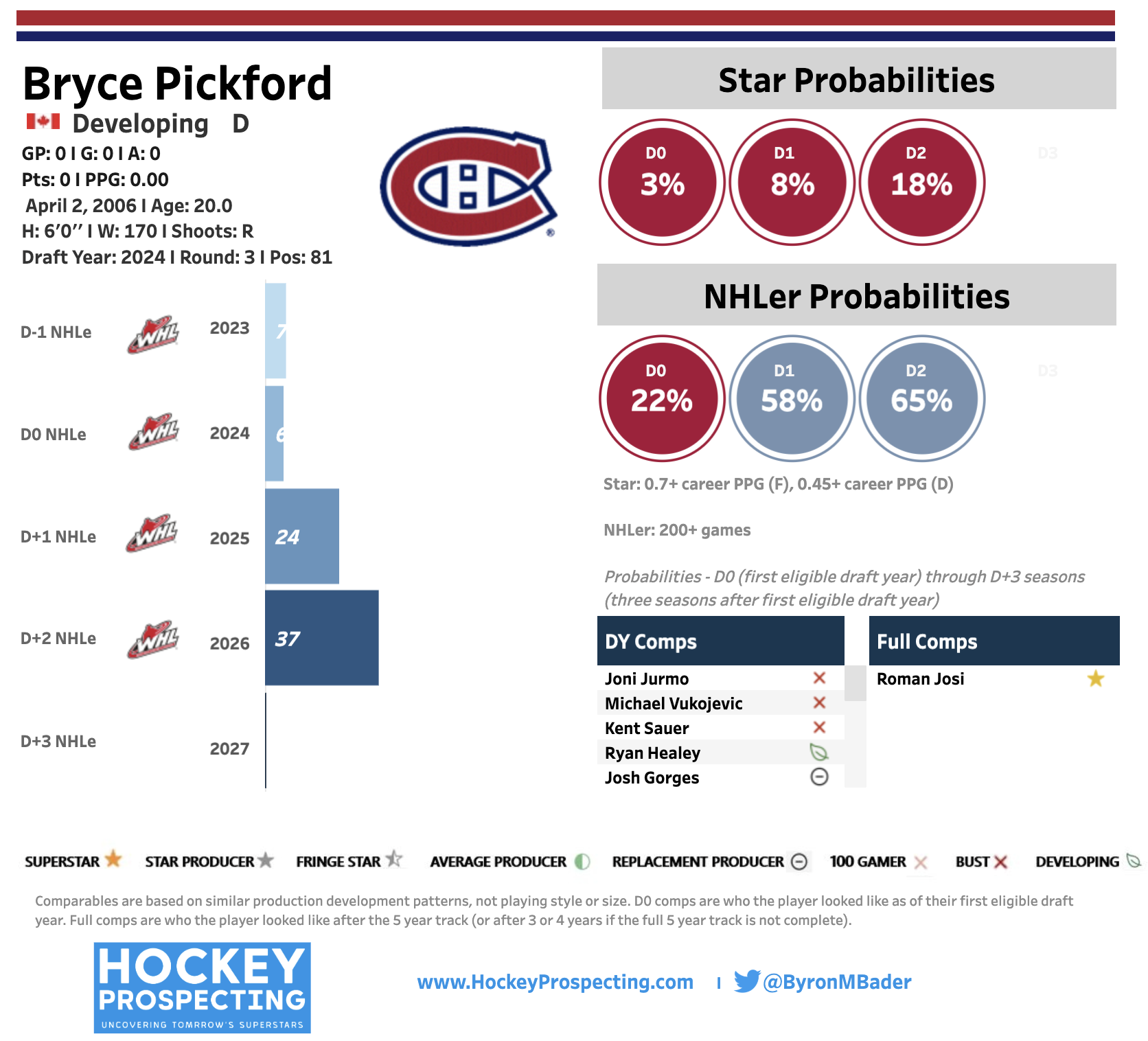
As with many young defensemen, consistency will be key, but the underlying indicators here are particularly encouraging. It is rare for a prospect to increase their star probability in the Hockey Prospecting model, which typically trends downward over time, yet Pickford has done so in back-to-back years, now sitting at 18 percent, a number that may still undersell his true upside. If he continues to earn power-play opportunities and translate this offensive growth to higher levels, he has the potential to become a highly valuable fantasy defenseman, making him a strong buy candidate before his profile gains wider recognition
Brad Lambert, RW
Team - Winnipeg Jets
McKeen’s Rank - 141
Lambert’s development has been uneven, but the underlying skills remain highly intriguing. He is an excellent skater with the ability to create offense through speed and puck control, and when engaged, he can be a dynamic presence. His flashes of high-end play suggest there is still untapped upside. He has long been something of an enigma as a prospect, with clear strengths in transition and shooting, but inconsistencies in other areas of his game that have limited his overall impact. His development path has also been somewhat unconventional, adding to the variability in how his progression has been viewed.
Brad Lambert with a ROCKET 🚀
The @NHLJets have a 4-2 lead! pic.twitter.com/qFx0z6VShl
— NHL (@NHL) April 7, 2026
This is a classic buy-low scenario. Since settling into a full-time role in the AHL, Lambert has been very productive, reinforcing that the offensive tools are still very much intact. The question is more about deployment and fit. The Winnipeg Jets have not always utilized him in ways that maximize his strengths, particularly his speed and ability to attack off the rush. Whether that changes internally or comes via a change of scenery, there is still significant upside here. Players with his skating and offensive skill set often take longer development paths, but if things click, he has the potential to emerge as a high-impact offensive contributor, making him an appealing buy at his current value.
Dmitri Gamzin, G
Team - New York Islanders
McKeen’s Rank - 158
Gamzin is quietly emerging as one of the more intriguing goaltending prospects outside the NHL. Playing in Russia, he has shown strong composure and technical ability, with a calm, controlled style that projects well to higher levels. There are also strong indicators beneath the surface, as Hockey Prospecting gives him a 97% chance of becoming an NHLer, with notable comparables including Igor Shesterkin and Ilya Sorokin. Notably, he was not drafted until age 21 and has already appeared in 79 KHL games, suggesting a more advanced development timeline than most goaltending prospects.
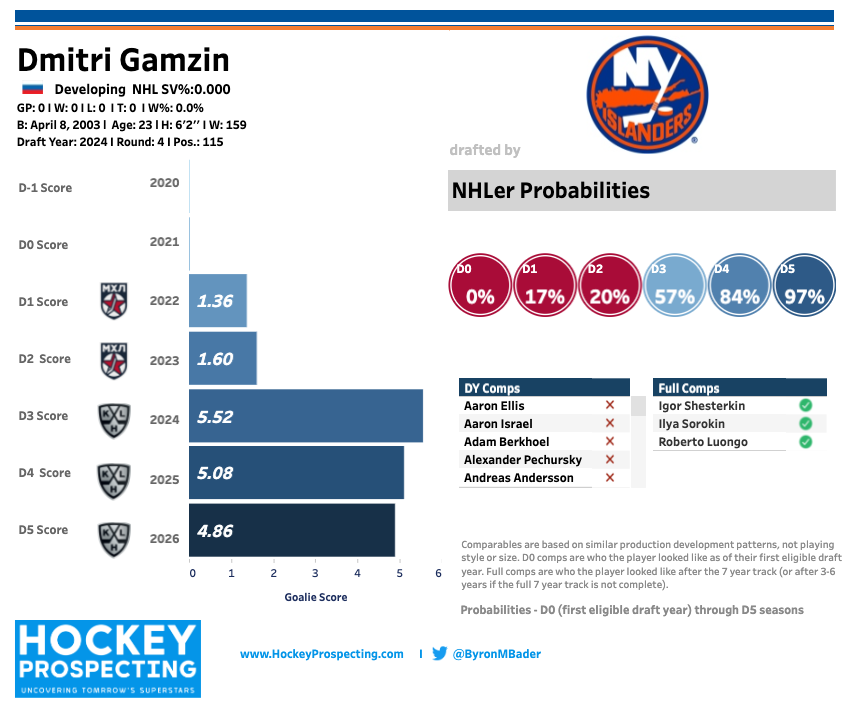
Goaltenders always carry inherent risk, but Gamzin’s profile is trending in the right direction. With Marcus Gidlof moved in the deal that brought Brayden Schenn to the Islanders, Gamzin’s stock gets a boost as the top goaltending prospect behind Sorokin in the system. The organization also lacks a clear long-term answer in net beyond its current group, giving him a realistic path to future value. If he were to land in a weaker goaltending pipeline, his stock could rise even further, making him the type of under-the-radar buy who could reward patient dynasty managers.
Mason West, RW
Team - Chicago Blackhawks
McKeen’s Rank - 163
West offers a combination of size and developing skill that makes him an intriguing long-term option. He plays a physical game and can create space for himself, while also showing flashes of offensive ability that hint at a potential power-forward profile. His development path has been unconventional, as he split time over the past two years playing high school football, even winning a state championship with Edina, before transitioning back to hockey full time with the Fargo Force of the USHL, where he has impressed.
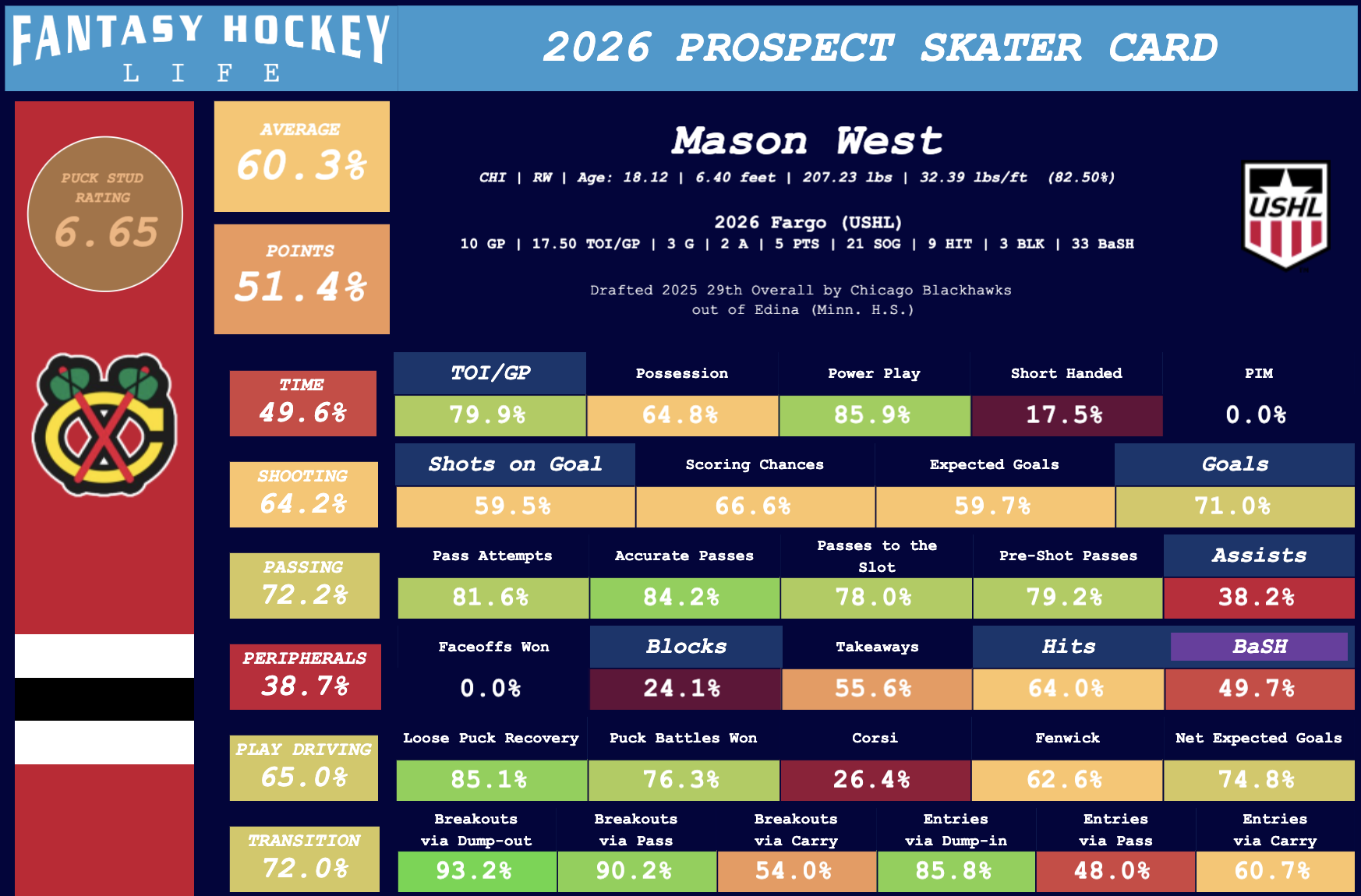
The upside here is tied to development, but the early indicators are encouraging. His Fantasy Hockey Life skater card highlights strong transition play, play-driving ability, and effectiveness in puck battles and loose puck recoveries, all traits that tend to translate well as competition increases. If his offensive game continues to progress alongside those underlying strengths, he could develop into a multi-category contributor. Players with this blend of size, athleticism, and improving skill often see their value rise as they refine their game, making West a worthwhile long-term investment at his current cost.
Sell Candidates
Dmitri Simashev, D
Team - Utah Mammoth
McKeen’s Rank – 8
Simashev brings an appealing physical and defensive profile, using his size and mobility to limit opposing chances. He projects as a minute-munching defenseman capable of handling difficult matchups and contributing in a shutdown role. That type of player carries clear value at the NHL level, particularly for teams looking to stabilize their blue line. From a fantasy perspective, however, the outlook is far less appealing. Players in this mold rarely produce consistent offense, and early returns support that concern. Simashev has just one point through 26 NHL games, and while his 35 points in 40 AHL games stand out, they appear more like an outlier when compared to his 16 points across 137 KHL games.
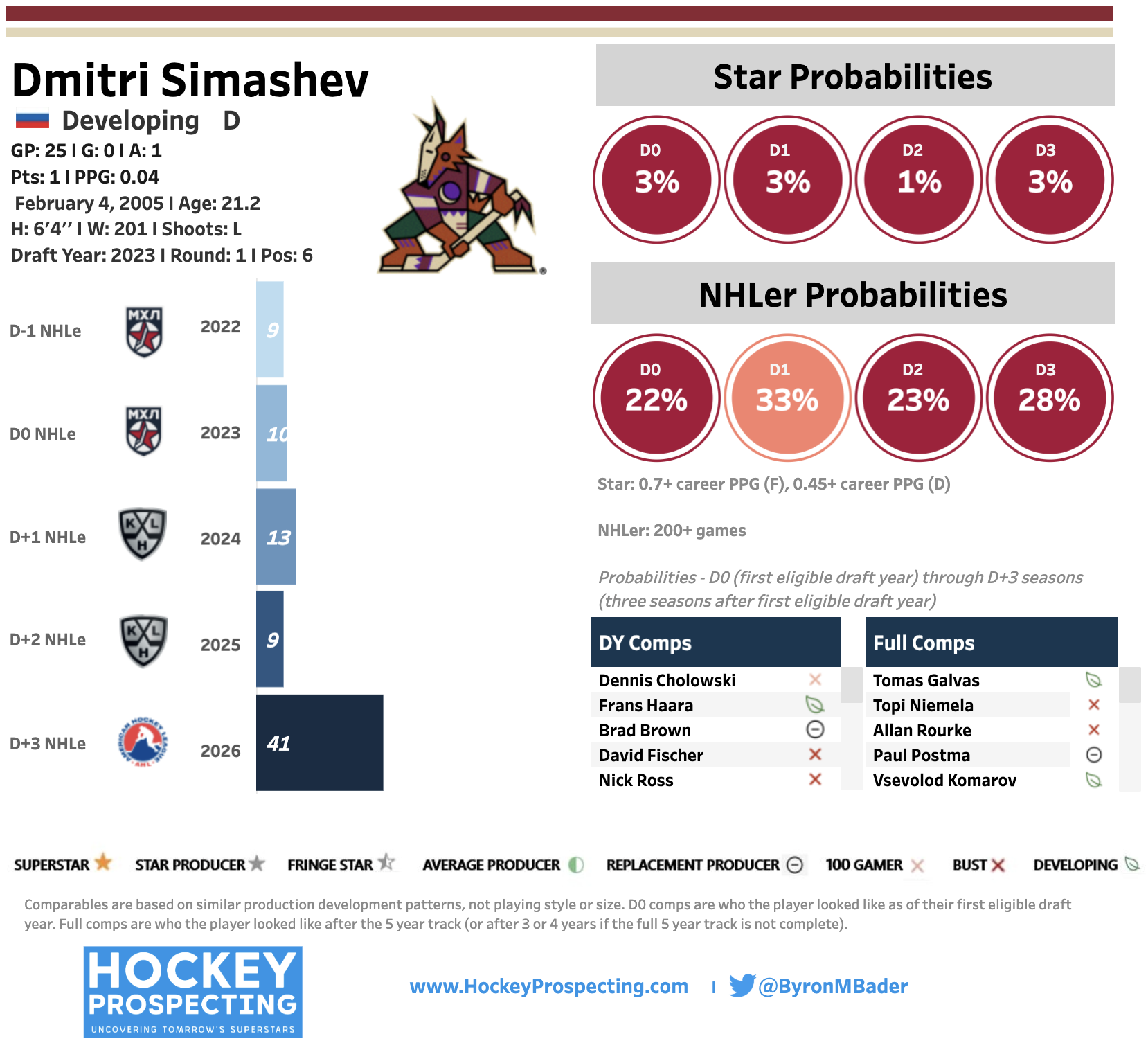
In addition to his lack of scoring, he doesn’t provide much in the way of blocks, shots, and hits (BASH). So far in the NHL, his BASH is 41st percentile compared to the rest of the league. His Hockey Prospecting profile reinforces the skepticism, giving him just a three percent chance of becoming a star. If his current value is being driven by draft pedigree and real-life impact, this is a strong opportunity to move him for a more fantasy-relevant asset before his role becomes more clearly defined.
Radim Mrtka, D
Team - Buffalo Sabres
McKeen’s Rank – 14
Mrtka has drawn attention for his size and physical presence, traits that remain highly valued in NHL defensemen. He plays a structured, straightforward game, using his reach and strength to disrupt plays and maintain defensive positioning. His transition defense is effective, and he projects as a player who can handle matchup responsibilities at higher levels.
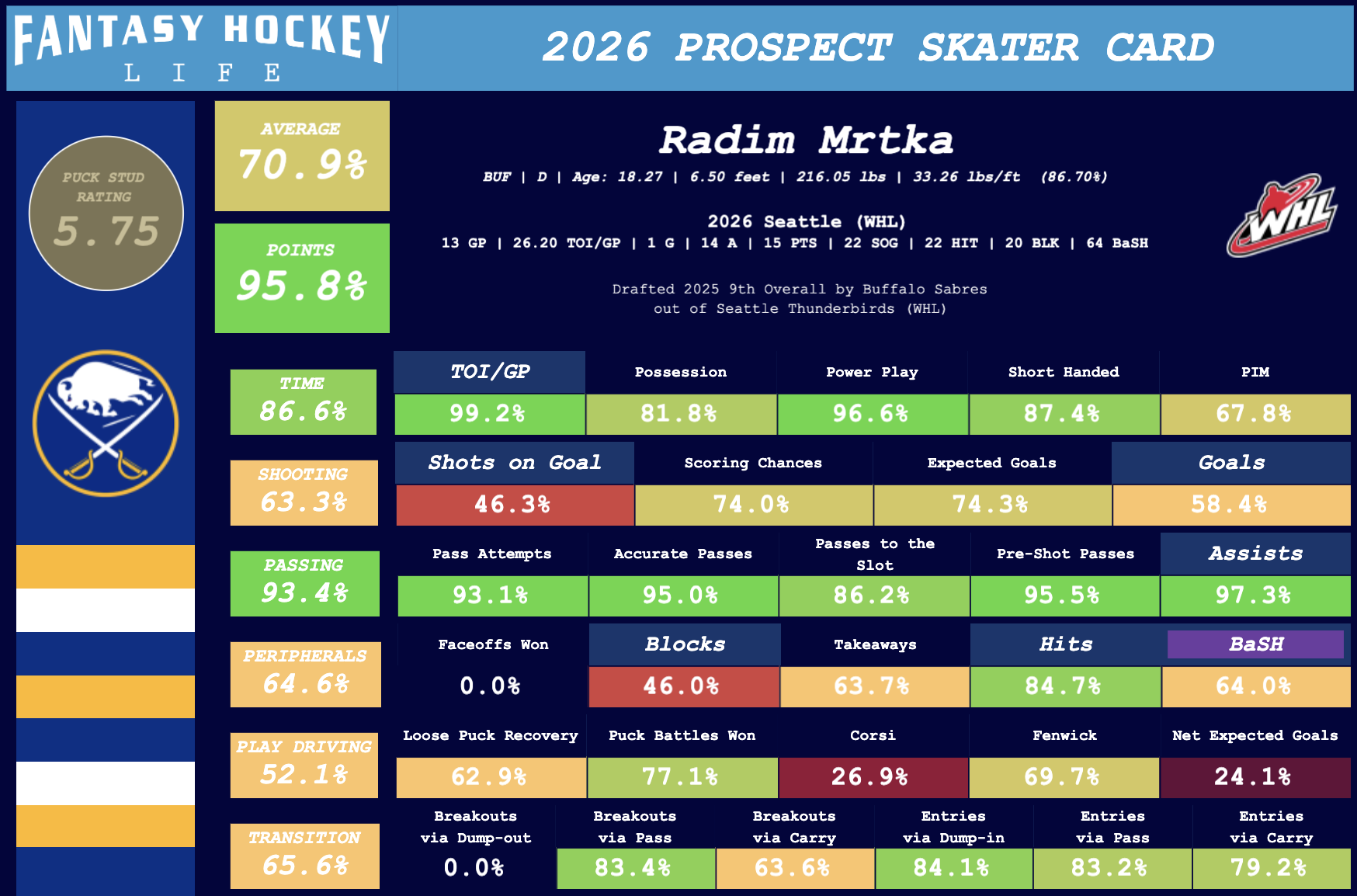
From a fantasy standpoint, however, there are clear limitations. Mrtka does not project as a dynamic puck-mover or offensive driver, which puts pressure on his scoring translating to provide value. His Fantasy Hockey Life tracking profile reflects this, showing strong transition numbers but limited contributions across most peripheral categories outside of hits. There are shades here of Colton Parayko, an effective real-life defender whose fantasy impact remains modest. If Mrtka’s value is being buoyed by his physical tools and projection, this is a reasonable point to move him for a more offensively impactful asset before his role becomes more clearly defined.
Jackson Smith, D
Team - Columbus Blue Jackets
McKeen’s Rank – 30
Smith put together a productive campaign at Penn State, recording 26 points in 35 games while showing flashes of offensive ability from the blue line. He is an effective transition player and can move the puck efficiently, with underlying play-driving metrics that point to real strengths in advancing possession. There are tools here that suggest he could contribute offensively at higher levels if everything comes together.
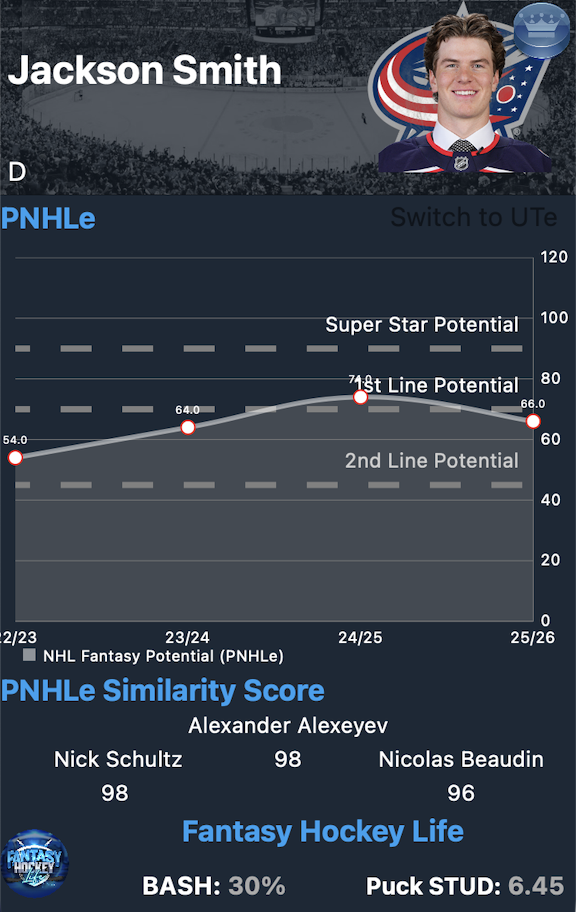
The concern is how much of that translates consistently. His profile is more uneven beneath the surface, with just a 50% puck battle win rate, low physical engagement in hits and blocks, and a negative net expected goals impact despite playing on a strong NCAA team. His pNHLe via the NHL Rank King app has also dipped from nearly 75 in his draft year down to 66, which may still be optimistic. If he is being valued closer to that earlier projection, this is a good opportunity to move him for a more certain or higher-upside asset.
Anton Silayev, D
Team - New Jersey Devils
McKeen’s Rank – 41
Silayev checks nearly every box from a physical and developmental standpoint. At 6-foot-7, he is a remarkably fluid skater for his size and has already logged 187 KHL games by age 20, a significant accomplishment in one of the world’s top professional leagues. He projects as a player capable of handling difficult minutes, using his reach, mobility, and defensive awareness to impact the game in a shutdown role.
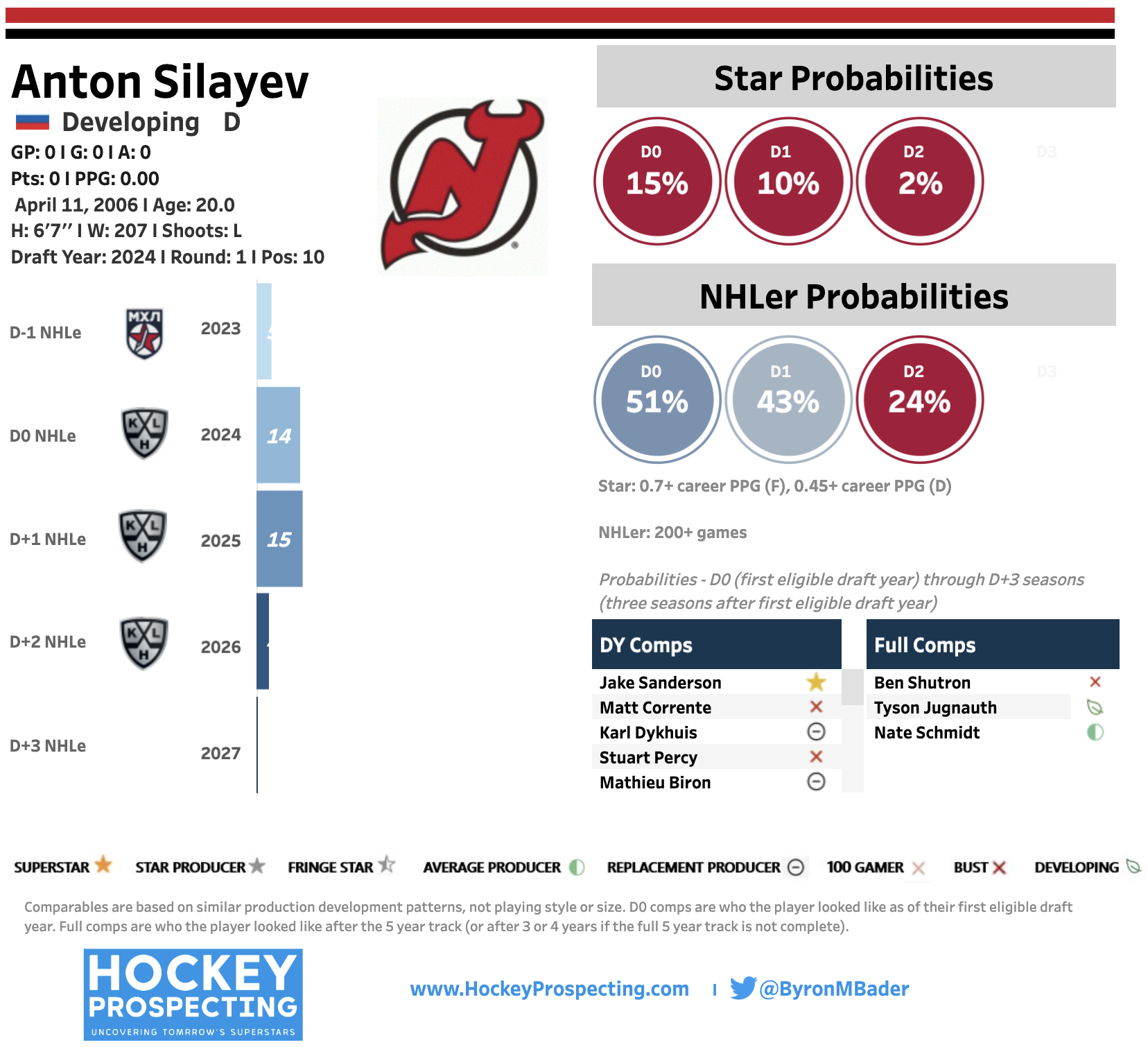
From a fantasy perspective, however, the outlook is far less encouraging. Despite his extensive KHL experience, Silayev has just 26 points across those 187 games, including only three in 61 contests this year. That lack of offensive production is difficult to ignore, particularly for a player unlikely to see meaningful power-play usage. His Hockey Prospecting profile reinforces the concern, assigning him just a two percent chance of becoming a star. While his real-life value may be significant, this is a case where that impact is unlikely to translate, making him a strong sell if the market remains optimistic.
Maveric Lamoureux, D
Team - Utah Mammoth
McKeen’s Rank – 70
Lamoureux stands out physically, using his size and reach to defend effectively and handle difficult matchups. He has progressed steadily in the AHL with the Tucson Roadrunners and has already seen limited NHL action, appearing in 20 games. His development path points toward a player who can fill a structured, bottom-pair role, with the ability to move between the NHL and AHL as needed.
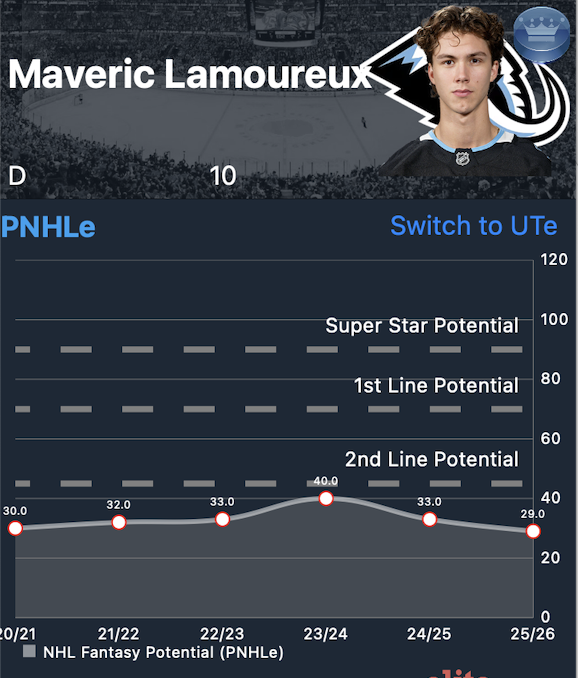
From a fantasy perspective, however, the upside appears limited. While he provides some value in peripheral categories such as hits and blocks, his offensive game has not shown signs of translating into meaningful production. His pNHLe via the NHL Rank King application has trended down to 29, which may be an accurate reflection of his long-term offensive ceiling. Players in this mold can offer a modest multicategory floor, but rarely develop into difference-makers, making this a reasonable opportunity to move him for a more impactful asset.
Zayne Parekh, D
Team – Calgary Flames
McKeen’s Rank – 6
Parekh is one of the more polarizing prospects in this group, driven by elite offensive production from the blue line. His ability to generate points and control play in the offensive zone is undeniable, making him highly appealing on the surface. This is not to say he is not a top prospect, he absolutely is. What he can do with the puck on his stick is special. The concern lies in translatability, as his defensive game and overall risk profile create real uncertainty about how his role will evolve at higher levels. If current valuations are already pricing in top-tier offensive output, this may present an opportunity to sell at peak value.
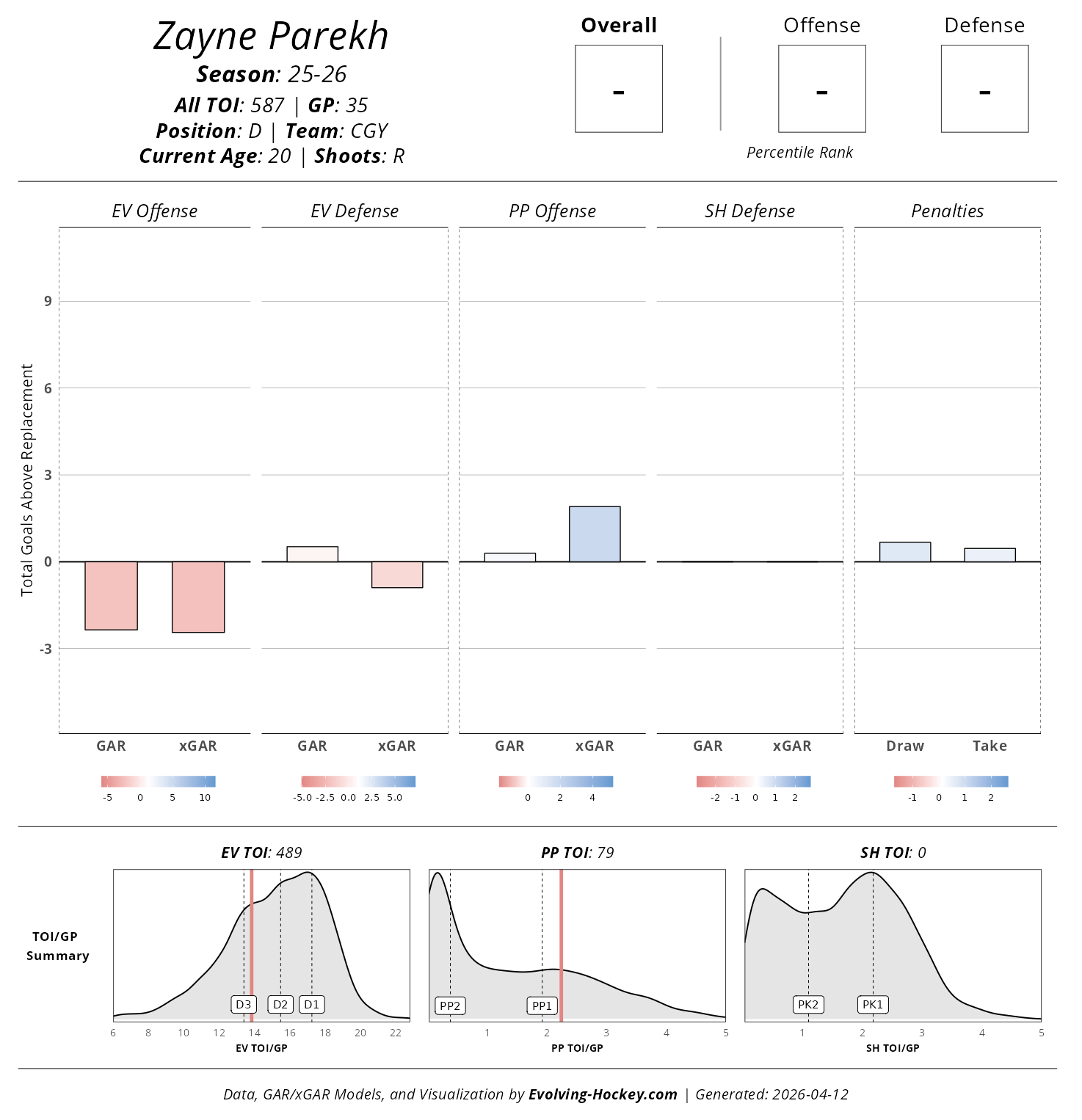
Through 34 NHL games this season, he has struggled to drive play despite being heavily sheltered, including over a 70% offensive zone start rate and consistent power play usage. The Flames have done what they can to put him in a position to succeed, yet his Evolving Hockey player card still shows poor even-strength impacts. Even if his power play contributions remain strong, Parekh risks settling into a limited role, potentially a bottom-pair defenseman who quarterbacks the top unit. This has been the narrative around him for years, and it is fair to question whether it will fully correct to the point where he earns 20-plus minutes per night. Do not sell for peanuts, but if the market still values him as a future elite, all-situations defenseman, this may be the time to move him for multiple strong assets.
Danil But, LW
Team – Utah Mammoth
McKeen’s Rank – 7
But offers an appealing combination of size and skill, showing flashes of offensive ability while creating space and contributing physically. He has a solid foundation as a prospect and has already demonstrated value as a responsible, defensively engaged forward at the NHL level. However, his consistency and pace remain concerns, and there is no clear high-end offensive driver in his game. If his current valuation is built more on projection than production, this may represent an opportunity to move him while his perceived upside remains elevated.
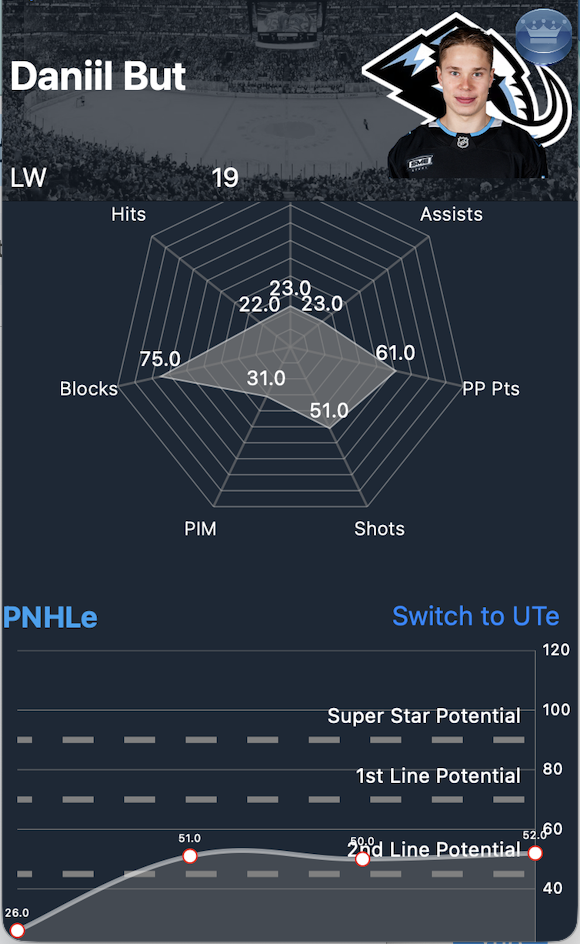
But projects as a strong complementary piece at the NHL level, but his ranking appears aggressive relative to what he is likely to provide in fantasy formats. While he has been effective defensively, his multicategory contributions remain limited, he blocks at a reasonable rate for a forward, but does not generate significant shot volume or physicality. As a result, much of his value will need to come from point production, which currently trends toward the 50-point range. That profile is useful but not difference-making, and there is little indication that a major offensive leap is coming, making this a sensible time to cash out if the market still views him as a higher-end asset.
Nate Danielson, C
Team – Detroit Red Wings
McKeen’s Rank – 27
Danielson projects as a reliable two-way center, capable of contributing in multiple situations. His skating, positioning, and awareness allow him to impact all three zones, and he has already shown he can handle structured roles at higher levels. That said, his offensive ceiling remains the key limitation. He is not driven by dynamic creativity, and without consistent power-play usage, his fantasy upside appears capped. If his current value reflects optimism beyond a bottom-six projection, he becomes a logical sell candidate.
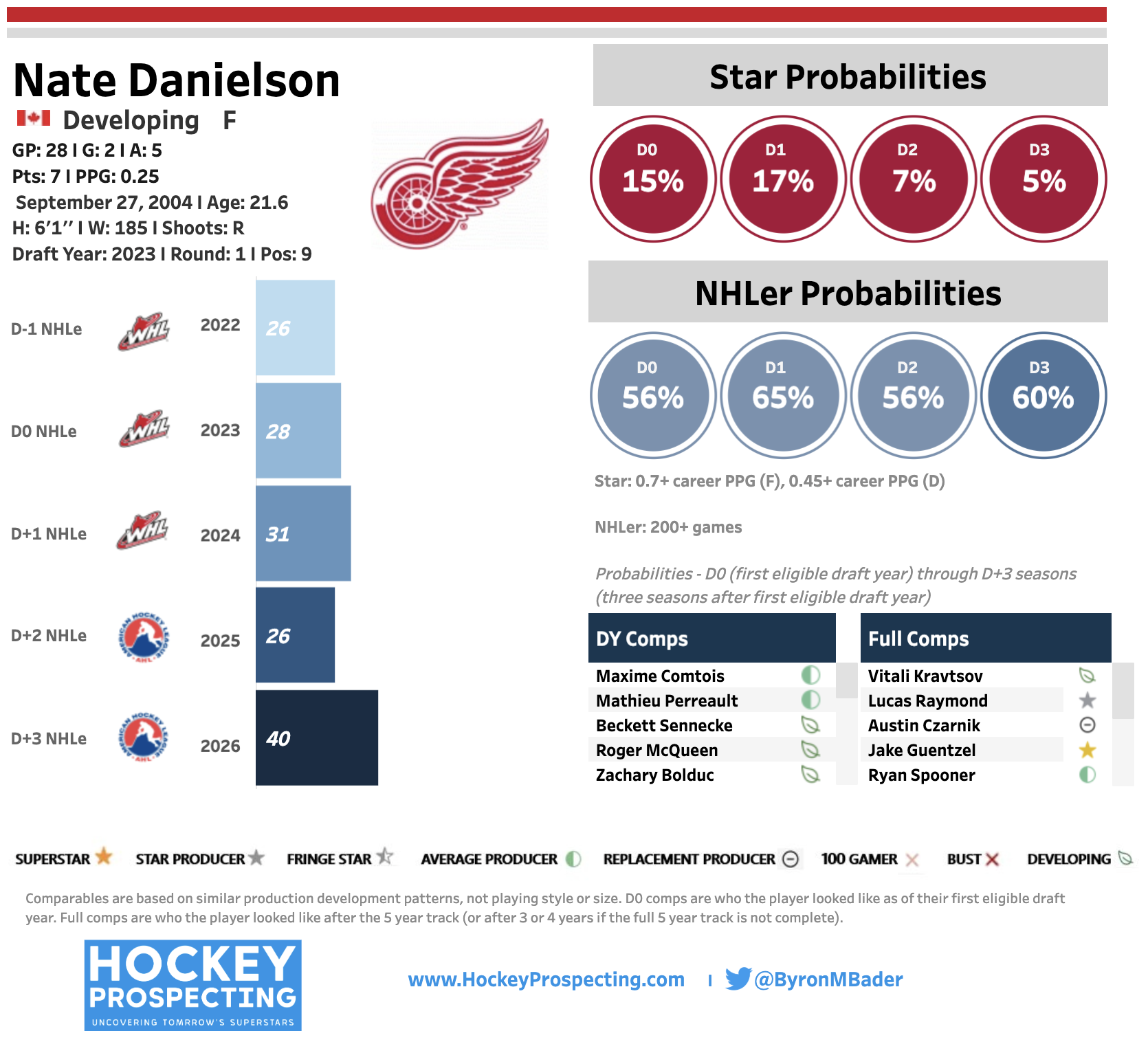
His Hockey Prospecting star probability has trended downward since turning professional, ultimately graduating from the model at just five percent. Danielson has long profiled as more of a bottom-six option, and his NHL sample has done little to challenge that view. While he may carve out a steady role, the likelihood of meaningful fantasy impact continues to shrink. If you can pivot to a prospect with higher offensive upside, it is a worthwhile move, as it is increasingly doubtful Danielson develops into a difference-maker.
Braeden Cootes, C
Team – Vancouver Canucks
McKeen’s Rank – 29776
Cootes has built his value through consistent production, a strong work ethic, and a highly projectable all-around game. He competes hard, plays with physicality, and supports play in all three zones, giving him one of the safer floors in this range. That reliability is appealing from a real-life perspective, but the concern for fantasy lies in the lack of a standout elite offensive trait. Without a clear high-end driver in his game, his projection leans more toward a supporting role. If his current value is being driven more by production than long-term upside, this may be an opportunity to sell.
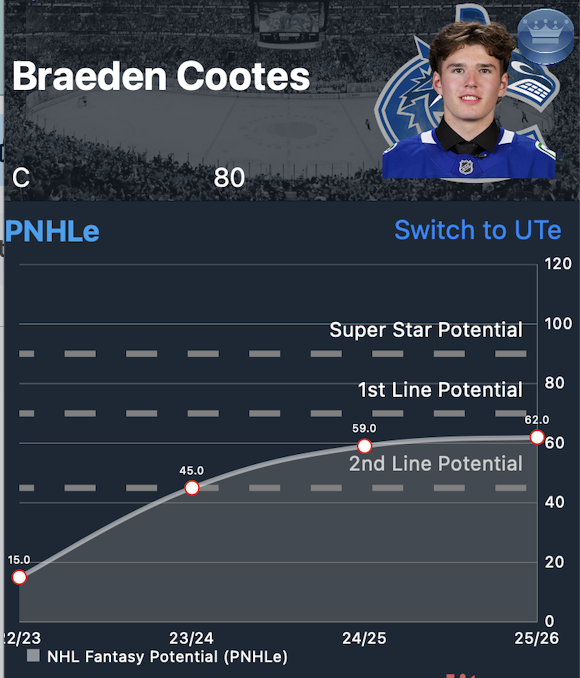
Cootes is often compared to Anthony Cirelli, which reinforces both his strengths and limitations. He is likely to become a valuable NHL contributor, but one whose fantasy impact may be capped in a middle- to bottom-six role. His projected scoring output, hovering around the 60-point range, reflects that ceiling. There is some appeal in leagues that reward BASH categories, as he should provide physicality and strong faceoff numbers, but unless that profile fits your build, it may be worth exploring a trade for a prospect with more offensive upside.
Jonathan Lekkerimäki, RW
Team – Vancouver Canucks
McKeen’s Rank – 33
Lekkerimäki’s appeal is built around his elite shot and natural scoring ability, which continue to drive his value as a prospect. He has produced well in the AHL, a strong indicator that his offensive tools can translate, particularly in a power-play role where he can find space and capitalize. However, his game has long been viewed as one-dimensional, with much of his value tied almost exclusively to that finishing ability. If his current valuation is driven primarily by goal-scoring upside, this may be an opportune time to sell before expectations begin to level out.
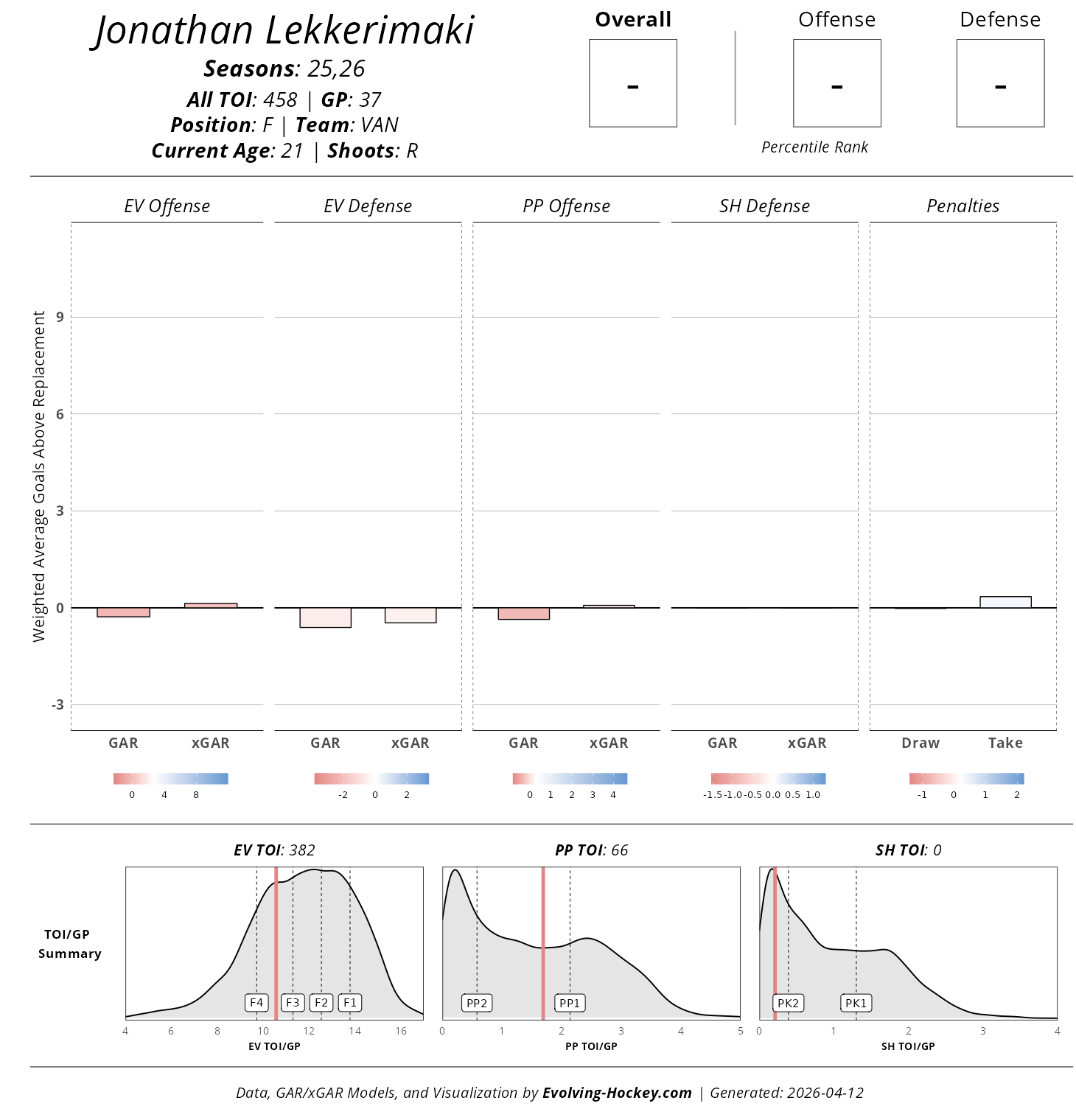
The concern lies in his play away from the puck. In nearly 500 NHL minutes, his Evolving Hockey profile shows below-average impacts across most areas, both offensively and defensively, even in situations where he should thrive. These off-puck limitations have been a known issue for years, and there has been little evidence of meaningful progression. As a result, he may struggle to earn consistent trust from coaches beyond sheltered even-strength usage and power-play deployment. That likely caps both his role and overall fantasy ceiling, making it risky to bet on a significant leap beyond his current profile.