


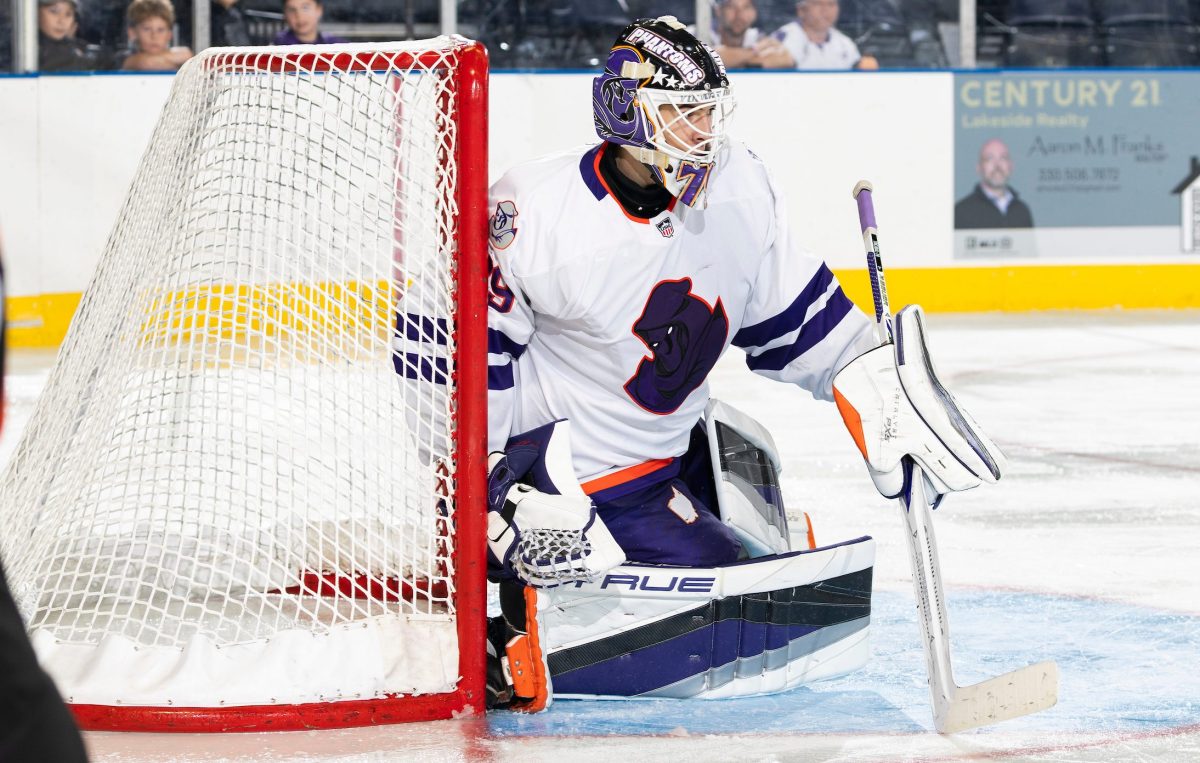
Position: G, Catches: R
H/W: 6-foot-4, 196 pounds
Date of Birth: 2007-11-09
The large Czech netminder, from Most, Czechia, is a towering presence in the net. He stands over the league average height of NHL goaltenders (~6-foot-3). He uses that size to its full potential as well, something that NHL scouts surely find tantalizing in itself. But what could make him an even more intriguing prospect comes down to his background and how he got to where he is today.
Trejbal started playing goaltender at 10 years old, originally playing defense in his younger years. He was inspired by fellow Czech netminder and Stanley Cup champion, Pavel Francouz, to strap on the pads and get in the crease. It turned out to be the correct decision by the youngster.
Two seasons ago, he played in the same system that Francouz once represented, HC Litvinov. There, he played 38 U20 games, with a .930 save percentage, 2.33 goals against average, and a record of 18-20-0. With his performance at the U20 level, he got a chance to play up in the Czech Extraliga, getting into one game for 17 minutes, recording four saves on five shots. He would also start a game with the Czechia U18 team at the World Juniors in Texas.
This past season, he elected to come over to the USHL with the Youngstown Phantoms. He would dominate in his regular season starts, drawing into 42 games, recording a .916 SV%, 2.12 GAA, and a 30-9-3 record. When Trejbal didn’t start for Youngstown, they looked like an entirely different team. In the playoffs, however, they were a quick exit, losing to 6th seed Madison Capitals. Trejbal finished the series with a 1-2-1 record, a 1.66 GAA, and an .896 SV%.
With his strong USHL season overall, Trejbal would commit to the University of Massachusetts, Amherst for 2026-27, where fellow countrymen Vaclav Nestrasil and Michael Hrabal played this season. He is one of the top goaltenders in this class, and is projected to go anywhere from the end of round one to the end of round two.
While Trejbal's combination of size, athleticism, and production have made him one of the premier goaltending prospects in the 2026 NHL Draft, I also wanted to see how his profile stacked up historically. To do so, I utilized my NHLeSV% model, which compares draft-eligible goaltenders against historical profiles and projects potential NHL outcomes based on league-adjusted performance and comparable statistical profiles.
To sum up what the model shows, Trejbal projects as a Tier 1A goaltender. Within the NHLeSV% model, Tier 1A represents the highest possible projection tier, reserved for goaltenders with elite NHL starter upside. Trejbal earned a 96.4% confidence match to tier 1 as a whole, narrowly edging out Tier 3 (ECHL goalie projection tier) at 95.9%.
While that projection is certainly encouraging, it should be viewed with some caution. Historically, goaltenders that fall within Trejbal's confidence (96.4%) and decisiveness (0.5% greater than the next closest match) ranges have been projected within one tier of their eventual career outcome 52.1% of the time. Additionally, the model has shown a tendency to overrate USHL goaltenders, making Trejbal's projection less certain than the raw numbers suggest.
In other words, the statistical profile is extremely promising and places Trejbal among the strongest goaltending profiles in the 2026 NHL Draft. However, as is often the case with goaltenders, the eye test remains critical when evaluating whether he can ultimately reach his projected ceiling.
Athleticism
Trejbal is a decently athletic goaltender, who, at his size, is impressive. He doesn’t necessarily explode across the crease, nor is his lateral movement particularly excellent. But he uses all of his frame and flexibility to stretch across and take away the bottom of the net. He does have good edges and can change direction well, in the event there’s a rebound or a quick pass in tight going against his momentum. Trejbal is able to use those edges to push back against the grain, then use his longer legs and bigger frame to stretch across. His frame, as mentioned, is tantalizing because it makes those desperation moments easier. He takes up so much of the net already, and his edges and athleticism is solid for his size, allowing him to make those saves when needed to.
Here is a prime example of his ability to change directions against the grain. Madison gets through the neutral zone here in overtime, and one of their forwards takes it wide to Trejbal’s right. He turns and fires the puck through traffic, and it hits another Madison forward driving the net. The Madison forward does bobble the puck initially, but Trejbal’s momentum has him going from right-to-left, and it did not take long for the forward to spin and fire the puck on net. Trejbal was able to dig his left skate into the ice and anchor himself, stopping his right-to-left momentum, before extending his right leg and glove out to take away that side of the net, coming up with a crucial save in a playoff overtime contest.
In this clip, Chicago has numbers flying up the ice towards Trejbal. As they gain the zone, the Youngstown defenders are drawn to the left side of the zone. That left a Steel forward driving the net on the right side open. The pass came a tad late, and a Youngstown back checker disrupted the shot a tad. But Trejbal still was able to get across in a very timely manner, and the disruption caused the puck to go against the grain on Trejbal. He was able to make the adjustment with his blocker hand to handle the knuckle-puck-esque shot and didn’t give up a rebound.
In this clip against Chicago again, the Steel get a breakaway. As the Steel forward comes flying in, Trejbal doesn’t panic, nor does he become over-aggressive. He times his gap between himself and the net well with the Steel forward. This allows him to not get too deep to give up too much net, while also not allowing him to be too far out where he can be exposed with a quick stickhandle across the crease from the opposing forward. That’s exactly what happens as well, as the forward tried freezing Trejbal with a fake move to the backhand and a leg kick to simulate a shot. Trejbal wasn’t fooled, and as he dropped to the butterfly to take away the bottom of the net, the forward made a quick move to the forehand. That’s then Trejbal, despite being down, is able to bite his edges into the ice enough to shove himself across the crease. His large frame and his well-timed gap control shortened the distance he needed to cover on such a move, allowing him to make a very difficult save, while simultaneously preventing a juicy rebound.
Grade: 52.5
Technique
As it pertains to technique, Trejbal possesses strong edges, strong gaps that he times well, and very good rebound control. However, he isn’t the most technically sound netminder. There are times where he can drift too far, over-setting and giving up the far side in some scenarios. Additionally, he can be inconsistent with his depth once possession is established and a shot is on its way. For example, Jakub Dobes has excellent anticipation and play-reading ability, which was on full display in the NHL playoffs this past season. When he knew a shot was coming, he exploded out and cut down the angle significantly, but he would sit back in his crease and keep his depth in check to cut down the distance needed to move laterally if the play changed directions. Trejbal needs to improve upon that as he progresses up leagues in the very near future. Lastly, he is susceptible to being beat low glove, as his angles can be a bit off on longer distance shots at times. With his large frame and solid movement skills, these are things that should be coached into his game and improved moving forward, but it is still prevalent in his film in the USHL.
Above is an example of the inconsistent depth and why I used Jakub Dobes as an example. It’s a bad turnover by the defenders in front of him, and when the puck pops out front for an opposing attacker, he is very deep in his net. The puck just squeaks past him and into the net. Had he been out to the top of his crease and anticipated that a shot was coming there, that’s a routine save. The turnover was bad, yes, but the puck wasn’t zipped across to the opposing forward. He had plenty of time here to get his feet set and square to the shot. But he is too deep, giving up the edges of the net, and giving up a tough goal here. Again, Dobes would have exploded out, knowing that there are very few other options for the attacker than to shoot.
In this clip, it’s a weird bounce that gets through his defender, then the NTDP fights through his teammate to get to the puck. It’s essentially one-on-one here. Trejbal does not waver or make the first move as the NTDP forward is closing in, until there’s no room left. When the NTDP forward pulls to the backhand in tight, Trejbal drops and pushes across to his blocker side and completely closes off any space for the puck to get through. Steady feet and no panic, plus a strong push and keeping his blocker up to knock the puck to the corner. Makes it look routine in a broken play that leads to a one-on-one situation.
Here, the NTDP have a rush coming down with numbers. The drop pass was a little off, causing one of the NTDP players to adjust his lane to scoop up the loose puck. In one motion, he collects the puck and spins a shot on net. The whole way, Trejbal stayed square to the shot, kept his feet close together to make these short, subtle shuffles to remain square, then as he saw the shot coming, widened his stance, dropped down and swallowed the shot, giving up no rebound.
In this clip, Omaha enters the zone once again with numbers. The puck is played cross-ice in the neutral zone and as they enter the offensive zone. As the Lancers forward collects the puck, Trejbal is out beyond the top of his crease and widens his stance. However, his glove is low and compact here, which is something that is noticeable in his film. As the shot comes, he drops down and he brings his glove hand up. That extra movement opens up a small space just between his glove and leg pad, and the shot finds that spot. As he adjusts his glove to the shot, that extra movement to bring his hand up delayed that adjustment, causing him to get beat low glove there. It’s a very subtle technical flaw, but a tendency that NHL shooters will find consistently if it isn’t fixed. Not only that, but as the puck finds the net, you can see how he drifted just a tad to the near side, giving up more space to that far side of the net. Another very subtle technical flaw that pops up on his film from time to time.
This clip shows the issues he has with angles more clearly. A Green Bay forward gains the zone, coming down the ice to Trejbal’s left. The three defenders are around him, not tight, but enough to prevent a move across to the other side, eliminating the need for Trejbal to worry about much lateral movement. So he challenges the shooter, out beyond the top of his crease. But he overcompensates for his blocker here, and gives up the far side of the net very clearly for the shooter, which he takes and scores with ease. This was not a threatening chance, nor were there many other options for the Green Bay forward as he was 1v3 against Youngstown defenders.
Grade: 50
Play Reading
Trejbal is an interesting case when it comes to play reading. There are moments where he anticipates plays correctly, which have slightly been touched on with other clips above. The correct depth and depth control in certain situations is a show of anticipating a shot or a pass, and he is correct more often than not. But, also as shown a bit in earlier clips, there are some inconsistencies with that. For the most part, however, Trejbal tracks plays well enough. While it will never be a true strength of his at this point, it certainly won’t be a weakness.
In this clip, despite giving up the goal, he shows the good and the bad. On the penalty kill, Cedar Rapids is moving the puck around on the right side of Trejbal and the point. He keeps his shuffles simple, following the play well. Then the puck is moved across to his left, and he takes one big shuffle and sets his feet before the RoughRiders player gets the puck on his tape. As the attacker holds the puck, however, he sits pretty deep in his crease. While there are options for the attacker to make another pass, he is not set as though he is prepared for a shot. Additionally, he has a slight lean towards his glove side, almost indicating that he’s loading up for a push. There’s not much traffic in front of him, so he likely should have come out a tad more to cut down the angle as well. But because he is deep in the crease and leaning towards his glove side, the shooter has a sliver of space on that shortside, and he takes a great shot to sneak it through.
In this clip, it’s another PK for Youngstown. As the puck is being moved around at the top of the zone, it is suddenly zipped down low to a player right by the net, to Trejbal’s right. Trejbal quickly pivoted and was in a good spot to make a stop if that attacker turned and shot it. Instead, he one-touches it across the top of the crease to a teammate on the other side of the net. Trejbal keeps his eyes on the puck, tracking it well, and gets off a strong push laterally. Getting deeper in his crease as the puck got to that first attacker at net front also allowed him to shrink the amount of distance he needed to cover laterally, which aided in his ability to make the save. After making that save, he pops back up to his feet quickly, anchors himself, then see’s a second shot coming. He quickly snaps his left leg down and pushes tighter to his post to seal off either a return pass to the attacker on the left side, or a rebound shot on net. He completely shuts down the whole play due to his tracking of the puck, controlled depth on the puck movement to limit the distance needed to cover, and strong core strength to keep himself upright after the initial save, allowing him to make a second save.
In this clip, Lincoln has possession in the offensive zone, taking it down below the goalline and behind the net. Trejbal takes a peak as the play is coming down the boards and recognizes there’s a Stars attacker in the slot area. As he turns back to the puck, he drops down and seals the post. As the pass comes out to the front, Trejbal pushes up and out off his post to almost the top of the crease to challenge the shooter. He knew exactly where the puck was going before it got there, and came way out to cut down the angle. However, the shot was blocked and kicked out to his left, to another open Stars attacker. He gets his head across, tracking the puck with his eyes, and pushes as hard as he can to get across to face that shooter. He got there before the shooter could get the puck off his stick, catching the shot against his chest and preventing a rebound opportunity.
Grade: 52.5
Compete/Temperament
Trejbal is a mostly calm goaltender in the face of intensity or chaos. What hurts him here a tad comes down to over-setting at times. But, he keeps his feet anchored and hardly panics or gets happy feet, losing his leverage for pushes. If he can clean up that inconsistency with his lateral pushes, his grade will go up in this category for sure. He can also be pretty passive at times, which has been seen in some of the clips above. There are times where he correctly reads that a shot is coming and gets out to the top of his crease to cut down angles. But there are plenty of situations where he stays too deep in his crease, giving the shooter more room to pick in the net.
In this clip, despite giving up a goal, is a very good example of that lack of panic in his game. As the puck is moved up to the point, he calmly gets to his spot and sets his feet. That puck gets quickly moved to the flank on Trejbal’s right. He goes down and gives a strong push across to get to his spot quickly, then gets up to his feet and gets anchored. But this shows how he over-sets, as his angle is off here and he gives the shooter some space on the far side. The shot never came, and he was able to adjust his angle as traffic crossed in front of him. As the puck is moved back to the point, he gets to his spot before the puck gets to his man, and again, he anchors his feet. As the point shot is sent towards the net, he gets down into the butterfly. However, his momentum from the earlier push got him to drop and drift a bit to his left. He gets back to his feet as the shot was blocked and adjusts himself again, as the second shot, after the initial shot was blocked, came in. While he never panics in this clip, and carefully adjusts when his angles are off after his pushes, those small adjustments throw off his timing a bit and adds an extra movement to making the save. Again, the composure in this play for a very young goaltender playing over-seas for the first time, is very impressive. But the minor adjustments due to over-setting and being off on his angles costed him here.
In this clip, Trejbal faces a quick counter attack from Muskegon. He initially showed outstanding poise on the initial attacker. He knew his options were very limited, he came way out to challenge him, knowing his teammate was tight to him on the back check. When the Muskegon attacker dropped the pass to a wide open teammate, he again did not panic. He shifted quickly to square up to the shooter, stayed aggressive, and got back into a wide stance. However, the Muskegon forward made a subtle move to fake a cut towards Trejbal’s blocker side, and he went down early from that quick fake. His aggressiveness left him vulnerable to that move, as he pulled to his backhand with a wide open cage to shoot at. Trejbal got lucky he mishandled and another teammate came in to help out. But once again, no panic or concern, but bit early on a subtle fake, preventing him from getting a good push to recover.
In this clip, a quick play into the middle by Muskegon creates a small area 2v1 for a Youngstown defender, who was tying up a Lumberjack forward at net-front. With the traffic, Trejbal is set deep in his crease and, as the Lumberjack puck carrier held and held, Trejbal got a bit anxious and dropped down early. As the attacker turned to his backhand, looking to draw the defender in and play to his teammate at the top of the crease, Trejbal popped right back up with a wide stance, saw the pass get sent across, and quickly turned his head towards it, used his left leg to push into his spot, and with his wide stance, he didn’t need to cover much distance. He made the save off the centering pass one-timer look casual. This displayed not only composure, but play-reading and anticipation. When Trejbal is at his best, these are the things he can pull off.
Grade: 55
Rebound Control
When it comes to rebound control and preventing second chance opportunities for opponents, Trejbal is mostly very strong. However, with his technical flaws, such as his angles being off, allows for rebounds to get away from him. Similar to his ability to read the play well, but not at a high-level, it won’t necessarily be a weakness for Trejbal. It’s also fair to assume that, as he cleans up his technical flaws, this area should absolutely improve.
In this clip, Cedar Rapids was in on a two-on-one rush, with the second forward in a bit behind the play. The attacking forward tries slowing up upon entering the zone, pulling the puck back on his forehand, before wiring a shot low and on net. If Trejbal doesn't utilize his stick well, there’s a potentially dangerous rebound to the second forward in. Instead, he uses his stick to deflect it to the corner and away from trouble.
In this clip, Madison has a three-on-two coming up ice. They gain the zone, then play it cross-ice almost immediately after crossing the blueline. That forward catches the puck on his forehand tight to his feet, pulls it out into a shooting position and fires the shot. Trejbal slightly over-sets, and it hits the bottom of the pad by the toe. The puck pops out directly up the middle of the slot, but there was no forward trailing down the middle of the zone for Madison to claim the rebound opportunity. That push across that causes him to slightly over-set led to the puck not hitting square to the leg pad, where he has a bit more control to direct the puck, causing it to pop cleanly out into a dangerous area of the ice.
On the powerplay, Waterloo takes it around behind the Youngstown net. Trejbal tracks the play as it goes around the net. As the Waterloo puck carrier works his way behind the net, he fires a diagonal feed from the goal line through the slot. Trejbal reads it well and tracks it the whole way, getting himself to his spot quickly. The most impressive part is that, while working from left to right, he doesn’t give up any rebound, making the stop with his chest and then quickly covering it up as it drops in front of him. That’s an example of him getting square to the shot quickly, making it an easier save, and one that he can prevent rebounds from being too dangerous.
As the puck was moved down the wall to Trejbal’s right. As the puck carrier glides towards the net from an odd angle, Trejbal hugs his post and protects the shortside. As the shot comes in, he shrugs it off, but he directs the rebound right to the net-front forward. He did well to fight off the rebound chance, but it was a non-threatening odd-angle shot that turned into a point-blank try right at the top of his crease.
Grade: 55
Puck Skills
When it comes to moving the puck, Trejbal, as do most goaltenders, keep things very simple. He comes out of his net to corral dump-ins and mostly leaves pucks there for a defender to scoop up. He isn’t particularly aggressive as a puck-mover, but he can flash that ability at times as well. But again, a vast majority of his passes are simple corrals and guiding the puck into an area for a defender to retrieve.
In this clip, the puck is chipped ahead and on goal. Trejbal, instead of just shoveling the puck into an area out of danger and for a defender to retrieve, one-touches the puck up the ice towards a forward in the neutral zone. If his teammate didn’t get a piece of the puck as it was zipped up ice, it likely would have connected for a solo break-out by Trejbal. However, due to the deflection, the puck was bouncing and it skipped past the blade of the forward up ice. But a very quick and confident decision that nearly worked, despite how difficult of a pass that is to make for a goaltender.
Here’s another example of his puck movement. The puck is sent down the ice, on net, and he collects it as pressure is bearing down on him. He doesn’t panic, instead holding the puck until the last moment, before backhanding it to his defender on the boards, where he is able to turn up ice, pass it into the neutral zone, and kick start a break out.
There are also moments like this, however, where he should have covered the puck instead of trying to play it. On a bit of a broken play for the Steel, the puck is bouncing towards the goal, with a Steel forward wrestling to get past a Phantoms defender. Instead of recognizing that the forward is working his way around his teammate, Trejbal tries to guide the puck into what he believed to be a safe area at the side of the net. Instead, he places it on a tee for the forward to skate into, Trejbal is well out of position, and the forward nearly capitalizes on a wrap-around attempt.
Grade: 55
OFD: 53.125
A note on the 20-80 scale used above. We look at five attributes (skating, shooting, puck skills, hockey IQ and physicality) for skaters and six for goalies (athleticism/quickness, compete/temperament, vision/play reading, technique/style, rebound control and puck handling). Each individual attribute is graded along the 20-80 scales, which includes half-grades. The idea is that a projection of 50 in a given attribute meant that our observer believed that the player could get to roughly NHL average at that attribute at maturity.