


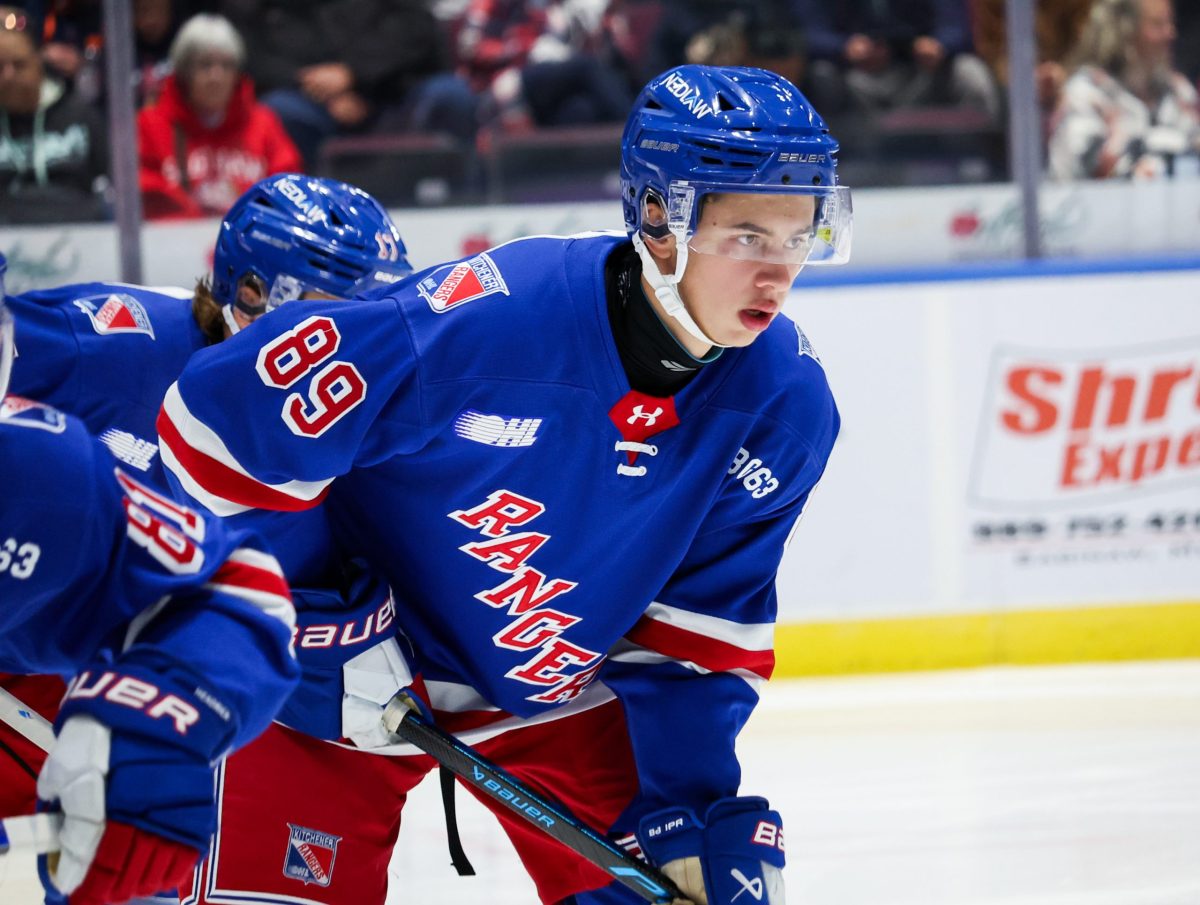
Position: D, Shoots: L
H/W: 6’2” , 180lbs
Date of Birth: 2008-05-09
Alexander Bilecki is a name whose stock has garnered a lot of attention leading into and throughout the Ontario Hockey League (OHL) playoffs. Bilecki, who recently captured a Memorial Cup with the Kitchener Rangers, was originally a second-round selection by the Blueshirts in 2024. After suffering a playoff defeat in the Western Conference Final the previous season at the hands of the eventual OHL and Memorial Cup champion London Knights, Bilecki and several of his Kitchener Rangers teammates committed to an intense offseason training program with the goal of achieving a better result for the following year. That work quickly translated onto the ice, as the Rangers emerged as one of the OHL’s top contenders...and were ultimately victorious.
Following the OHL trade deadline, Kitchener further boosted an already highly talented roster by adding Sam O'Reilly, Dylan Edwards, Gabe Chiarot, and Jared Woolley, while also welcoming back Luke Ellinas and Matthew Andonovski. Despite being the youngest defencemen on a championship-caliber team — one that features four NHL prospects among its six regular blueliners, many of whom are 19- and 20-years-old — Bilecki earns over 17 minutes a night on Kitchener’s top 4, playing every situation at even strength and special teams. Bilecki is an effective puck-mover and has shown to be just as effective rushing the puck. There are translatable traits in his hockey IQ that project well to the professional level, whether through his timely activations in the offensive zone or his ability to track plays and close out in the defensive zone. Bilecki has good size, listed as 6’2,” and despite being listed at 180lbs, he can play physical and use his strength to pin opponents to the boards.
Skating
Bilecki has really been able to showcase his skating ability playing under Jussi Ahoka’s position-less system. He is a strong north-south skater with a smooth stride and strong mobility, allowing him to activate effectively in the offensive zone to help sustain pressure. His coaches have given him the freedom to jump into the rush as a fourth forward through the neutral zone, where his skating ability becomes even more noticeable. With the puck on his stick, he looks poised and controlled, skating with a forward lean, knees centered over his toes, and the ability to adjust his skating gait seamlessly in motion. Like most young defencemen, Bilecki still has areas of his skating that can improve. Adding another level of explosiveness to his stride and sharpening his pivots will allow even more effective close outs and prevent getting beaten out wide, elevating his effectiveness as a mobile two-way defenceman at the next level.
Understanding the Barrie forechecker is on him, Bilecki uses his feet to escape the pressure for the clean zone exit. The only adjustment on this play is next time to dump the puck in rather than try to make that pass through 3 forecheckers at the red line.
Watching Bilecki this season, the calmness and poise in the defensive side of the puck really improved. He makes plays like a retrieval on his backhand under pressure look effortless. You see his eyes constantly scanning the ice, absorbing information before making a move with the puck.
Observing this play, there should be no way Bilecki comes out behind the net with the puck, especially that cleanly. Bilecki is battling two forecheckers and is closed out of inside leverage to the puck; however, he uses his footspeed and angling, to be first to the puck and complete the zone exit.
This sequence is a good example of Bilecki’s habits with the puck — he absorbs contact well, keeps his feet moving, and works his way into open space to become a passing option. Moving forward, you would like to see him be more aggressive on the 1 v 1 opportunity especially against a forward covering. Using the speed generated from his entry, if he can develop to pull the puck to his backhand, shift his lower body to protect the puck and drive the puck to the net that would add another layer to his offensive game.
Another prototypical sequence by Bilecki here activates himself into the rush and a hard backcheck to rejoin the play in the defensive zone.
Grade: 55
Shot
This past season, Bilecki showed clear growth in multiple areas of his game on both sides of the puck. Offensively, he took a notable step forward, more than tripling his shot total from his rookie season (123 compared to 40), which translated into a significant increase in his production, including 11 goals across the regular season and playoffs.
He is dynamic offensively, quarterbacking the Rangers’ second power play unit, playing with strong puck vision and an ability to identify and hit shooting lanes from distance. Bilecki is not a top triggerman, who can beat goaltenders with an overpowering high velocity shot from the point; however, he was effective at utilizing a quick wrist shot or snap shot to get pucks through traffic, consistently finding lanes and generating scoring opportunities from the point.
Bilecki’s shooting tendencies are centered around accuracy and release. Throughout the regular season, playoffs, and Memorial Cup, more than 50% of his shot attempts reached the net, highlighting his ability to consistently find shooting lanes through traffic. Similar to Rangers teammate Cameron Reid, Bilecki rarely forces shots when a lane is unavailable. Instead, he activates his feet to create space and improve the shooting angle. When presented with open ice, he does not settle for a quick release from distance; rather, he takes advantage of the space available, walks into a more dangerous scoring area, and loads up his shot to generate a higher-quality opportunity.
When Bilecki has the ability to find soft space in the slot, he can capitalize with a quick release.
Bilecki was rewarded with a couple of goals this season for finishing off plays with a hard net drive.
Bilecki is so effective at getting shots through traffic to allow tips or create juicy rebounds for second chance opportunities in front of the net.
Grade: 52.5
Skills
Bilecki consistently displays soft hands and the ability to maintain control of the puck while in motion. His coordination between his feet and hands allows him to execute quick directional changes, evade pressure, and retain possession through traffic. As the season progressed, he appeared increasingly comfortable and confident carrying the puck, showing greater poise in possession and rarely overskating pucks. His growing confidence with the puck on his stick enabled him to play at a faster pace while remaining under control. Bilecki has been highly consistent moving the puck this season, rarely making lazy passes or missing his target, even when operating under immense pressure. He routinely demonstrates good poise and decision-making with possession, allowing him to move the puck efficiently. Like many junior players, there are instances where the intent behind the play is correct and the read is the right one, but the execution falls short due to not handling the pass cleanly at the pace of the game. As the skill level around him improves, more of these plays should translate into successful offensive sequences even at a higher pace of play.
A subtle play that is more difficult than it initially appears, as Bilecki quickly transitions the pass in his skate to his stick before releasing a shot in tight space. The sequence highlights his hand-eye coordination, puck control, and ability to execute under pressure with limited time and room.
His puck control is smooth and composed, allowing him to maintain possession effectively even at top speed.
Bilecki can afford to be creative with the puck because his hands are well-synchronized with his feet.
When Bilecki activates offensively, his skating, puck control, and playmaking ability often make him look more like a forward. In these clips, he confidently leads the attack, executes quality seam passes through traffic, and commits hard net drives, creating space and opening up shooting lanes.
Bilecki’s breakout and stretch passes are incredibly consistent and accurate.
Grade: 55
Smarts
A defenceman prospect with offensive instincts like Bilecki often comes with a tradeoff. Typically, offensive-minded defencemen provide skill, creativity, and puck-moving ability but can lack defensive awareness or shutdown capabilities. In Bilecki’s case, however, he has developed strong puck-management habits and is not a liability in his own end. He consistently forces more turnovers in the defensive zone than he creates, and even under heavy pressure, he rarely shows panic with the puck. Instead, he remains composed, using his feet to evade forecheckers or making quick, efficient plays to relieve pressure and transition the puck up ice. His ability to contribute offensively without sacrificing defensive reliability is one of the more appealing aspects of his game. This season, he averaged more than two turnovers per game in the offensive zone. However, the majority of those turnovers occurred below the tops of the circles and were the result of failed offensive plays rather than poor decision-making. They often came while attempting to create scoring chances, make plays through traffic, or capitalize on opportunities in dangerous areas. These are the types of turnovers that coaches can generally live with, as they stem from offensive initiative and creativity rather than carelessness, and should become less frequent as he continues to develop and refine his execution. Bilecki’s ability to process the ice and make decisive plays under pressure is a key component of his offensive game.
These are two excellent examples of Bilecki’s awareness and hockey sense. On both plays, he scans the ice before receiving the puck, identifying the developing scoring opportunity. He quickly moves the puck to his teammate, open for the backdoor tap-in goal.
These clips highlight the progression and confidence Bilecki has developed with the puck. The first two clips showcase examples of turnovers that were more common in his game last season, while the following two clips feature similar situations where he has made noticeable adjustments. The contrast illustrates his growth in puck management, decision-making, and poise under pressure, as he now recognizes plays more quickly and executes them with greater confidence and efficiency.
These clips show a few instances where Bilecki was caught flat-footed and paid the price as opposing players were able to gain a step on him. While these situations were not a frequent occurrence, they highlight an area for continued development. Developing stronger pivots on the ice and building more lower body strength will limit the chances of getting caught flat footed and reduce the likelihood of being beaten when defending against speed.
On this play, Bilecki gets caught drifting too far toward the outside, which opens up space through the middle of the ice for the Petes' forward to attack. The misread forces his defensive partner into a difficult position, leaving him caught between assignments and ultimately contributing to the scoring chance. The play likely could have been prevented had Bilecki maintained his positioning between the dots, protecting the middle of the ice and taking away the passing lane through the slot. It serves as a good example of an area where continued growth in defensive awareness and positioning can help him become a more complete two-way defenceman.
Grade: 52.5
Physicality/Compete
Bilecki has certainly toned down the frequency of his heavy hits compared to his rookie season in the OHL, but he continues to play with flashes of his physical edge and finishes his checks with purpose. His physical game has become more controlled and situational, allowing him to separate opponents from the puck and disrupt plays without taking himself out of position. The added discipline in his physical approach reflects a more mature understanding of when to be aggressive and when to prioritize positioning. Bilecki has consistently showcased his composure when playing through contact. He prepares his body well to absorb incoming hits, does not shy away from physical pressure, and remains focused on executing the play. Rather than rushing decisions, he often looks to move the puck to his defence partner or up ice to teammates efficiently before absorbing contact, demonstrating both poise and awareness under pressure. His ability to withstand physical play while still making effective puck-moving decisions is an important part of his game.
With Jared Woolley and Matthew Andonovski serving as Kitchener’s primary shutdown pairing down the stretch and both expected to move on next season, a larger role on the backend will likely be available for Bilecki. As mentioned throughout this report, he already possesses good strength in his frame and should continue to get stronger, while further improvements to his skating will only enhance his overall effectiveness.
To develop into a true top-pairing defenceman, however, Bilecki will need to become more consistent with his closeouts and his ability to tie up sticks around the net and in defensive-zone coverage. It was rare to see him lose battles simply because he was overpowered physically, but with an increased role likely comes more matchups against opposing top lines. As a result, the details of his defensive game will be tested more frequently, making his continued development in those areas an important next step in his progression.
Bilecki handles physical matchups against larger opponents fairly well. He does a good job of closing out space, preventing opposing players from fully utilizing their size and strength advantages.
A few hard hits Bilecki is capable of making.
Similar to most defensive prospects, developing the physicality, timing, and consistency required to eliminate time and space is an area that NHL defensive coaches continually emphasize. Bilecki has the skating ability, mobility, and physical tools necessary to excel in this aspect of the game. As he continues to gain experience and strength, becoming more assertive and consistent in his closeouts should allow him to further limit opponents' options and establish himself as a more complete two-way defenceman.
Bilecki is not afraid to sacrifice his body to block shots or use an active stick to disrupt shooting lanes. In one clip, Bilecki gets a piece of the shot and deflects it wide of the net before immediately clearing the front of the crease, eliminating any secondary scoring chance. The play highlights both his defensive awareness and his commitment to protecting in front of the net.
Grade: 52.5
OFP: 53.625
A note on the 20-80 scale used above. We look at five attributes (skating, shooting, puck skills, hockey IQ and physicality) for skaters and six for goalies (athleticism/quickness, compete/temperament, vision/play reading, technique/style, rebound control and puck handling). Each individual attribute is graded along the 20-80 scales, which includes half-grades. The idea is that a projection of 50 in a given attribute meant that our observer believed that the player could get to roughly NHL average at that attribute at maturity.